
Hamstring Tendinitis: Symptoms, Causes, and First Aid Awareness in Canada
Understanding Hamstring Tendinitis
Hamstring tendinitis is a condition involving inflammation or irritation of a hamstring tendon—the strong, flexible tissue that connects the hamstring muscles to the bones of the pelvis and lower leg. These tendons play a key role in walking, running, bending the knee, and extending the hip.
Hamstring tendinitis is most often seen in people who participate in sports or physically demanding activities, particularly those involving sprinting, sudden stops, jumping, or contact. In many cases, the condition can be managed conservatively, but more severe or persistent cases may require further medical intervention.
Why This Matters for First Aid and Workplaces in Canada
Hamstring injuries are common in sports, recreation, construction, warehousing, emergency services, and outdoor work. Pain and limited mobility can affect balance, lifting ability, and safe movement. First aid awareness helps recognize early signs, reduce strain, and support recovery before the condition worsens or becomes long-term.
A Realistic Scenario
A recreational soccer player notices a gradual ache at the back of their thigh that worsens after practices. A teammate with first aid training recognizes this as a possible tendon overuse issue and encourages rest, icing, and reduced activity rather than continuing to play through the pain.
What Causes Hamstring Tendinitis?
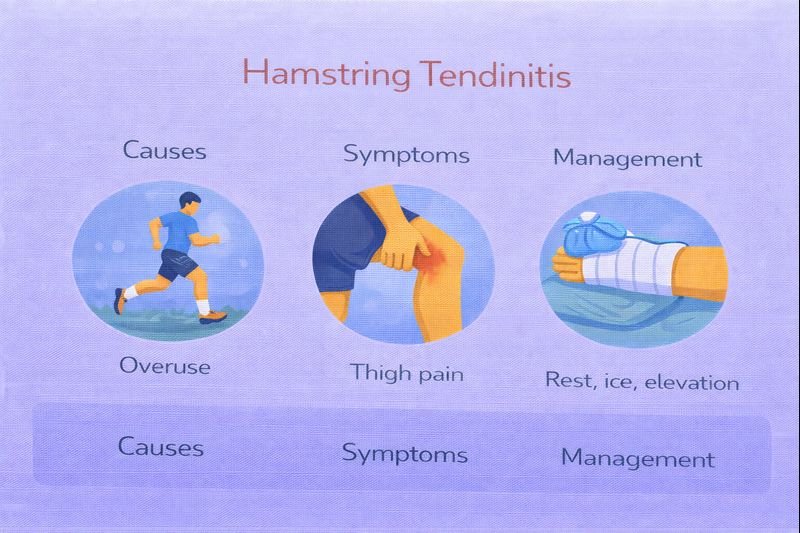 Hamstring tendinitis develops when the tendon is repeatedly stressed or overloaded, often without enough time to recover. Each time the hamstring muscles contract, they pull on the tendon, which then pulls on the bone to produce movement. Over time, excessive strain can lead to irritation and inflammation.
Common contributing factors include:
-
Repetitive running or sprinting
-
Sudden increases in training intensity
-
Poor flexibility or muscle imbalance
-
Inadequate recovery between activities
-
Contact sports and activities involving rapid acceleration or deceleration
Common Signs and Symptoms
Symptoms may develop gradually or appear after increased activity. They can include:
-
Pain or tenderness at the back of the thigh or near the sitting bone
-
Discomfort that worsens with activity or stretching
-
Swelling or a feeling of tightness
-
Reduced strength or flexibility
Pain may be mild at first and become more noticeable with continued use.
First Aid Awareness and Early Management
From a first aid perspective, the goal is to reduce inflammation, manage pain, and protect the tendon to allow healing.
Rest and Positioning
-
Reduce or stop activities that strain the hamstring
-
Allow time for recovery, especially during the first few days
-
When resting, elevating the affected leg can help reduce swelling
In some cases, a brace or support may be recommended by a healthcare professional, though this is not always necessary.
Cold Therapy Awareness
Applying cold can help reduce pain and inflammation in the early stages.
General cold application principles include:
-
Use a cold pack or wrapped frozen item
-
Place a cloth or towel between the skin and the cold source
-
Apply in short intervals with breaks in between
-
Monitor skin condition to avoid cold injury
Cold therapy is a common first aid approach for soft tissue irritation.
Medication and Medical Care Awareness
Some individuals use anti-inflammatory medications as part of their care plan. These medications reduce inflammatory signals in the body, which may help relieve pain. Because they can have side effects, they should be used according to medical advice.
Persistent, worsening, or severe symptoms should be evaluated by a healthcare professional to confirm the diagnosis and rule out other injuries.
Surgical Considerations (Severe Cases)
Surgery is not common for hamstring tendinitis but may be considered in severe cases that do not improve with conservative care. Surgical options focus on addressing damaged or inflamed tissue around the tendon.
Before surgery is considered, imaging such as MRI may be used to better understand the extent of tendon involvement. As with any procedure, potential risks and benefits should be carefully reviewed with a healthcare provider.
Prevention and Workplace Considerations
-
Gradually increase training or workload intensity
-
Warm up before physical activity
-
Maintain flexibility and balanced strength
-
Allow adequate recovery time
-
Report ongoing pain early rather than pushing through symptoms
Workplaces and sports programs that promote early reporting and modified duties can help prevent chronic injury.
Frequently Asked Questions (FAQ)
Is hamstring tendinitis the same as a hamstring strain?
No. Tendinitis involves the tendon, while a strain affects the muscle fibres.
Can hamstring tendinitis heal on its own?
Many cases improve with rest and activity modification, but recovery time varies.
Is surgery usually required?
No. Most cases are managed without surgery.
Does continuing activity make it worse?
Yes. Ongoing strain without recovery can prolong symptoms.
Why is first aid awareness important for tendon injuries?
Early recognition and reduced strain help prevent long-term damage and loss of function.
Educational Note
This article is intended for general first aid and workplace safety education in Canada. It promotes awareness of hamstring tendinitis but does not replace medical diagnosis or treatment.
About The Author

Mark Kascha
Certified First Aid Instructor Trainer with 30+ years of real-world experience, including lifeguarding, workplace emergency response, and first aid program development across Canada. Has worked with WorkSafeBC, WSIB, and Manitoba Health.
Last reviewed: March 2026