
Watery stools, often called diarrhea, are very common and can affect people of all ages. Many cases are short-lived and improve as the body restores normal digestive function.
First Aid & Workplace Relevance (Canada)
In Canada, digestive upsets are frequently linked to travel, foodborne illness, viral infections, workplace lunches, or sudden diet changes. Awareness can help individuals stay hydrated, recognise signs of discomfort, and understand when symptoms may warrant assessment—especially for young children or older adults who are more sensitive to fluid loss.
Scenario (Mild & Realistic)
After a food truck festival, a coworker noticed loose stools and mild cramping. They drank fluids, rested, and symptoms settled over the weekend.
Common Causes of Watery Diarrhea
 Watery diarrhea may occur due to:
-
Viral or bacterial infections
-
Imbalance in digestive tract bacteria
-
Parasites (including travel-related exposure)
-
Sudden increases in dietary fibre or high-water-content foods
-
Sensitivities to certain foods or drinks
-
Medication side effects
Most short-term cases improve naturally.
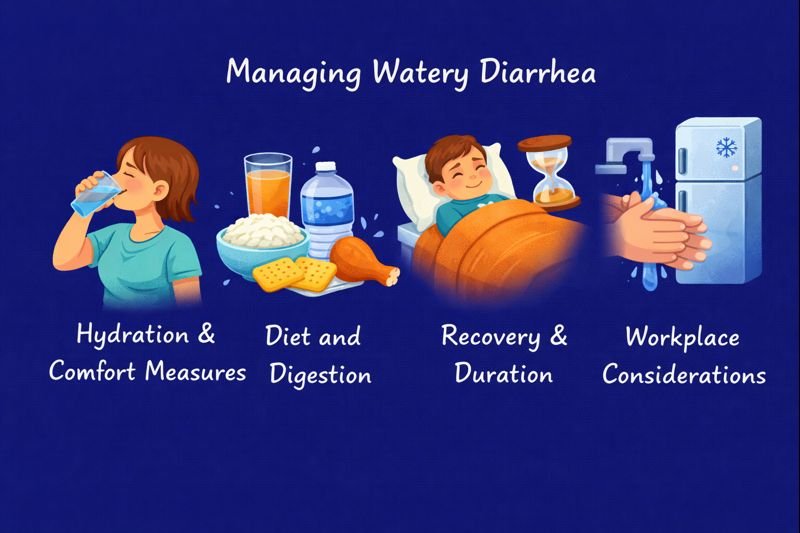
Hydration & Comfort Measures
Because watery stools can increase fluid loss, people often focus on:
-
Drinking fluids more frequently
-
Choosing beverages that feel gentle on the stomach
-
Allowing time for rest
Infants, young children, and older adults may be more affected by fluid loss, so monitoring for signs of dehydration is important in these groups.
Diet and Digestion
Some individuals find that digestion feels easier with:
-
Smaller, more frequent meals
-
Foods that are mild in flavour or texture
-
Gradual return to fibre-rich foods as the system settles
Dietary tolerance varies widely, and no single approach works for everyone.
Recovery & Duration
Most short-term diarrhea resolves as the body clears irritants and rebuilds its normal digestive rhythm. If symptoms last for several days, are accompanied by blood, fever, or severe pain, or occur after travel, individuals may seek assessment to look for underlying causes such as infection or intolerance.
Workplace Considerations
Employers can help limit transmission of infectious causes by:
-
Encouraging proper handwashing
-
Supporting sick-day flexibility
These measures reduce the risk of gastrointestinal illness spreading through shared environments.
FAQ (Educational)
Is watery diarrhea always caused by infection?
No. It can stem from food, medication changes, stress, and digestive sensitivities as well as infectious sources.
How long does diarrhea usually last?
Many short-term cases settle within a few days, but duration depends on the cause.
Can dehydration occur?
Yes. Fluid loss is higher during diarrhea, so hydration is important—especially for young children and older adults.
When do people seek assessment?
Persistent, severe, or unusual symptoms may prompt individuals to consult healthcare professionals for further evaluation.
Educational Note
This article supports general first aid and digestive health awareness. Digestive symptoms vary widely, and healthcare professionals can help identify contributing factors when symptoms persist.
About The Author

Mark Kascha
Certified First Aid Instructor Trainer with 30+ years of real-world experience, including lifeguarding, workplace emergency response, and first aid program development across Canada. Has worked with WorkSafeBC, WSIB, and Manitoba Health.
Last reviewed: March 2026