
 What Is Tonsillitis?
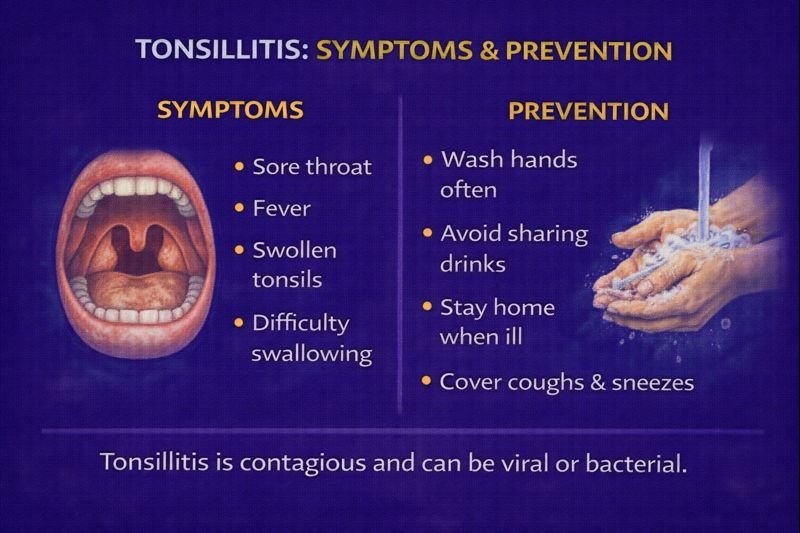
Tonsillitis refers to inflammation or infection of the tonsils — small lymphatic tissues located at the back of the throat that help defend against germs entering through the mouth and nose. The condition is common in childhood but can occur at any age.
Relevance for First Aid, Public Settings & Workplaces
Tonsillitis spreads through respiratory droplets, making it more common in settings where people are in close contact (schools, childcare, workplaces, shared housing). Basic first-aid awareness focuses on comfort care, hydration, and recognizing when symptoms warrant medical assessment.
Scenario (Mild & Realistic)
A child returned home from school complaining of a sore throat and reduced appetite. By evening, the throat looked red and swallowing was uncomfortable. The caregiver encouraged fluids, rest, and monitored symptoms before consulting a healthcare professional the next morning.
Causes
Tonsillitis may result from:
-
Viral infections (e.g., common cold viruses)
-
Bacterial infections (e.g., group A strep)
Because viruses are more common, many mild cases resolve without medical treatment. Bacterial causes may require medical management.
Symptoms
Symptoms vary by age and severity. Common examples include:
-
Sore throat or scratchy voice
-
Fever or chills
-
Swollen or red tonsils
-
White or yellow patches on tonsils
-
Painful swallowing
-
Earache or headache
-
Stiff neck
-
Reduced appetite (especially in children)
-
Irritability or drooling in young children
If breathing becomes difficult due to swelling, prompt medical care is required.
Diagnosis
Healthcare professionals may:
-
Examine the throat and neck
-
Ask about symptoms and exposure
-
Swab the throat for testing to identify potential bacterial infection
First Aid & Home Comfort Measures
For many mild viral cases, symptom relief focuses on comfort and hydration. Public first-aid education commonly highlights:
-
Drinking plenty of fluids
-
Resting and reducing irritants (cold air, smoke)
-
Gargling warm salt water (for older children and adults)
-
Using lozenges (if age-appropriate)
-
Using a humidifier for dry indoor air
Healthcare professionals determine whether additional treatment, antibiotics, or follow-up is needed.
Complications
Most cases resolve within 7–10 days, but bacterial tonsillitis can occasionally lead to complications if untreated. Recurrent cases or persistent symptoms may be assessed for possible tonsil surgery (tonsillectomy), based on clinical guidance.
Prevention
Since tonsillitis can spread between people:
-
Practise regular handwashing
-
Avoid sharing drinks or utensils
-
Stay home when actively ill
-
Cover coughs and sneezes
-
Avoid close contact with individuals who have active respiratory infections
FAQ — Tonsillitis
1. Is tonsillitis contagious?
Yes. It can spread through coughing, sneezing, or shared contact.
2. Who gets tonsillitis most often?
Children experience it more frequently, but adults can also be affected.
3. Does every case need antibiotics?
No. Many cases are viral. Healthcare professionals determine when antibiotics are appropriate.
4. Can tonsillitis return?
Recurrent cases are possible, especially in childhood.
5. How long does tonsillitis last?
Many mild cases improve in about a week to 10 days.
Educational Note
This article supports public understanding of tonsillitis symptoms, first-aid comfort measures, and when to seek medical assessment. Diagnosis and treatment decisions are made by healthcare professionals.
About The Author

Mark Kascha
Certified First Aid Instructor Trainer with 30+ years of real-world experience, including lifeguarding, workplace emergency response, and first aid program development across Canada. Has worked with WorkSafeBC, WSIB, and Manitoba Health.
👉 [View full credentials]🔗 View LinkedIn Profile
Last reviewed: March 2026