
Strawberry Allergy: Symptoms, Risks, and First Aid Awareness in Canada
Understanding Strawberry Allergy
Strawberries are widely enjoyed in desserts, snacks, and beverages and are often promoted for their antioxidant properties. Despite their nutritional benefits, strawberries are also a common food allergen, particularly in children. For some individuals, eating strawberries can trigger allergic reactions that range from mild oral discomfort to more serious, whole-body symptoms.
Recognizing early signs of strawberry allergy is important for first aid awareness and workplace or school safety.
Why This Matters for First Aid and Workplaces in Canada
Strawberries are frequently used in cafeterias, catered events, childcare settings, schools, and food service environments across Canada. They are also common ingredients in flavourings, desserts, and processed foods. First aid awareness helps people recognize allergy symptoms early, avoid further exposure, and respond appropriately if symptoms escalate.
A Realistic Scenario
At a workplace lunch event, an employee eats a dessert topped with fresh strawberries. Within an hour, they feel tingling and itching in their mouth and notice mild lip swelling. A coworker trained in first aid recognizes this as a possible food allergy, helps the employee avoid further exposure, and monitors symptoms in case they worsen.
Oral Symptoms of Strawberry Allergy
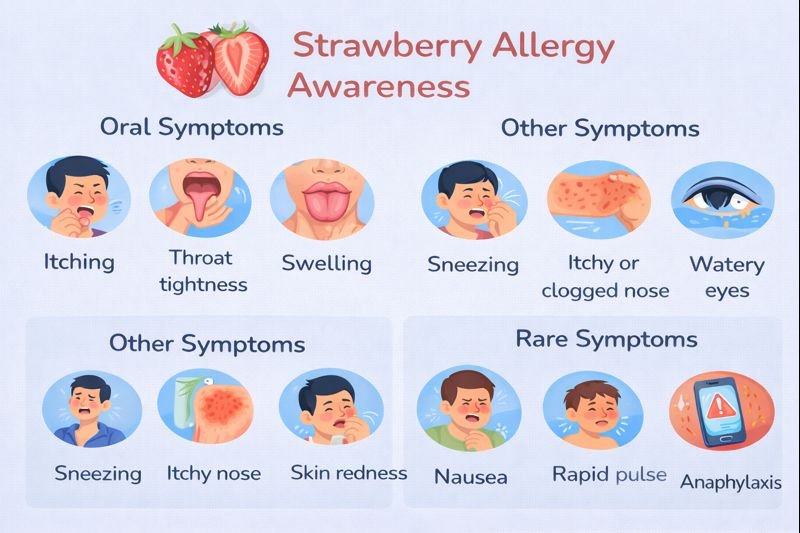 Symptoms of strawberry allergy often appear within minutes to two hours after eating the fruit. The most common early symptoms affect the mouth and throat.
These may include:
-
Itching in the mouth or throat
-
Tightness in the throat
-
Swelling of the lips, tongue, or inner cheeks
-
Hives inside the mouth
-
Burning or prickling sensations in the gums, lips, tongue, or cheeks
These oral symptoms are often the first warning signs and should not be ignored.
Other Common Symptoms
In addition to oral symptoms, strawberry allergy may also cause reactions in other parts of the body, such as:
-
Sneezing and runny nose
-
Nasal itching or congestion
-
Redness or swelling of skin that contacted the fruit
-
Watery or itchy eyes
Symptoms can involve the skin, respiratory system, or digestive system.
Rare but Serious Symptoms
In uncommon cases, strawberry allergy may lead to more serious reactions, including:
-
Chest discomfort or tightness
-
Asthma symptoms or breathing difficulty
-
Generalized itching (pruritus)
-
Nausea, vomiting, diarrhea, or stomach cramps
-
Rapid heartbeat
-
Dizziness, fainting, or sudden drop in blood pressure
-
Anaphylaxis, a severe and potentially life-threatening allergic reaction
Because allergic reactions can escalate, monitoring symptoms closely is critical.
First Aid Awareness and Management
From a first aid perspective, the focus is on recognition, avoidance, and escalation:
-
Stop eating the suspected food immediately
-
Avoid further exposure to strawberries or strawberry-containing foods
-
Monitor for spreading symptoms or breathing difficulty
-
Follow workplace or school emergency response procedures
-
Seek urgent medical care if severe symptoms develop
First aid training emphasizes early recognition and knowing when emergency help is needed.
Strawberry Allergy in Children
Children are more likely to develop strawberry allergy than adults. Strawberries are often used as flavouring in:
-
Ice cream
-
Yogurt
-
Candy and chocolate
-
Baked goods
Because strawberries may not always be obvious in foods, caregivers and educators should monitor children closely if symptoms appear after eating.
Prevention and Avoidance
Preventing reactions involves careful avoidance and awareness:
-
Check ingredient lists when eating out or at social events
-
Be aware that strawberries may appear in sauces, desserts, and flavourings
-
Inform caregivers, coworkers, or food handlers about the allergy
-
Watch for possible reactions to related fruits if advised by a healthcare professional
Some individuals tolerate white strawberry varieties, which lack certain proteins found in red strawberries, although tolerance varies.
Frequently Asked Questions (FAQ)
How quickly do strawberry allergy symptoms appear?
Symptoms often begin within minutes but may take up to two hours to develop.
Are strawberry allergies more common in children?
Yes. Children are more frequently affected, though some outgrow the allergy over time.
Can strawberry allergy cause breathing problems?
In rare cases, strawberry allergy can trigger asthma symptoms or breathing difficulty.
Is strawberry allergy always severe?
No. Many reactions are mild, but severe reactions can occur and require emergency care.
Why is first aid awareness important for food allergies?
Early recognition and prompt response help prevent complications and delays in care.
Educational Note
This article is intended for general first aid and workplace safety education in Canada. It supports awareness of strawberry allergy but does not replace medical assessment or emergency care when needed.
About The Author

Mark Kascha
Certified First Aid Instructor Trainer with 30+ years of real-world experience, including lifeguarding, workplace emergency response, and first aid program development across Canada. Has worked with WorkSafeBC, WSIB, and Manitoba Health.
Last reviewed: March 2026