 A seizure is a temporary change in the brain’s electrical activity. Some seizures involve noticeable movements or loss of control, while others may be subtle or go unnoticed. Seizures can be linked to injuries, illness, or neurological conditions, and may require medical assessment—especially when they are new, recurrent, or unexplained.
Seizure awareness matters at home, in schools, recreation settings, and workplaces, particularly where falls or secondary injuries could occur.
Scenario
During a lunchtime break at college, a student pauses mid-sentence, stares blankly for several seconds, then resumes eating. Friends check in to make sure they are okay. Later, the student explains they sometimes have brief absence seizures and follows a care plan with their healthcare team.
Types of Seizures
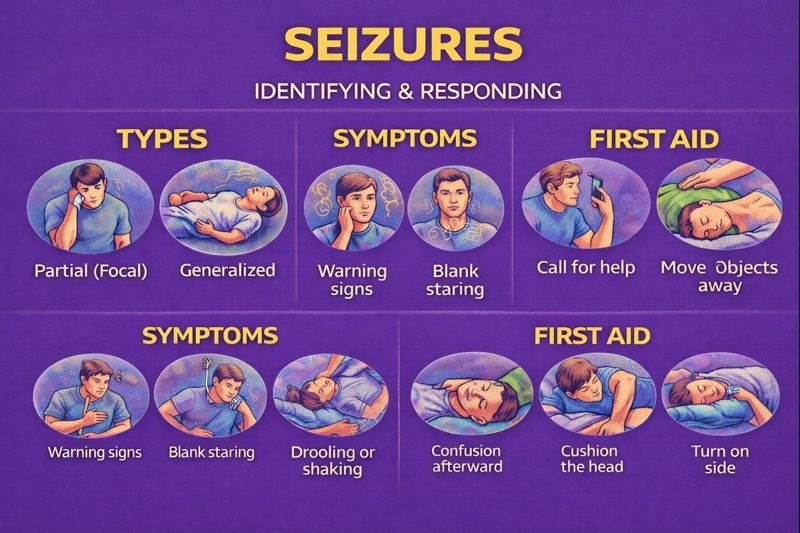
Seizures may be grouped into two broad categories:
Focal (Partial) Seizures
-
Originate in one area of the brain
-
May involve altered sensations, brief confusion, or small movements
Generalized Seizures
-
Involve both sides of the brain
-
May include tonic-clonic seizures (formerly “grand mal”) with full-body stiffening and rhythmic movement
Seizures may also follow illnesses, head injuries, electrolyte disturbances, or other temporary medical conditions.
Warning Signs (Aura-Like Symptoms)
Some individuals notice sensations before a seizure, such as:
-
Dizziness
-
Sudden fear or anxiety
-
Nausea or stomach discomfort
-
Changes in taste, smell, or vision
Not everyone experiences warnings.
Common Symptoms During a Seizure
Symptoms vary widely and may include:
-
Brief staring or unresponsiveness
-
Uncontrolled muscle movements
-
Drooling or altered mouth movements
-
Sudden collapse or fall
-
Rigid body or rhythmic shaking
-
Rapid eye movements
-
Temporary changes in awareness or mood
-
Loss of bladder or bowel control (some cases)
-
Confusion or tiredness afterward
Episodes typically last a few seconds to a few minutes.
Possible Causes
Seizures may occur due to:
-
Fever (in children)
-
Illness or infection
-
Low blood sugar
-
Electrolyte imbalance
-
Alcohol or drug withdrawal
-
Stroke
-
Epilepsy
-
Brain disorders present at birth
-
Lack of oxygen
-
Kidney or liver conditions
Identifying the cause can guide long-term management.
First Aid Awareness
If a person is having a seizure:
Do:
-
Stay calm and stay with them
-
Gently guide away objects to prevent injury
-
Cushion the head if possible
-
Roll onto their side when safe to support breathing
-
Observe the duration and symptoms
Do Not:
-
Do not restrain movements
-
Do not place anything in the mouth
-
Do not give food, drink, or medications during the episode
When to Seek Emergency Assistance
Call emergency services if:
-
The seizure lasts longer than 5 minutes
-
A second seizure occurs without recovery
-
Breathing remains difficult afterward
-
The person is injured during the seizure
-
It is their first known seizure
-
The person does not regain awareness in a reasonable time
Prevention & Management
Prevention depends on cause. Individuals with epilepsy may benefit from routine medical follow-up, medication management, or lifestyle adjustments under healthcare supervision. Some seizures related to injury or illness may not recur once the underlying condition is treated.
FAQ (Educational, Non-Diagnostic)
Can someone be awake during a seizure?
Yes. Many focal or absence seizures occur without loss of consciousness.
Are seizures always linked to epilepsy?
No. Seizures can occur due to illness, metabolic changes, injury, or withdrawal.
Is it dangerous to place something in the mouth during a seizure?
No objects should be placed in the mouth; it can cause choking or dental injury.
Do seizures always require emergency care?
Not always. However, prolonged seizures, first-time events, or injury-associated events warrant immediate medical attention.
Educational Note
This article provides public first aid and safety education. Assessment, diagnosis, and medical planning are completed by qualified healthcare professionals.
About The Author

Mark Kascha
Certified First Aid Instructor Trainer with 30+ years of real-world experience, including lifeguarding, workplace emergency response, and first aid program development across Canada. Has worked with WorkSafeBC, WSIB, and Manitoba Health.
👉 [View full credentials]🔗 View LinkedIn Profile
Last reviewed: March 2026