 What is an inflamed elbow joint?
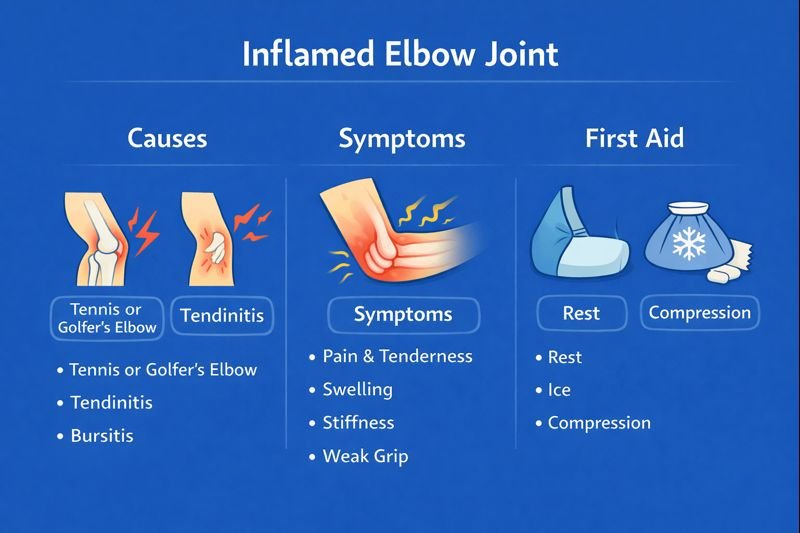
Elbow inflammation can involve the joint itself or nearby soft tissues such as tendons, ligaments, bursae, and muscles. Common examples include bursitis, tennis elbow, golfer’s elbow, and tendinitis. Inflammation may lead to discomfort, reduced range of motion, and swelling around the joint.
Workplace & Canadian first aid relevance
Elbow irritation is seen in occupations and recreational settings that involve repetitive grip, forceful wrist movements, tool use, lifting, or racquet sports. Basic first-aid awareness can support comfort, safe return to activity, and early recognition of persistent symptoms.
Scenario: Mild workplace repetitive strain
A warehouse employee noticed soreness on the outside of the elbow after a week of lifting small boxes. Swelling was mild, and discomfort increased when gripping. A coworker with workplace first-aid training suggested resting the arm over the weekend and avoiding repetitive lifting until symptoms eased. The employee later sought guidance from a clinician about modifying tasks.
Common causes & contributing factors
Inflamed elbow joints may develop from:
-
Repetitive motion (e.g., tennis, golf, manual work)
-
Tendon irritation at the elbow (tennis elbow = outer elbow; golfer’s elbow = inner elbow)
-
Bursitis (bursa irritation/swelling)
-
Bruises or direct impact
-
Less commonly, fractures or other structural injuries
Activities involving grip force, tool vibration, or abrupt wrist motion can contribute to discomfort.
Symptoms
Symptoms may include:
-
Local pain (inner or outer elbow)
-
Swelling or warmth
-
Tenderness during grip or lifting
-
Reduced range of motion
-
Stiffness after rest
-
Discomfort during sports or repetitive work
First aid & management (educational overview)
General first-aid awareness focuses on reducing irritation and supporting recovery:
-
Resting from aggravating activities
-
Applying cold packs at intervals to support comfort
-
Using light compression to reduce swelling (elastic wraps or sleeves)
-
Considering temporary task modification in the workplace
Individuals with persistent, worsening, or unexplained swelling often benefit from clinical evaluation to determine the underlying cause and whether rehabilitation exercises, braces, or other interventions may help.
Medication awareness (non-prescriptive)
Some people use over-the-counter pain or anti-inflammatory medications for symptom relief. Suitability depends on health conditions, age, and other medications. A healthcare professional can provide guidance if symptoms persist or if medication questions arise.
When to seek further assessment
Healthcare assessment may be useful when:
-
Pain persists despite rest
-
Swelling continues or worsens
-
Injury involves a fall or direct blow
-
Grip strength noticeably decreases
-
Work tasks cannot be completed comfortably
Prevention & workplace considerations
Helpful strategies may include:
-
Gradual return to sport or work tasks
-
Equipment or tool adjustments (e.g., grip modifications)
-
Stretching and strengthening guided by a professional
-
Task rotation to reduce repetitive strain
FAQ
Is tennis elbow only caused by tennis?
No. It can occur from any activity involving repetitive gripping or wrist extension, including workplace tasks.
Can elbow inflammation appear suddenly?
Yes. It may follow a specific incident, but often develops gradually from repetitive use.
Does swelling always mean a serious injury?
Not necessarily. Swelling can accompany irritation, bursitis, or minor strains, but persistent swelling warrants evaluation.
Can elbow issues affect daily tasks?
Yes. Activities such as lifting, typing, or opening jars may feel uncomfortable during flare-ups.
Educational note
This post supports public education and first-aid awareness. Individuals with ongoing pain or swelling can seek clinical guidance for assessment and care options.
About The Author

Mark Kascha
Certified First Aid Instructor Trainer with 30+ years of real-world experience, including lifeguarding, workplace emergency response, and first aid program development across Canada. Has worked with WorkSafeBC, WSIB, and Manitoba Health.
Last reviewed: March 2026