Hypothermia occurs when the body loses heat faster than it can produce it, causing the core temperature to drop below about 35°C (95°F). It can start with mild shivering and progress to serious changes in thinking, movement, and consciousness if not addressed.
In Canada, where cold weather, wind, and wet conditions are common, hypothermia awareness is especially important for outdoor workers, winter sports, and everyday activities in cold seasons.
First Aid & Workplace Relevance (Canadian context)
 Hypothermia can affect:
-
Outdoor workers (construction, utilities, forestry, delivery)
-
Winter sports participants (skiing, snowboarding, ice fishing, skating)
-
People experiencing homelessness or inadequate heating
-
Drivers stranded in winter conditions
-
Campers, hikers, and paddlers in cold or wet weather
Workplaces with cold exposure risks often include cold-stress prevention in their health and safety programs.
Scenario (with trained first aid rescuer)
During a winter field trip, a student’s clothes became wet after playing near a snowbank. After some time outside, they began shivering intensely and speaking slowly. A trained first aid rescuer noticed the change, brought the student indoors, helped them remove wet clothing, wrapped them in dry layers and blankets, and asked another staff member to monitor and call for medical advice. Because the student seemed confused and extremely tired, emergency services were contacted for further assessment.
Signs and Symptoms of Hypothermia
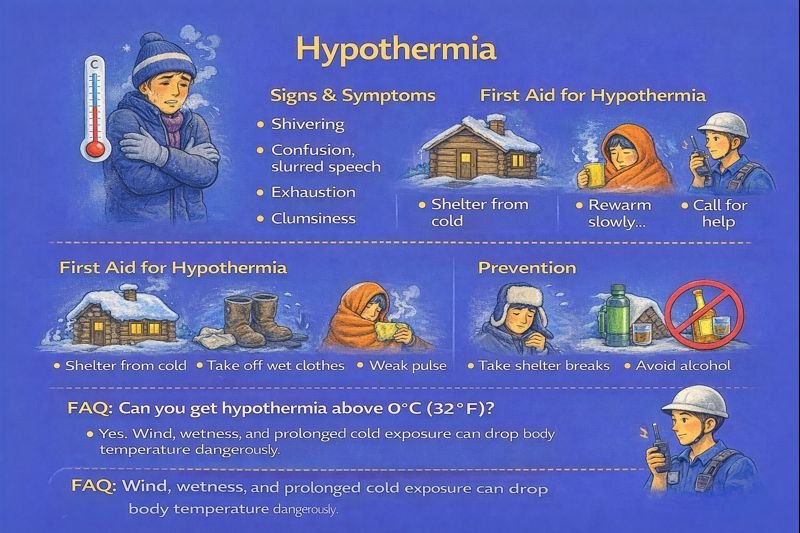
Symptoms may appear gradually and can be easy to miss. They may include:
-
Shivering (mild or severe)
-
Cold, pale, or bluish skin
-
Slurred or slow speech
-
Confusion, poor judgment, or irritability
-
Fatigue or unusual drowsiness
-
Clumsiness or loss of coordination
-
Memory problems
In more severe hypothermia, shivering may stop, consciousness can decrease, and breathing or pulse may become slow and difficult to detect.
Causes & Mechanisms
Hypothermia occurs when heat loss exceeds heat production. This can be caused by:
-
Prolonged exposure to cold air, especially with wind (wind chill)
-
Wearing wet clothing in cool or cold conditions
-
Immersion in cold water
-
Inadequate clothing or shelter in winter
-
Fatigue, dehydration, or certain medical conditions
-
Use of alcohol, which can alter heat perception and increase heat loss
Wet and windy conditions can lead to hypothermia more quickly than cold alone.
First Aid / Management (Public-Education Level)
If hypothermia is suspected, first aid education commonly recommends:
-
Ensure scene safety
-
Protect both the responder and the person from cold and hazards.
-
-
Move to a warmer, sheltered area if safe to do so
-
Indoors, a heated building, or a vehicle out of wind and wet conditions.
-
-
Remove wet clothing
-
Replace with dry layers, blankets, or sleeping bags if available.
-
-
Warm the core areas first
-
Focus on the chest, neck, armpits, and groin using blankets, warm (not hot) packs wrapped in cloth, or body heat.
-
Avoid direct high heat (e.g., hot water, heating pads on high) which can lead to complications.
-
-
Offer warm, non-alcoholic drinks
-
Only if the person is awake, able to swallow, and can follow instructions.
-
Avoid alcohol, which increases heat loss and impairs judgment.
-
-
Call for emergency assistance
-
Especially if there is confusion, slurred speech, severe shivering, loss of coordination, or decreased responsiveness.
-
If the person becomes unresponsive or you suspect cardiac arrest, follow your local emergency guidance and first aid training (which may include CPR) until help arrives.
Important Considerations
-
Shivering stopping is not always a good sign.
When hypothermia worsens, shivering can slow or stop as the body’s ability to generate heat declines. -
Rewarming can be complex in severe hypothermia.
As cooler blood from the arms and legs returns to the core, core temperature may initially drop further. This is one reason medical supervision is important in more serious cases. -
Alcohol does not “warm you up.”
Alcohol moves warm blood toward the skin surface, creating a feeling of warmth while increasing heat loss and dehydration. -
Frostbite can occur alongside hypothermia.
Extremities (fingers, toes, nose, ears) can freeze in very cold conditions and may require separate assessment.
Prevention & Workplace / Outdoor Safety
To reduce hypothermia risk:
-
Dress in layers (moisture-wicking base, insulating mid-layer, wind/water-resistant outer layer)
-
Wear hats, gloves, scarves, and warm footwear
-
Keep clothing dry; change out of wet items promptly
-
Plan for breaks in warm shelters or vehicles
-
Stay hydrated and nourished during outdoor activities
-
Avoid alcohol and drugs that impair judgment in cold environments
-
Include cold weather safety in workplace orientations and toolbox talks
FAQ
1. Can hypothermia occur above 0°C (32°F)?
Yes. Hypothermia can occur in cool, wet, or windy conditions, especially if clothing is damp or people are inactive for long periods.
2. Is shivering always present?
Shivering is common early on. In more severe hypothermia, shivering may decrease or stop, which can be a concerning sign.
3. How quickly can hypothermia develop in cold water?
Cold water can draw heat away from the body much faster than cold air. Even a few minutes in very cold water can be dangerous.
4. Why avoid direct high heat on very cold skin?
Intense heat can damage the skin and may cause sudden changes in blood flow. Gradual, controlled warming is safer.
5. Who is more at risk?
Infants, older adults, people with certain medical conditions, outdoor workers, unhoused individuals, and those without adequate clothing or shelter are at increased risk.
Educational Note
This article is intended for public education and first aid awareness. It does not replace professional training, medical assessment, or emergency care. If hypothermia is suspected—especially with confusion, decreased consciousness, or severe cold exposure—contact emergency services promptly.
About The Author

Mark Kascha
Certified First Aid Instructor Trainer with 30+ years of real-world experience, including lifeguarding, workplace emergency response, and first aid program development across Canada. Has worked with WorkSafeBC, WSIB, and Manitoba Health.
👉 [View full credentials]🔗 View LinkedIn Profile
Last reviewed: March 2026