
 Understanding GERD
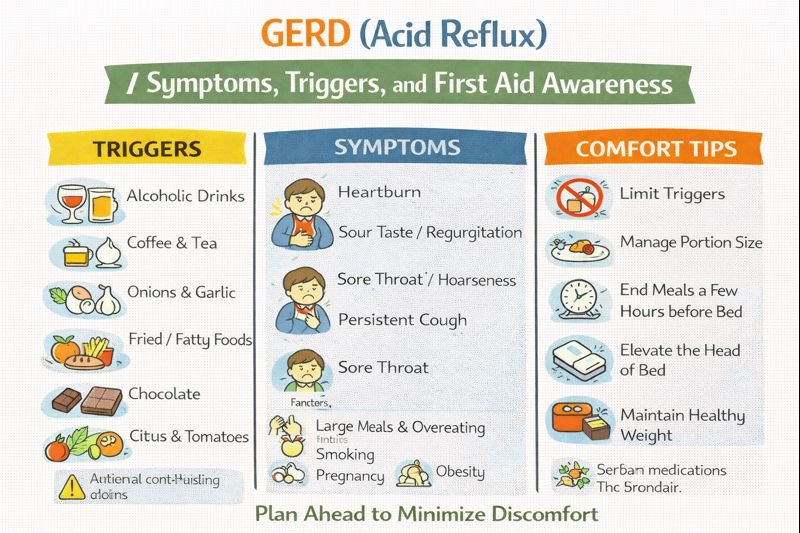
Gastroesophageal reflux disease (GERD) is a digestive condition in which stomach acid flows back into the esophagus. This backward movement, known as reflux, can cause frequent heartburn and other uncomfortable symptoms. While occasional reflux is common, ongoing or poorly managed GERD can irritate the esophagus over time and lead to complications. Awareness and early lifestyle planning play an important role in managing symptoms effectively.
First Aid & Workplace Relevance in Canada
GERD symptoms can interfere with focus, sleep, and comfort at work. In Canadian workplaces, employees may experience reflux during long shifts, after heavy meals, or while working in seated or bent positions. First aid awareness helps individuals recognize early symptoms, adjust posture or meal timing, and reduce triggers in everyday settings without alarm.
A Short Realistic Scenario
After a late catered meeting, an employee develops a burning sensation in the chest and a sour taste in the mouth. A colleague familiar with first aid awareness suggests staying upright, sipping water, and avoiding lying down during the commute home. By adjusting posture and meal timing, the discomfort gradually eases.
Determining Common GERD Triggers
Managing GERD often begins with identifying factors that weaken or irritate the lower esophageal sphincter, the muscle that normally keeps stomach contents from moving upward.
Common Food and Drink Triggers
Many people notice symptoms after consuming:
-
Coffee and tea
-
Carbonated drinks
-
Fried or high-fat foods
-
Chocolate
-
Citrus fruits
-
Tomatoes and tomato-based products
-
Onions and garlic
-
Mint
-
Spicy foods
Triggers vary between individuals, and not everyone reacts to the same foods.
Other Contributing Factors
GERD symptoms may also be influenced by:
-
Large or heavy meals
-
Overeating
-
Smoking
-
Obesity
-
Pregnancy
-
Tight or restrictive clothing around the waist
-
Certain medications
Recognizing patterns helps guide practical adjustments.
Common Symptoms of GERD
Heartburn is the most well-known symptom and may feel like a burning sensation behind the breastbone. It can sometimes be intense enough to feel concerning, especially when chest discomfort is unfamiliar.
Other symptoms may occur with or without heartburn and include:
-
Sour or bitter taste in the mouth
-
Regurgitation of food or fluid
-
Sore throat
-
Persistent cough
-
Hoarseness, especially in the morning
Symptoms may worsen after meals, when bending over, or when lying down.
First Aid Awareness and General Management
GERD symptoms are often managed through everyday lifestyle adjustments rather than urgent interventions.
Avoiding Known Triggers
Once personal triggers are identified, limiting or avoiding them can significantly reduce symptoms.
Meal Timing and Portion Awareness
-
Eat smaller meals rather than large portions
-
Avoid lying down for at least 2–3 hours after eating
-
Be mindful of late-evening meals
Posture and Elevation
-
Stay upright after meals
-
Elevate the head of the bed slightly using blocks or a wedge pillow
-
Avoid stacking regular pillows, which may worsen reflux
Weight and Lifestyle Considerations
Maintaining a healthy weight through balanced nutrition and regular activity may help reduce pressure on the stomach and lower esophageal sphincter.
Workplace Considerations
-
Encourage flexible meal breaks when possible
-
Allow upright posture after meals
-
Reduce prolonged bending tasks following eating
-
Support awareness of dietary sensitivities
-
Include digestive comfort topics in wellness or first aid education
Frequently Asked Questions
Is heartburn always GERD?
No. Occasional heartburn can occur without GERD, but frequent symptoms may suggest ongoing reflux.
Can GERD cause coughing or hoarseness?
Yes. Acid irritation can affect the throat and vocal cords, even without chest discomfort.
Why do symptoms worsen at night?
Lying flat allows stomach acid to move upward more easily, especially after meals.
Do all trigger foods affect everyone the same way?
No. Triggers are highly individual and vary from person to person.
How can first aid awareness help?
Understanding early symptoms and simple comfort strategies helps reduce discomfort and prevent escalation.
Educational Note
This information is provided for general public education and first aid awareness. Digestive symptoms can vary widely, and learning how to recognize patterns and apply everyday comfort strategies supports calm, informed decision-making.
About The Author

Mark Kascha
Certified First Aid Instructor Trainer with 30+ years of real-world experience, including lifeguarding, workplace emergency response, and first aid program development across Canada. Has worked with WorkSafeBC, WSIB, and Manitoba Health.
👉 [View full credentials]🔗 View LinkedIn Profile
Last reviewed: March 2026