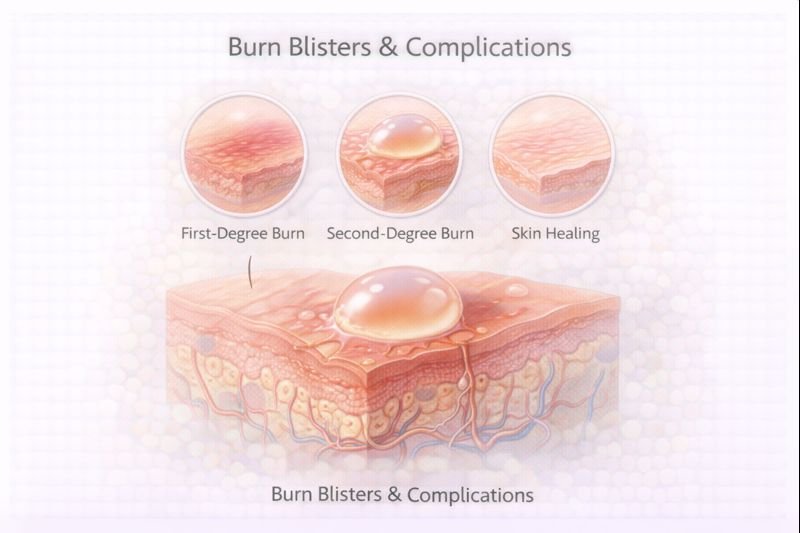
 Burn blisters can occur after exposure to heat, chemicals, electricity, or even sun radiation. Burns are commonly categorized as first-degree, second-degree, or third-degree, depending on how deep the injury goes into the skin. The possible complications vary significantly based on the area affected and the severity.
In Canada, mild burns are often managed at home, but more serious burns require prompt medical attention. This is especially relevant in workplaces where burns may result from industrial equipment, hot surfaces, or chemical exposure—one reason why workplace safety training, including basic first aid and safe handling procedures, plays an important role in preventing injuries.
Peeling & Healing
As skin begins to heal from first- or second-degree burns, the damaged outer layer can peel away. Although peeling looks concerning, it typically means new skin cells are replacing damaged tissue.
Risk of Infection
Infection is one of the major complications of burn blisters. Once the skin barrier is disrupted, bacteria can enter more easily. Signs of infection include:
-
Redness or swelling
-
Increasing pain
-
Warmth at the site
-
Pus or drainage
In more serious cases, red streaks spreading upward from the burn may indicate a bloodstream infection. Children, older adults, and individuals with weakened immune systems should be assessed sooner.
Pain & Sensitivity
Burn blisters are often painful due to exposed nerve endings. Cool compresses and gentle first aid measures may help, but the skin still needs time to repair itself. OTC pain medications may offer relief if appropriate for the individual.
Shock (Severe Burns)
Large or deep burns can lead to shock, a medical emergency. Warning signs include:
-
Cool, clammy skin
-
Shallow or weak breathing
-
Weakness or confusion
Emergency medical help should be sought immediately.
Skin Cancer (Long-Term Risk)
Repeated severe sunburns—particularly during childhood—are associated with an increased lifetime risk of skin cancer. Some forms may appear years later as dark or persistent lesions that do not heal or frequently re-open.
When to Seek Medical Care
Seek prompt medical attention if:
-
Blisters cover a large area
-
The burn is on the face, hands, feet, or genitals
-
Signs of infection develop
-
The individual experiences difficulty breathing, shock, or severe pain
-
The burn was caused by chemicals, electricity, or fire
Serious burn injuries may require wound management, monitoring for infection, or advanced medical treatment.
Workplace & Safety Connection (Canada Focus)
Burns are a common workplace hazard in food service, industrial settings, and skilled trades. Employers in Canada rely on hazard controls, PPE, and safety training to reduce preventable injuries. Workers who complete first aid and workplace safety courses are better equipped to respond to burns quickly, recognize complications, and know when emergency care is needed.
Educational Disclaimer
This article is for learning and awareness only. It does not replace medical assessment, diagnosis, or treatment. If someone experiences a burn or blister with concerning symptoms, seek care from a qualified healthcare professional or local emergency services.
About The Author

Mark Kascha
Certified First Aid Instructor Trainer with 30+ years of real-world experience, including lifeguarding, workplace emergency response, and first aid program development across Canada. Has worked with WorkSafeBC, WSIB, and Manitoba Health.
👉 [View full credentials]🔗 View LinkedIn Profile
Last reviewed: March 2026