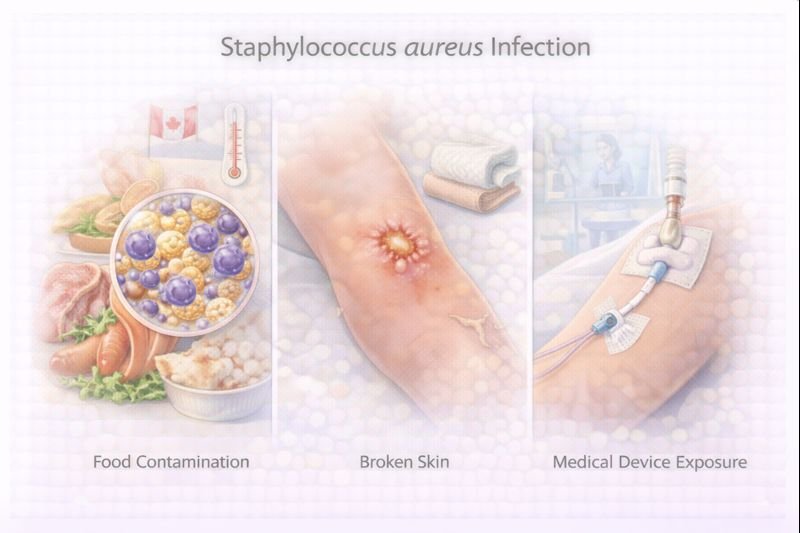
 Staphylococcus aureus (“staph”) is a common type of bacteria that lives on the skin and inside the nose — often without causing illness. When the bacteria enter the body through food, broken skin, or invasive medical equipment, infections can develop. In some cases, untreated staph infections can lead to serious complications.
Staph exposure can occur in homes, workplaces, daycares, long-term care facilities, food handling environments, and healthcare settings across Canada. Prompt recognition and basic hygiene practices play a major role in prevention.
How Staph Spreads
1. Food Contamination
Staphylococcus aureus is salt- and heat-tolerant, allowing it to multiply in certain foods, especially when refrigeration or safe handling practices are missed.
Common food-related symptoms include:
-
Nausea
-
Vomiting
-
Diarrhea
-
Abdominal discomfort
These symptoms may appear within 30 minutes of eating contaminated food. Once swallowed, the illness isn’t contagious to others — it’s the toxin produced by the bacteria that causes the reaction.
Canadian context: Food safety programs emphasize proper refrigeration, handwashing, avoiding cross-contamination, and maintaining safe cooking and holding temperatures in homes, workplaces, and commercial kitchens.
2. Broken Skin
Staph can enter the body through:
-
Cuts
-
Scrapes
-
Puncture wounds
-
Skin abrasions
-
Surgical wounds
Signs may include:
-
Redness
-
Warmth
-
Local swelling
-
Pus or drainage
These infections can spread between people through direct contact or contaminated items like towels, bandages, or gym equipment.
Workplace note: Roles involving manual labour, sports, childcare, or health care may see increased exposure to skin-related infections due to frequent minor injuries or shared surfaces.
3. Bloodstream Infections (Bacteremia)
If staph enters the bloodstream, more serious infections may develop. Risk is higher in individuals with:
-
Weakened immune systems
-
Diabetes
-
Chronic wounds
-
Medical device use
Bloodstream infections can affect major organs, including the heart, lungs, or bones.
4. Medical Device Exposure
Staph is common in hospitals and long-term care settings. Contaminated devices — such as catheters, feeding tubes, or breathing intubation — can introduce bacteria deeper into the body.
Canadian healthcare facilities follow infection control protocols to reduce device-related risks, but awareness remains important for patients and caregivers.
Prevention & Safety
Reducing staph infections relies on:
-
Hand hygiene
-
Proper wound care
-
Safe food handling
-
Cleaning shared surfaces
-
Avoiding direct contact with open sores
Across Canada, public health guidance and certified training programs reinforce hygiene practices that help prevent staph transmission in both community and workplace environments.
Educational Note: Learning basic first aid skills — including wound care and when to seek professional help — adds confidence during minor infection-related situations. Understanding prevention through food safety and workplace hygiene complements CPR/AED and first aid training offered across Canada and supports overall community safety.
📌 Learning-Only Disclaimer
This information supports general learning, prevention, and awareness. It does not replace medical assessment or treatment. Anyone with symptoms of a possible infection — especially fever, severe pain, or worsening skin changes — should consult a healthcare professional.
About The Author

Mark Kascha
Certified First Aid Instructor Trainer with 30+ years of real-world experience, including lifeguarding, workplace emergency response, and first aid program development across Canada. Has worked with WorkSafeBC, WSIB, and Manitoba Health.
👉 [View full credentials]🔗 View LinkedIn Profile
Last reviewed: March 2026