 What Is Wheezing?
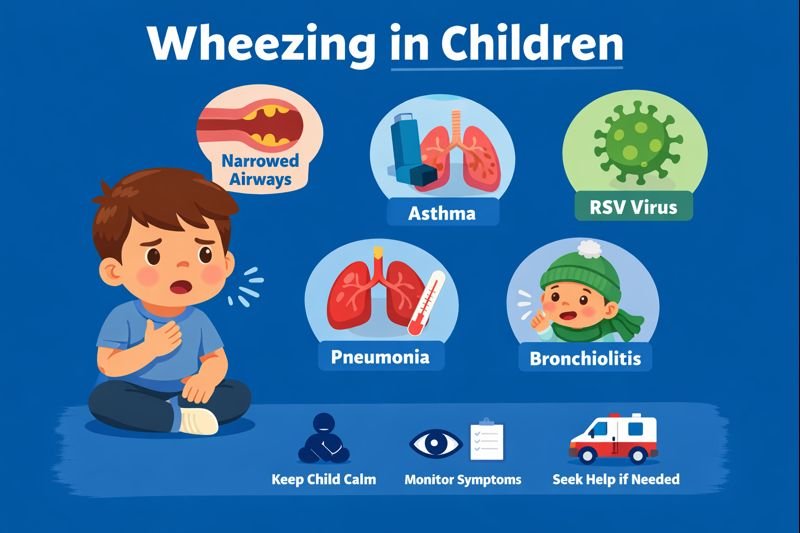
Wheezing is a high-pitched, whistling sound that can occur when a child breathes out. It happens when air moves through narrowed or inflamed lower airways in the lungs. While wheezing is commonly associated with asthma, it can also appear with several other childhood respiratory conditions. Because breathing feels more difficult, children who are wheezing may seem uncomfortable, irritable, or short-tempered.
Wheezing may sometimes be heard without special equipment, but it is often identified more clearly by a healthcare professional using a stethoscope.
Why Wheezing Matters in Canadian First Aid and Workplace Settings
In Canada, many parents, caregivers, educators, and workplace first aiders encounter children through schools, daycares, recreation programs, and family-oriented workplaces. Understanding wheezing helps first aid–trained individuals recognize when a child may be struggling with breathing and when closer monitoring or additional help may be needed. While first aid does not involve diagnosing or treating medical conditions, awareness supports safer responses and timely decisions.
A Simple, Realistic Scenario
During an afternoon program at a community centre, a staff member notices that a young child is breathing faster than usual and making a faint whistling sound when exhaling. The child seems more tired and irritable than earlier in the day. Because the staff member has basic first aid awareness, they stay calm, reduce the child’s physical activity, keep them comfortable, and inform a supervisor so the child’s caregiver can be notified.
Common Symptoms That May Occur with Wheezing
Wheezing may appear on its own or alongside other symptoms, depending on the cause. These can include:
-
Shortness of breath or rapid breathing
-
Coughing, especially during or after activity
-
Chest tightness or discomfort
-
Fatigue or reduced activity
-
Fever or cold-like symptoms (in some infections)
Conditions That Can Cause Wheezing in Children
Several respiratory conditions can narrow or inflame the airways and lead to wheezing.
Asthma
Asthma is a common long-term condition in children that affects the lungs and airways. It often runs in families. In asthma, the airways become inflamed and may produce extra mucus, making breathing more difficult. Wheezing, coughing, and shortness of breath are common features. While asthma cannot be cured, symptoms are often managed over time with medical care.
Pneumonia
Pneumonia is an infection of the lungs that may be caused by bacteria, viruses, fungi, or parasites. Symptoms can vary by age and cause, but may include wheezing, fever, rapid breathing, chest discomfort, chills, or vomiting. Some types resolve more quickly than others, depending on the cause and care received.
Respiratory Syncytial Virus (RSV)
Respiratory syncytial virus is a common viral infection that affects the respiratory tract, particularly in children under two years of age. Symptoms often resemble a cold and may include wheezing, runny nose, mild fever, sore throat, and general discomfort. Because RSV is viral, antibiotics are not effective against it.
Bronchiolitis
Bronchiolitis is a frequent respiratory illness in infants and young children caused by a viral infection. It affects the small airways in the lungs, which can fill with mucus and make breathing harder. Symptoms often include a runny nose, mild fever, cough, and wheezing. While the illness itself may last around one to two weeks, wheezing can persist longer as the airways recover.
First Aid Awareness and General Management
From a first aid perspective, wheezing signals that breathing may be more difficult than usual. Key awareness points include:
-
Keeping the child calm and reducing physical exertion
-
Allowing them to sit in a comfortable position
-
Monitoring breathing and overall comfort
-
Seeking additional help or guidance if symptoms worsen or do not improve
First aid training focuses on recognizing changes, supporting comfort, and knowing when to escalate concerns.
Prevention and Workplace Considerations
While not all causes of wheezing can be prevented, general public health and workplace practices can help reduce risk:
-
Encouraging regular handwashing
-
Reducing exposure to respiratory illnesses when possible
-
Maintaining clean shared environments
-
Supporting smoke-free spaces
-
Promoting awareness of respiratory symptoms among staff and caregivers
These measures are especially relevant in Canadian childcare, education, and community-based workplaces.
Frequently Asked Questions About Wheezing in Children
Is wheezing always linked to asthma?
No. While asthma is a common cause, wheezing can also occur with infections such as pneumonia, bronchiolitis, or respiratory viruses. Each situation is different.
Can wheezing be heard without medical equipment?
Sometimes. Mild wheezing may only be noticeable with a stethoscope, but more pronounced wheezing can occasionally be heard without one.
Why do children with wheezing seem irritable?
Breathing discomfort can make children feel tired or frustrated, which may affect their mood and behaviour.
Does wheezing always mean a serious condition?
Not always. Wheezing can range from mild to more concerning, depending on the cause and accompanying symptoms. Monitoring and awareness are important.
Can wheezing last after an illness improves?
Yes. In some viral conditions, wheezing may continue for weeks as the airways slowly recover, even after other symptoms improve.
Educational Note
This article is intended for general public and workplace education in Canada. It supports first aid awareness and understanding of common respiratory symptoms but does not replace guidance from qualified healthcare professionals.
About The Author

Mark Kascha
Certified First Aid Instructor Trainer with 30+ years of real-world experience, including lifeguarding, workplace emergency response, and first aid program development across Canada. Has worked with WorkSafeBC, WSIB, and Manitoba Health.
👉 [View full credentials]🔗 View LinkedIn Profile
Last reviewed: March 2026