
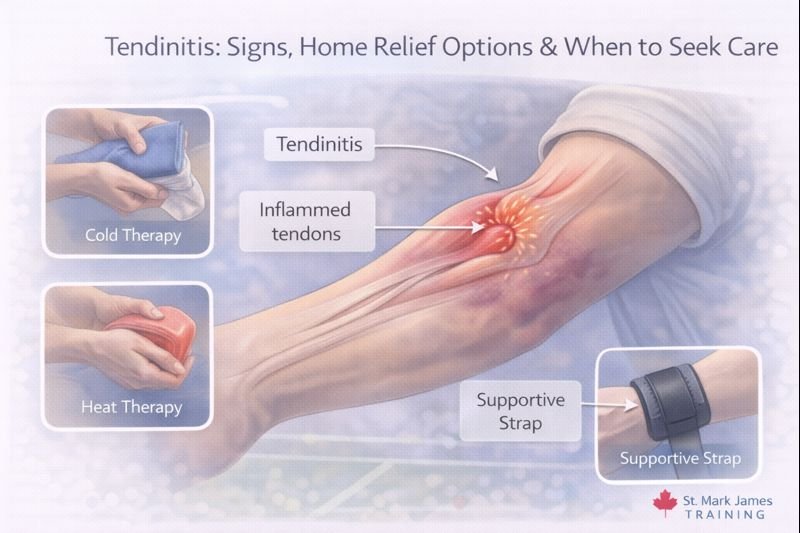
 Tendinitis occurs when a tendon (the connective tissue that links muscle to bone) becomes irritated or inflamed. Although almost any tendon can be affected, the most common areas include the shoulder, elbow, wrist, knee, ankle, and thumb.
For many Canadians, tendinitis develops from repetitive work tasks, household activities, racquet sports, or strength training. Early recognition and good self-care can reduce discomfort and help prevent more serious injury. First aid training—especially workplace-focused programs—can help people identify when home care is appropriate and when medical assessment is needed.
Common At-Home Supports
These measures are considered general first aid information only and are not a substitute for medical assessment if symptoms persist or worsen.
Topical analgesics
Over-the-counter creams, gels, patches or sprays may include ingredients such as menthol, camphor or salicylates. These create a cooling or warming sensation that can temporarily reduce discomfort, although they do not treat the underlying cause.
Cold therapy
Cold is most useful during the first 24–48 hours after irritation or after an activity flare-up.
Cold can help reduce swelling and ease pain. Typical use:
-
15–20 minutes per application
-
Several times per day
-
Do not apply ice directly to the skin
Heat therapy
Heat is often used after swelling has settled, improving blood flow and relaxing surrounding muscles. Typical use:
-
10–20 minutes per application
-
Several times per day
Non-steroidal anti-inflammatory drugs (NSAIDs)
Short courses of common OTC options like ibuprofen, naproxen, or aspirin may reduce pain and inflammation. A healthcare provider should be consulted for safety considerations, especially for children, older adults, or those with medical conditions.
Supportive devices
Forearm straps, braces, or heel lifts may reduce tendon loading during activities. Evidence varies, but some individuals find them helpful during recovery or repetitive workplace tasks.
When to Seek Medical Care
A medical assessment is recommended if:
-
Pain or swelling persists beyond several days
-
Symptoms worsen despite home care
-
Daily work or sport activities become limited
-
There is abrupt, severe pain or difficulty using the limb (possible tendon rupture)
Persistent tendinitis may benefit from physiotherapy, workplace ergonomic adjustments, or diagnostic assessment to rule out more serious injury.
Canadian Context & Safety Training Relevance
Tendinitis commonly affects workers who perform repetitive motions, manual handling, or tool-based tasks—highlighting the value of Canadian occupational health programs and proper injury prevention strategies.
Canadian employers often integrate first aid training, ergonomics, and musculoskeletal injury prevention into safety plans. Programs such as standard first aid, CPR/AED certification, and workplace safety training help ensure early recognition of musculoskeletal injuries and promote safe return-to-work practices.
Educational Disclaimer
This article is for public education only and not a diagnostic or treatment guide. If someone in Canada experiences persistent, worsening, or uncertain injury symptoms, they should seek assessment from a qualified healthcare professional.
About The Author

Mark Kascha
Certified First Aid Instructor Trainer with 30+ years of real-world experience, including lifeguarding, workplace emergency response, and first aid program development across Canada. Has worked with WorkSafeBC, WSIB, and Manitoba Health.
👉 [View full credentials]🔗 View LinkedIn Profile
Last reviewed: March 2026