
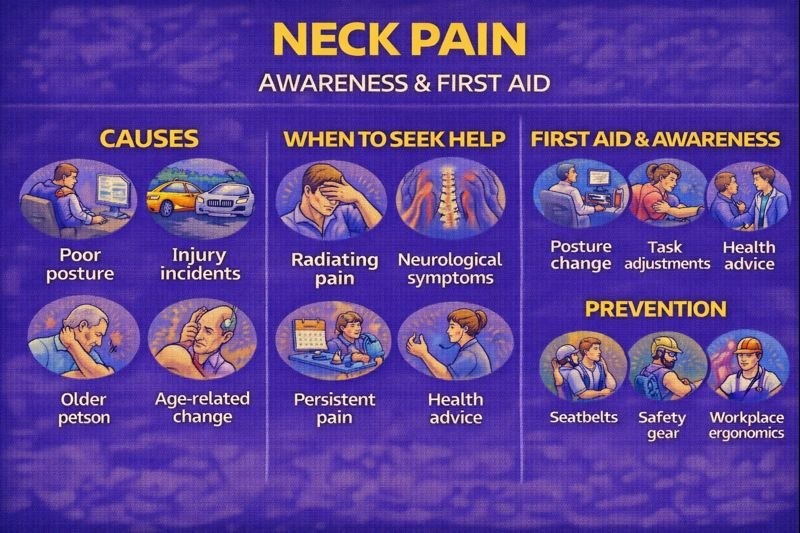
 Neck pain is a common condition that can affect movement, sleep, and daily activities. The neck contains seven cervical vertebrae supported by muscles, ligaments, nerves, and discs. Because it is flexible and supports the head, the neck is more vulnerable to strain and injury than other parts of the spine.
Relevance at Home, Work & Sport
Neck discomfort is often reported in:
-
Office and desk-based jobs
-
Driving and commuting
-
Contact and field sports
-
Trades requiring overhead work
-
Posture-related strain from technology use
Most neck pain is temporary, but persistent or neurological symptoms warrant medical assessment.
Scenario (mild, realistic, non-alarmist)
During a busy semester, Sara began studying long hours using a laptop on a low coffee table. Over several days, she noticed stiffness on the right side of her neck and mild headaches at the base of her skull. After adjusting her workspace and taking regular movement breaks, the discomfort gradually improved.
Common Causes of Neck Pain
Neck pain may be linked to the following:
Muscle & soft tissue strain
-
Sudden movements or awkward positions
-
Repetitive tasks (e.g., typing, phone use, overhead work)
-
Sports involving collisions or rapid direction changes
-
Poor posture during reading, gaming, or studying
Degenerative or age-related changes
Wear-and-tear conditions can affect discs and joints, particularly in adults over 40.
Traumatic injuries
Neck injuries can occur during:
-
Falls
-
Motor vehicle incidents
-
Diving or sports collisions
These may cause soft tissue strain or, in rare cases, structural injury. Emergency assessment is recommended after high-force trauma.
Referred or radiating discomfort
Some neck problems may cause pain that travels to the shoulder, upper back, or arm.
When to Seek Medical Assessment
Assessment by a healthcare professional is recommended when neck pain:
-
Follows a high-impact injury (e.g., fall or collision)
-
Radiates into arms or legs
-
Is accompanied by tingling, weakness, or numbness
-
Lasts longer than expected or interferes with daily activities
-
Is linked to headaches, coordination changes, or neurological symptoms
Medical evaluation may include physical examination and imaging to rule out structural injury.
First Aid & Early Awareness Strategies
Non-emergency neck discomfort may improve through:
-
Reducing aggravating movements
-
Posture and ergonomic adjustment
-
Gentle mobility under guidance of a health professional
-
Workplace or sports task modification
Rehabilitation professionals such as physiotherapists may offer strengthening, mobility, or posture strategies based on individual needs.
Prevention & Workplace Considerations
Helpful approaches include:
-
Regular movement breaks during computer or desk work
-
Lifting and overhead-work training in trades
-
Safe technique in contact sports
-
Seatbelt use in vehicles
-
Fall prevention during winter weather
-
Supportive equipment for cycling, skating, or skiing
Canadian workplaces often incorporate neck and back health into ergonomics and injury prevention programs.
FAQ (Educational)
Is neck pain always caused by injury?
No. Many cases are related to posture, muscle strain, or repetitive tasks.
Can teens or young adults get neck pain?
Yes—especially from phone use, studying, sports, or posture strain.
Does neck pain mean there’s spine damage?
Not usually. Most cases are soft tissue-related, but persistent or neurological symptoms should be assessed.
Why does neck pain sometimes cause headaches?
Tension in upper neck muscles can contribute to headaches at the base of the skull.
Educational Note
This article supports public first aid and injury awareness. Diagnosis, rehabilitation, and medical decision-making are carried out by qualified healthcare professionals.
About The Author

Mark Kascha
Certified First Aid Instructor Trainer with 30+ years of real-world experience, including lifeguarding, workplace emergency response, and first aid program development across Canada. Has worked with WorkSafeBC, WSIB, and Manitoba Health.
👉 [View full credentials]🔗 View LinkedIn Profile
Last reviewed: March 2026