
Latex Allergy: What It Is and Why It Matters in First Aid & Workplaces (Canada)
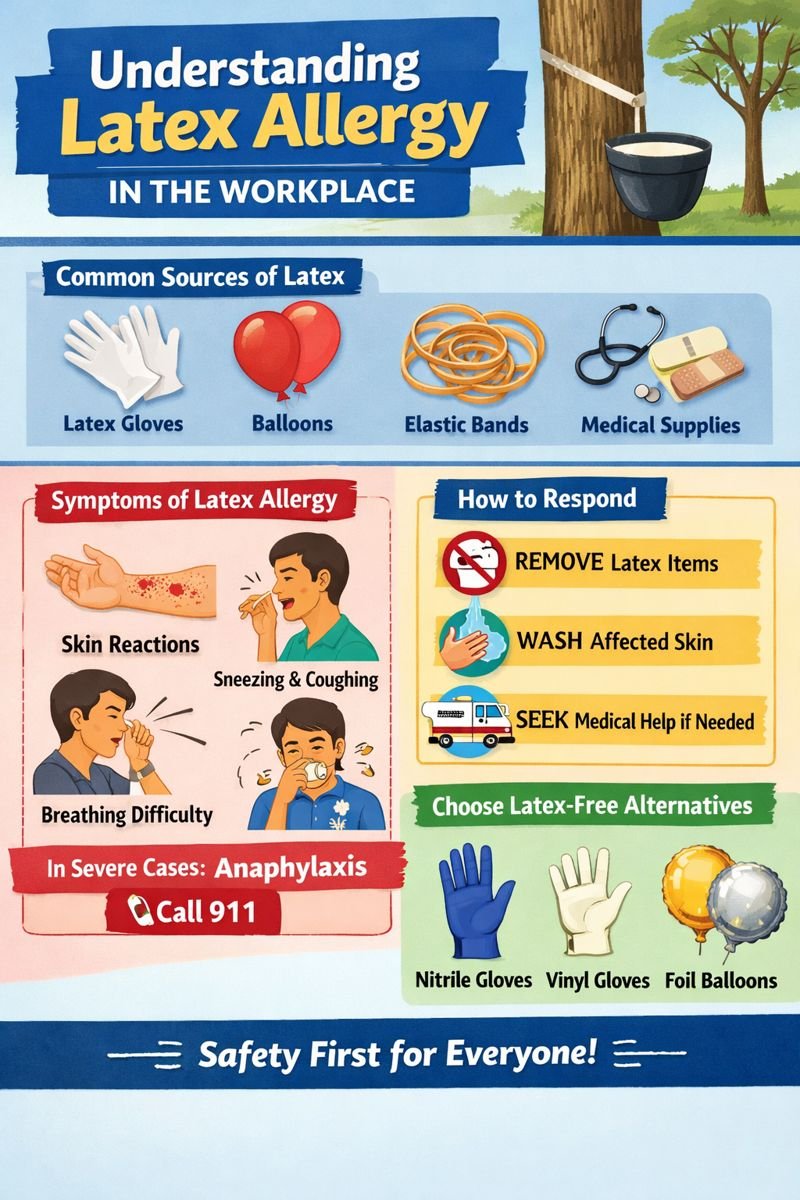 A latex allergy is an immune reaction to specific proteins found in natural rubber latex. Latex is used in many consumer, health care, and workplace products. When a person is sensitized, the immune system treats latex proteins as harmful, which can lead to symptoms ranging from skin irritation to respiratory reactions.
First Aid & Workplace Relevance
Latex is still encountered in some medical exam gloves, balloons, elastic bands, and other workplace items. Many Canadian employers now use latex-free alternatives, especially in health care, food handling, and first aid kits, to reduce allergic reactions in workers, customers, and the public. Having basic awareness helps workplaces choose safer products and respond calmly if someone develops symptoms.
Realistic Scenario
During a workplace safety training session, a volunteer tried on older latex gloves from an outdated kit. Within minutes, they noticed itching and light redness on their wrists. The instructor removed the gloves, washed the area with mild soap and water, and switched to nitrile gloves. The volunteer felt better shortly after, and the team made a note to replace the remaining gloves with latex-free supplies.
Symptoms of Latex Allergy
Symptoms vary with sensitivity and how much latex a person is exposed to (contact or airborne particles). Reactions can be mild, moderate, or more pronounced:
Mild–Moderate skin or respiratory symptoms may include:
-
Redness or irritation where latex touched the skin
-
Itching or hives
-
Watery or irritated eyes
-
Runny or congested nose
-
Sneezing or cough
More pronounced reactions may include:
-
Wheezing or difficulty breathing
-
Scratchy throat
-
Dizziness or feeling unwell
In rare cases, some individuals can experience symptoms related to anaphylaxis, a serious form of allergic reaction. This may involve difficulty breathing, low blood pressure, or altered level of consciousness. Emergency medical care is required for suspected anaphylaxis.
Causes & Mechanisms
Latex reactions happen when the immune system identifies latex proteins as harmful. This can involve:
-
Direct contact (e.g., gloves, balloons, rubber bands, elastic)
-
Airborne particles from powdered latex gloves or items that release latex proteins into the air
Repeated exposure may increase sensitivity for some individuals, which is why workplaces often switch to latex-free options when possible.
Management & First Aid Awareness
There is no cure for latex allergy, but symptoms can be managed. Public guidance generally focuses on:
-
Avoiding latex products when possible
-
Choosing alternative materials (e.g., nitrile or vinyl gloves in first aid kits and workplaces)
-
Responding calmly to symptoms by removing the source, washing the skin if appropriate, and supporting the person in seeking medical attention if needed
People with known latex allergy may carry emergency medications prescribed by a health professional for their own use.
Prevention & Workplace Considerations
Workplaces in Canada can reduce risks through:
-
Maintaining latex-free first aid kits
-
Choosing non-latex gloves for food handling, personal care, and first aid
-
Training staff to recognize common allergy symptoms
-
Reviewing procurement policies to avoid unnecessary latex products
-
Checking labels when buying balloons, elastic bands, or protective gear
FAQ
Is latex allergy common?
Latex allergy is less common than environmental allergies, but it is more frequently seen among people with repeated exposure to latex products, such as health care workers, cleaning staff, and some industrial roles.
Can symptoms appear even without touching latex?
Yes. Some latex products shed small particles into the air, especially powdered gloves. Sensitive individuals may react by inhalation.
Are latex-free gloves effective for first aid?
Yes. Nitrile and vinyl gloves are widely used in first aid and workplaces because they provide barrier protection without latex proteins.
Are balloons a concern for people with latex allergy?
Latex balloons can release proteins when inflated or popped. Some individuals choose foil (Mylar) balloons as an alternative.
Can latex allergy develop over time?
In some people, repeated exposure can lead to sensitization and future reactions. Minimizing exposure can reduce risk in workplaces.
Educational Note
This information supports awareness of latex allergy for public health and workplace safety. It is not a substitute for professional medical assessment, treatment, or emergency care.
About The Author

Mark Kascha
Certified First Aid Instructor Trainer with 30+ years of real-world experience, including lifeguarding, workplace emergency response, and first aid program development across Canada. Has worked with WorkSafeBC, WSIB, and Manitoba Health.
👉 [View full credentials]🔗 View LinkedIn Profile
Last reviewed: March 2026