
Thumb Repetitive Stress Injuries: Causes, Symptoms & Workplace Awareness
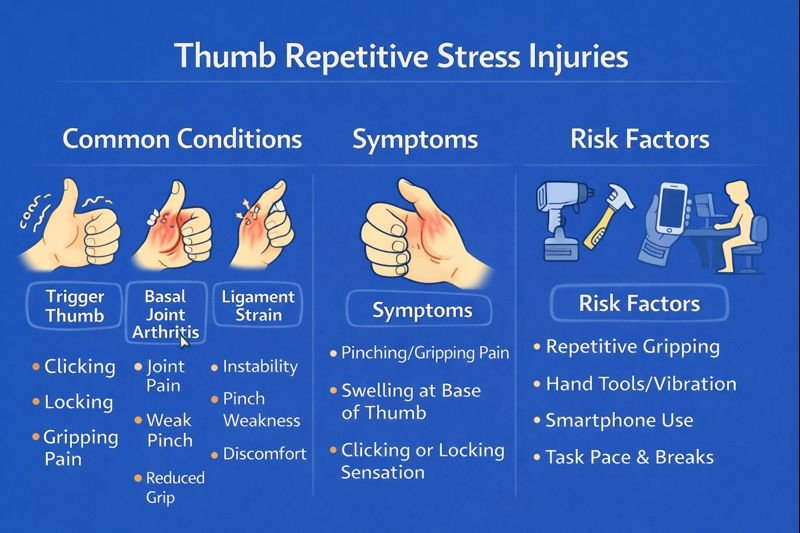 What are repetitive stress injuries of the thumb?
Repetitive stress injuries (RSIs) occur when tissues are irritated by repeated movements or sustained force over time. The thumb is especially vulnerable because it handles gripping, pinching, texting, tool use, and fine motor tasks. Overuse can affect tendons, joints, and ligaments, leading to discomfort or reduced mobility.
Canadian workplace & first aid relevance
Thumb RSIs can impact work involving tools, keyboards, caregiving, trades, manufacturing, food service, and other precision-based roles. Early awareness can support ergonomic changes, rest, and timely assessment rather than escalation to long-term discomfort.
Scenario: Tool-related thumb strain
A carpenter noticed thumb pain and clicking when gripping a staple gun repeatedly during a renovation job. Adjusting tools and reducing repetitive gripping helped ease discomfort, and the carpenter later discussed ergonomic recommendations with a clinician.
Common repetitive thumb conditions (educational overview)
Trigger thumb
Trigger thumb involves a catching, popping, or “locking” sensation when bending the thumb. Repetitive gripping may irritate the tendon sheath, limiting smooth gliding. Symptoms may include:
-
Clicking or catching during movement
-
Local tenderness at the base of the thumb
-
Occasional locking in a bent position
Mild cases may improve with rest or activity modification. Clinical options may include splinting or other interventions when symptoms persist.
Basal joint arthritis (thumb carpometacarpal arthritis)
The joint at the base of the thumb is prone to wear-and-tear. Age, genetics, and repetitive pinching can contribute. Symptoms may include:
-
Pain near the base of the thumb
-
Reduced pinch strength
-
Difficulty opening jars or gripping objects
Conservative management may involve activity modification, supportive splints, or medical care depending on severity. Advanced cases may require specialist evaluation.
Ligament strain or laxity
Ligaments stabilize thumb joints. Over time, repetitive force or stretch can decrease stability, affecting fine motor tasks and grip precision. Individuals may notice:
-
Weak pinch strength
-
Joint “give” or instability
-
Discomfort during gripping
Clinical assessment helps determine if bracing, therapy, or ergonomic changes are useful.
De Quervain’s tenosynovitis
This involves irritation of tendons that move the thumb away from the hand (as in a “hitchhiking” motion). Symptoms may include:
-
Pain along the thumb side of the wrist
-
Swelling near the base of the thumb
-
Pain aggravated by lifting or rotating objects
Repetitive lifting, childcare tasks, and tool use can contribute to onset.
Symptoms to watch for
Thumb RSIs may lead to:
-
Pain with gripping or pinching
-
Swelling at the base of the thumb or wrist
-
Clicking, catching, or locking
-
Reduced grip or pinch strength
-
Difficulty with fine motor tasks (e.g., fastening buttons, opening jars)
Risk factors & workplace considerations
Common contributors include:
-
Repetitive gripping or forceful pinching
-
Hand tools with high resistance or vibration
-
Prolonged smartphone or device use
-
Lack of rest between repetitive tasks
-
Increased workload or rapid task pace
Workplaces may support ergonomic adjustments, task rotation, and tool modifications to reduce strain.
Management & first aid awareness (non-prescriptive)
Supportive approaches focus on reducing irritation and promoting movement comfort:
-
Rest from aggravating activities
-
Gentle stretching or mobility exercises
-
Splinting or bracing (clinical guidance recommended)
-
Ergonomic or tool adjustments
-
Medical evaluation for persistent symptoms
Healthcare professionals may consider imaging, therapy, injections, or surgical options based on severity and functional impact.
When to seek assessment
Evaluation may be helpful when:
-
Symptoms persist for weeks
-
Locking or catching interferes with tasks
-
Swelling or weakness progresses
-
Fine motor skills become difficult
-
Work or daily activities are affected
FAQ
Is repetitive stress injury permanent?
Not always. Some RSIs improve with rest, ergonomic changes, or clinical care. Others may require ongoing management.
Do RSIs only affect manual labour workers?
No. RSIs can affect office workers, students, artists, caregivers, and anyone who repeats small movements frequently.
Can RSIs come from phone use?
Yes. Texting, scrolling, and gaming can strain thumb joints and tendons in some individuals.
Can bracing help?
Braces or splints may support comfort or stability for some conditions. Suitability depends on individual assessment.
Educational note
This post supports public and workplace awareness about thumb repetitive stress injuries, ergonomics, and mobility. Persistent symptoms benefit from clinical evaluation.