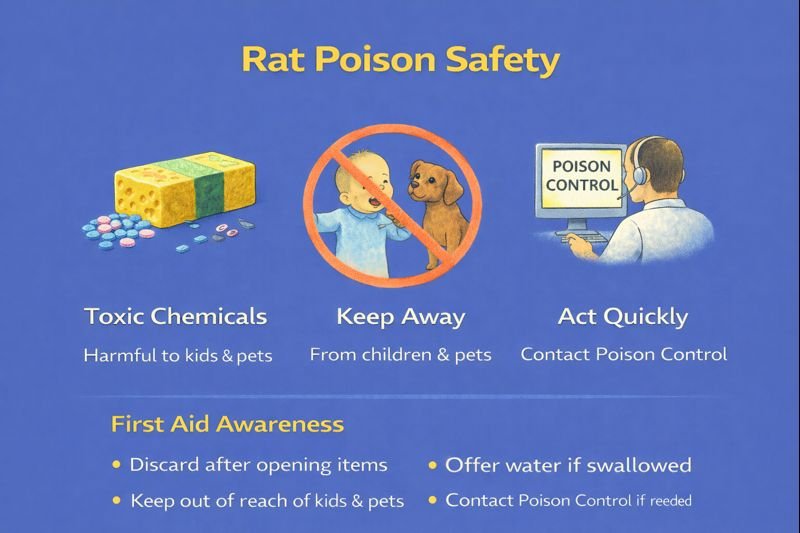
 Rat poisons (rodenticides) are designed to kill rodents. Because they are toxic chemicals, accidental exposures involving children and pets are a significant concern. Understanding how these products work, why they are dangerous, and what actions are recommended in suspected exposures can improve household and workplace safety.
First Aid & Household Relevance
Rodenticides are sometimes used in homes, cottages, farms, and storage facilities. In Canada, Poison Control centres and emergency services provide guidance when accidental exposures occur. Preventing access by children, pets, and wildlife is essential.
Scenario (with trained first aid rescuer)
At a family cottage, bait had been placed in a shed for mice. A trained first aid rescuer noticed a young child holding a bait block and quickly removed it, checked that none had been eaten, and contacted Poison Control for advice. The family secured the bait in a locked container and arranged for safer pest control measures going forward.
Types of Rat Poisons
Rodenticides come in different chemical categories, with varying effects:
-
Anticoagulants: interfere with blood clotting
-
Neurotoxic rodenticides: affect the brain and nervous system
-
Metabolic rodenticides: disrupt calcium balance in the body
These substances are harmful to more than just rodents. Many wildlife species, pets, and children can experience serious effects if exposed.
Possible Signs of Rodenticide Exposure
If a person or pet ingests rat poison, symptoms may vary depending on the product and quantity. Reported symptoms in accidental human exposures can include:
-
Unusual bruising
-
Bleeding (gums or nose)
-
Fatigue or general weakness
-
Breathing difficulty
-
Abdominal discomfort
-
Changes in urine or stool colour
Symptoms may not appear immediately, which is one reason Poison Control guidance is recommended as soon as exposure is suspected.
First Aid Awareness
Public education emphasizes:
-
Do not wait for symptoms if ingestion is suspected
-
Contact Poison Control or emergency services for guidance
-
Avoid giving home remedies or medications without professional direction
-
Bring product packaging if responders request ingredient information
These services tailor instructions to the specific substance involved.
Prevention & Safe Use
To reduce risk at home or work:
-
Choose pest control strategies appropriate to the environment
-
Store poisons securely and out of reach
-
Use sealed or tamper-resistant bait stations when required by law or manufacturer
-
Consider licensed pest control services for heavy infestations
-
Monitor for accidental access by wildlife or pets
Children under six are at the highest risk for unintentional ingestion because of hand-to-mouth behaviours and curiosity about colourful bait blocks.
Environmental & Animal Safety
Rodenticides can unintentionally affect:
-
Pets (dogs, cats, ferrets)
-
Birds of prey (owls, hawks)
-
Small mammals
-
Scavengers
Secondary poisoning can occur if animals eat poisoned rodents. Many Canadian municipalities encourage integrated pest management and safer alternatives when possible.
FAQ
Are all rat poisons the same?
No. Rodenticides work through different mechanisms and may cause different symptoms.
Why are children particularly at risk?
Many baits are colourful and attractive, and young children explore by putting objects in their mouths.
Can symptoms be delayed?
Yes. Some effects develop hours to days after ingestion, depending on the poison type.
Is it safer to hire a professional exterminator?
For severe infestations, professionals can apply regulated products safely and reduce accidental exposure risk.
Does rat poison affect pets?
Yes. Dogs and cats are commonly exposed when poisons are accessible.
Educational Note
This article supports awareness of rat poisons, exposure risks, and the importance of contacting Poison Control or emergency services when poisoning is suspected. It does not provide instructions for treatment, diagnosis, or medication use.
About The Author

Mark Kascha
Certified First Aid Instructor Trainer with 30+ years of real-world experience, including lifeguarding, workplace emergency response, and first aid program development across Canada. Has worked with WorkSafeBC, WSIB, and Manitoba Health.
👉 [View full credentials]🔗 View LinkedIn Profile
Last reviewed: March 2026