A surgical incision is always at risk for infection if it is not properly cared for during recovery. Early recognition of infection is critical, as untreated surgical site infections can lead to increasing pain, delayed healing, extended hospital stays, and in severe cases, life-threatening complications.
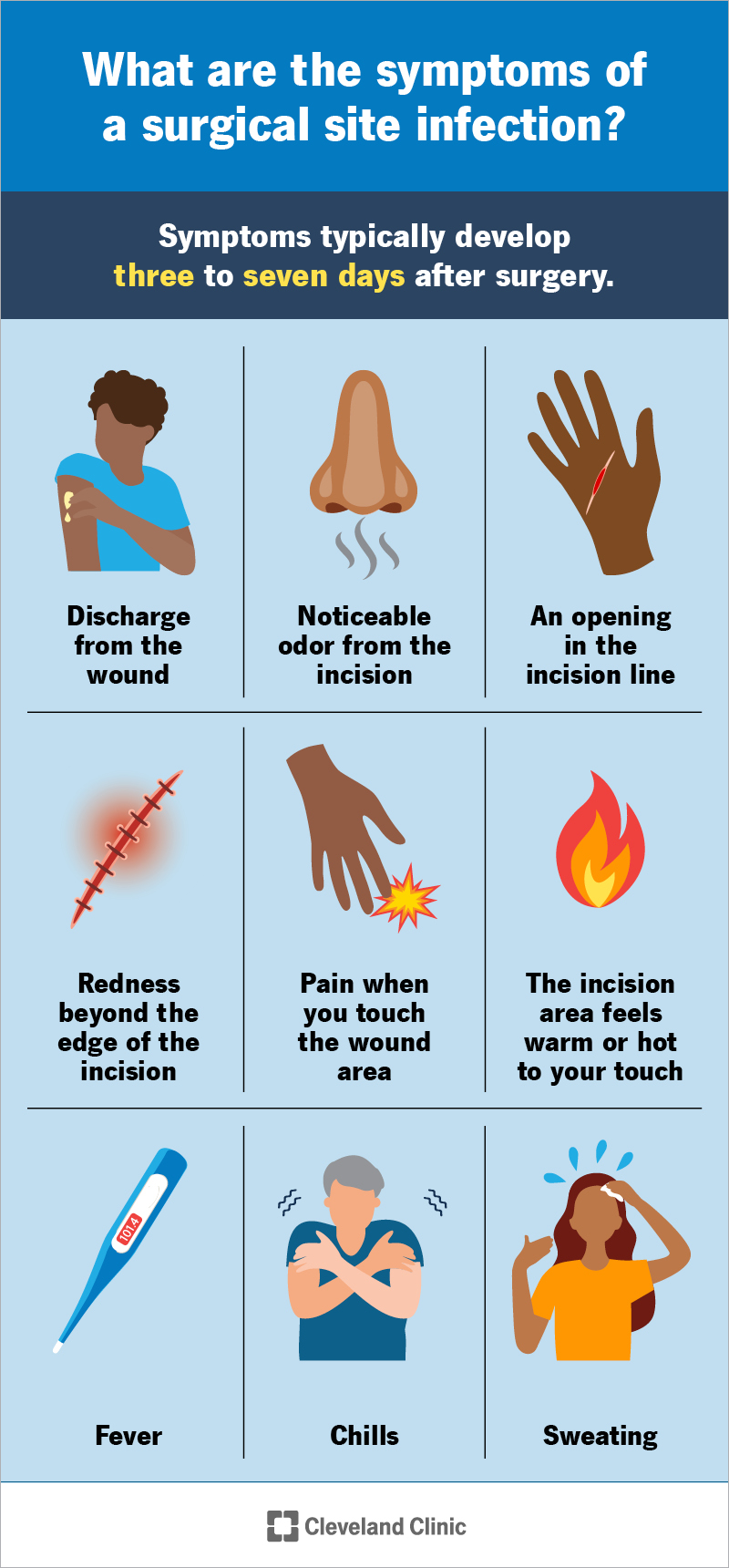
The most common warning signs of an infected incision include fever, worsening pain, discharge, and changes to the appearance of the wound or surrounding skin.
Common Signs and Symptoms of an Infected Incision
Abnormal Discharge or Bleeding
After surgery, it is normal for a small amount of clear, light yellow, or slightly pink fluid to ooze from the incision, especially in the first few days following major surgery.
However, any thick, cloudy, foul-smelling, or coloured discharge may indicate infection:
-
Greyish-white drainage is often associated with staphylococcal infections
-
Greenish discharge with a strong odour may indicate Pseudomonas infection
-
Unexpected bleeding from the incision site can also signal an underlying infection
Increasing or Unusual Pain
Some pain at the incision site is expected and may increase with movement or stretching. Pain is typically managed with prescribed or recommended pain medication.
New, worsening, or persistent pain—especially pain that does not improve with medication—can be a warning sign. Infection causes the release of inflammatory chemicals, which leads to increased tenderness and pain at the wound site.
Changes to the Surrounding Skin
When bacteria enter a surgical incision, nearby blood vessels widen as part of the immune response. This may cause:
-
Redness spreading outward from the incision
-
Swelling or tightness of the skin
-
Skin pulling apart at the edges
Redness extending more than 5 cm (about 2 inches) from the incision, increasing swelling, or separation of stitches or staples is a cause for concern and should be assessed by a healthcare professional.
Fever and Warmth
An infected incision may feel warm to the touch, which can be checked using the back of the hand. Infection can also lead to fever, sometimes accompanied by:
-
Fatigue
-
Poor appetite
-
Rapid heart rate
-
Faster breathing
When to Seek Medical Care
You should contact a doctor or seek medical attention immediately if:
-
Pain around the incision becomes severe or progressively worse
-
Discharge changes colour, consistency, or smell
-
Redness or swelling continues to spread
-
The wound opens or stitches/staples separate
-
Fever develops after surgery
Early treatment greatly reduces the risk of serious complications.
First Aid & Wound Care Disclaimer
This information is intended for educational and first aid awareness purposes only and does not replace medical advice or professional wound assessment. Surgical site infections can worsen quickly and should always be evaluated by a healthcare provider.
Learning proper wound care, infection recognition, and post-surgical first aid is an important skill. Canadians are encouraged to take a First Aid and CPR course with a certified training provider to improve their ability to recognize and respond to wound complications.
About The Author

Mark Kascha
Certified First Aid Instructor Trainer with 30+ years of real-world experience, including lifeguarding, workplace emergency response, and first aid program development across Canada. Has worked with WorkSafeBC, WSIB, and Manitoba Health.
👉 [View full credentials]🔗 View LinkedIn Profile
Last reviewed: March 2026