A pneumothorax occurs when air collects in the space around the lungs, making it harder for them to expand fully. This can result from injury to the chest or from certain underlying health conditions.
First Aid & Workplace Relevance (Canada)
Chest injuries can occur in settings such as construction, sports, transportation, or recreational activities. Awareness of symptoms helps bystanders recognise when someone may need assessment from healthcare professionals.
Scenario (Mild & Realistic)
During a recreational soccer game, a player collided with another and felt sore on one side of the chest. They rested and iced the area. Later, when discomfort increased and breathing felt harder, a family member arranged for a medical assessment.
How Can a Pneumothorax Happen?
A pneumothorax can develop when air enters the space between the lungs and chest wall. This may follow:
-
Blunt force to the chest
-
Rib injuries
-
Penetrating trauma
-
Certain medical conditions
When air builds up in this space, the lung may not expand fully with each breath.
Possible Symptoms to Be Aware Of
Symptoms can vary depending on the cause, the amount of trapped air, and the individual’s overall health. People may experience:
Chest Discomfort
Some individuals describe sharp or sudden discomfort on one side of the chest, especially when breathing in. Chest discomfort can be associated with many conditions, including non-lung causes, which is why medical assessment helps determine what is going on.
Breathing Changes
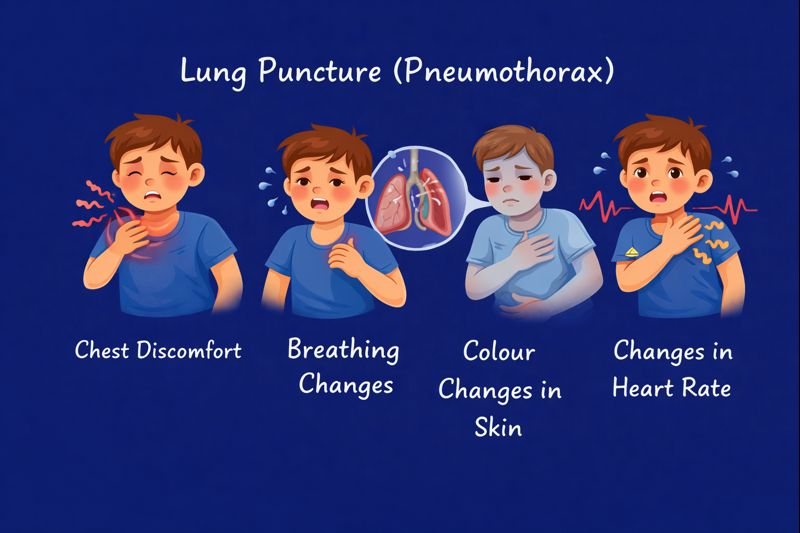 Reduced lung expansion can affect breathing. People may notice:
-
Shortness of breath
-
Faster breathing
-
Feeling easily winded with mild activity
Coughing up small amounts of blood can occur in some cases, depending on the nature of the injury or condition.
Colour Changes in Skin
When oxygen levels are lower than usual, the skin may appear paler or slightly bluish (often noticeable around lips or fingertips). This can be accompanied by light-headedness or fatigue.
Changes in Heart Rate
The body may increase heart rate to circulate oxygen more quickly. Individuals may feel their heart beating faster or feel anxious along with other symptoms.
Workplace & Safety Considerations
Environments where chest impacts or falls are more likely—such as construction, sport, or transportation—benefit from:
-
Safe play and equipment use
-
Fall-prevention measures
-
Proper lifting techniques
-
Reporting of injuries for follow-up
These measures are not curative but promote awareness and early attention to symptoms.
FAQ (Educational)
Is pneumothorax always caused by trauma?
No. It can also occur spontaneously or alongside existing lung or connective tissue conditions.
Does chest pain always mean a lung puncture?
No. Chest discomfort can stem from many sources, including muscles, joints, or the heart, which is why evaluation is important.
Can symptoms appear gradually?
Yes. Some cases develop slowly, while others occur more suddenly depending on the cause.
Who is more likely to experience pneumothorax?
It can occur in people of various ages. Taller or thinner young adults, individuals with lung conditions, and individuals with chest injuries may have increased risk in certain circumstances.
Educational Note
This material supports public and workplace awareness. Symptoms involving breathing changes or chest discomfort may prompt individuals to seek professional assessment to better understand the cause.
About The Author

Mark Kascha
Certified First Aid Instructor Trainer with 30+ years of real-world experience, including lifeguarding, workplace emergency response, and first aid program development across Canada. Has worked with WorkSafeBC, WSIB, and Manitoba Health.
👉 [View full credentials]🔗 View LinkedIn Profile
Last reviewed: March 2026