
What Is Iliotibial Band Syndrome?
Iliotibial band syndrome (ITB syndrome) is a common overuse injury that causes pain on the outside of the knee. It occurs when the iliotibial band—a thick band of connective tissue running from the hip down the outer thigh to the knee—repeatedly rubs against the outer knee during movement.
This condition is often called runner’s knee because it frequently affects runners, but it can also occur in cyclists, hikers, and individuals whose work involves repetitive knee bending.
First Aid and Workplace Relevance in Canada
ITB syndrome is relevant in Canadian workplaces and recreational settings, particularly where individuals perform repetitive lower-body movements, prolonged walking, stair use, or running on uneven surfaces. It is also seen in physically demanding jobs and fitness activities.
First aid awareness helps people recognize early overuse symptoms, modify activity, and reduce irritation before the condition becomes more persistent.
A Simple, Realistic Scenario
A recreational runner notices a sharp ache on the outside of the knee about 15 minutes into a run. The pain fades with rest but returns every time they run downhill. Remembering first aid training, they stop running temporarily, apply cold therapy, and focus on recovery rather than pushing through the pain.
Common Symptoms
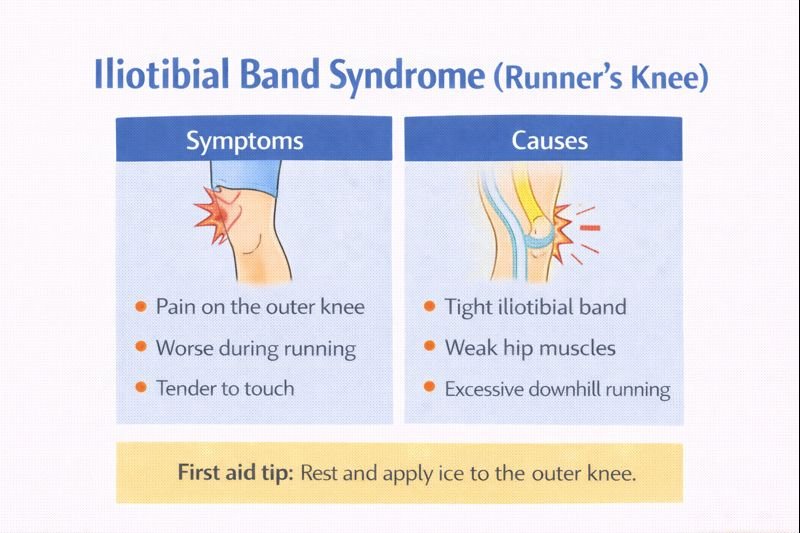 Symptoms of iliotibial band syndrome typically include:
-
Pain on the outer side of the knee
-
Tenderness near the bony area on the outside of the knee
-
Pain that starts during activity and gradually worsens
-
Pain that improves with rest but returns when activity resumes
-
Increased discomfort when running downhill
Pain may also be felt when bending and straightening the knee, especially when pressure is applied to the outer knee. Tightness along the outer thigh and hip is common.
Additional Signs Noted on Assessment
Healthcare professionals may observe:
-
Tightness along the iliotibial band
-
Weakness in hip muscles, especially those that move the leg sideways
-
Tender trigger points in the buttock or hip area
These factors can contribute to ongoing irritation if not addressed.
Causes and Contributing Factors
Several factors can increase the likelihood of developing ITB syndrome:
-
Tight or poorly conditioned iliotibial band
-
Weak hip muscles, particularly the gluteus medius
-
Foot mechanics that cause excessive inward rolling
-
Running on sloped or cambered surfaces
-
Frequent downhill running
-
Differences in leg length
-
Sudden increases in training intensity or volume
These factors increase friction between the band and the outer knee.
First Aid and Early Management
From a first aid perspective, early care focuses on reducing irritation and allowing healing.
General first aid considerations include:
-
Resting from activities that cause pain
-
Avoiding running or movements that aggravate symptoms
-
Applying cold therapy to the outer knee
-
Choosing alternative low-impact activities to stay active
Continuing to run through pain often worsens the condition.
Management and Recovery Considerations
Recovery usually involves addressing both symptoms and contributing factors.
Supportive strategies may include:
-
Gradual return to activity once pain settles
-
Stretching tight muscles along the hip and thigh
-
Strengthening hip and core muscles
-
Adjusting training surfaces or footwear
Early action helps prevent repeated flare-ups.
Prevention and Workplace Considerations
Helpful prevention strategies include:
-
Gradually increasing activity levels
-
Warming up before exercise or physical work
-
Varying running routes and surfaces
-
Maintaining hip and leg strength
-
Reporting persistent knee pain early
Task modification and ergonomic awareness can reduce ongoing stress on the knee.
Frequently Asked Questions
Why does ITB syndrome hurt on the outside of the knee?
The iliotibial band rubs against a bony area on the outer knee, causing irritation.
Why does the pain start partway into activity?
Repeated motion increases friction over time, leading to pain as activity continues.
Is runner’s knee only seen in runners?
No. It can also affect cyclists, hikers, and people with repetitive knee movement at work.
Does rest really help ITB syndrome?
Yes. Rest reduces irritation and allows the tissue to recover.
How does first aid training help with overuse injuries?
First aid education promotes early recognition and activity modification to prevent worsening.
Educational Note
This article is intended for general public education and workplace first aid awareness in Canada. It does not replace medical assessment, diagnosis, or individualized treatment for knee conditions.
About The Author

Mark Kascha
Certified First Aid Instructor Trainer with 30+ years of real-world experience, including lifeguarding, workplace emergency response, and first aid program development across Canada. Has worked with WorkSafeBC, WSIB, and Manitoba Health.
👉 [View full credentials]🔗 View LinkedIn Profile
Last reviewed: March 2026