
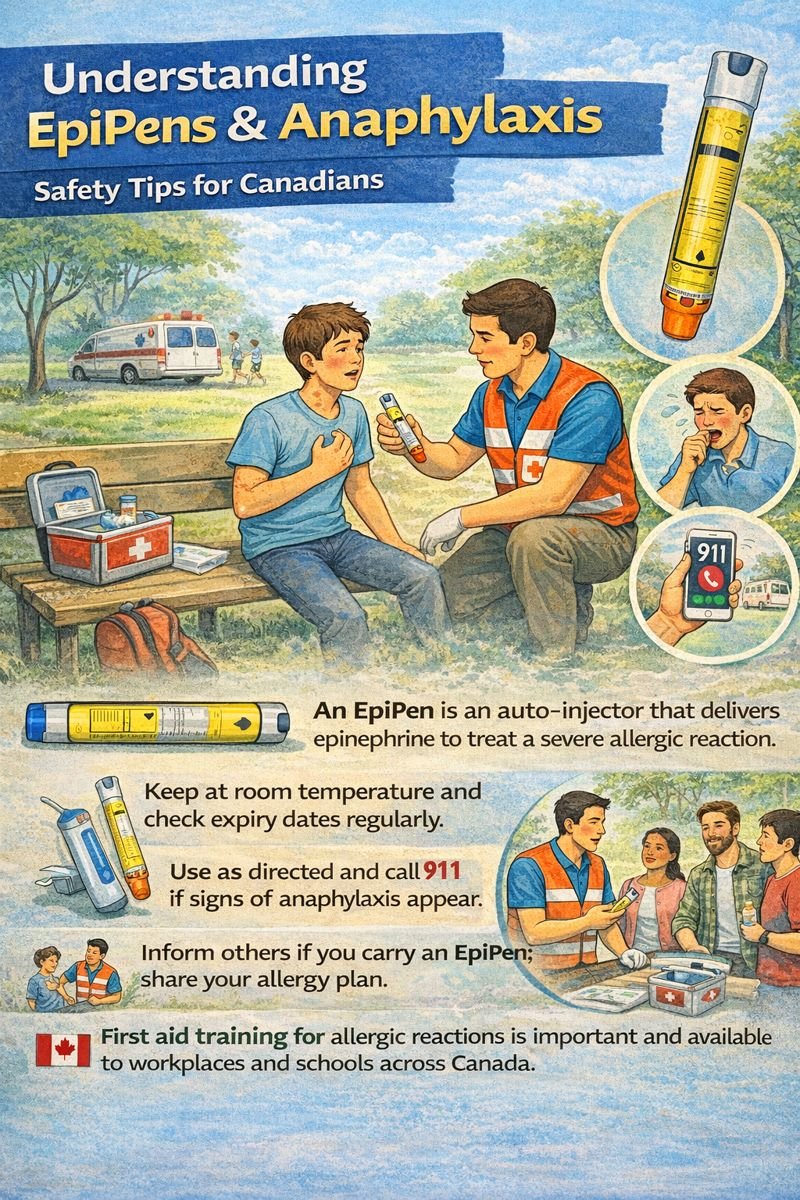
 Epinephrine is the recommended first-line medication for anaphylaxis, a serious type of allergic reaction that can involve breathing difficulty, swelling, or circulatory changes. Many people with allergies carry an autoinjector such as an EpiPen for their own use as prescribed by a healthcare professional. Public awareness helps workplaces, schools, and community settings recognize allergic reactions, support the person, and know when emergency care is needed.
First Aid & Workplace Relevance
Food allergies, insect stings, and medication allergies are recognized concerns in Canadian workplaces, childcare programs, schools, camps, and recreational facilities. Many institutions now develop anaphylaxis plans, keep emergency contact information on file, and encourage staff to recognize common symptoms.
Scenario
At a summer sports camp, a participant accidentally ate a cookie containing nuts. Minutes later they reported itching around the mouth and said they were feeling “tight in the throat.” A trained first aid rescuer checked the camp’s allergy plan, asked the participant if they carried a prescribed autoinjector, and supported them in using it. Emergency services were contacted as outlined in the plan, and the participant was taken for medical follow-up. The situation was managed calmly and the camper returned later in the week.
What an EpiPen Is
An EpiPen is a single-use autoinjector designed to deliver a pre-measured dose of epinephrine. Epinephrine can help counteract symptoms of anaphylaxis by:
-
Reducing swelling that affects breathing
-
Improving airway function
-
Supporting blood pressure
People with known allergies may be prescribed an autoinjector for their personal use.
When EpiPens Are Used
Individuals carrying an autoinjector are typically advised to use it at the first signs of a severe allergic reaction, as outlined by their healthcare provider. Common triggers include peanuts, tree nuts, shellfish, eggs, milk, insect stings, latex, and certain medications.
Emergency medical care remains important after the use of epinephrine because symptoms can return or progress.
Storage & Handling Awareness
To ensure reliability, manufacturers and allergy organizations generally recommend:
-
Keeping autoinjectors at room temperature
-
Avoiding prolonged exposure to heat or cold (e.g., hot cars, freezers)
-
Protecting them from direct sunlight
-
Checking expiration dates
-
Inspecting the viewing window for discoloration (e.g., cloudy or brown solution)
Autoinjectors should remain in their carrier tubes until needed.
First Aid Awareness
Public anaphylaxis training often covers:
-
Recognizing symptoms early
-
Confirming if the person has a prescribed autoinjector
-
Supporting them in using their own device when indicated by their plan
-
Contacting emergency services
-
Monitoring breathing and comfort until help arrives
Autoinjectors are prescription devices, and training is available through workplaces, schools, and first aid programs.
Side Effects & Aftercare Context
After epinephrine is used, some people may experience temporary effects such as:
-
Rapid heartbeat
-
Paleness
-
Shakiness
-
Headache or dizziness
These effects are generally short-lived compared to the severity of untreated anaphylaxis. Medical follow-up ensures symptoms resolve safely.
Prevention & Everyday Safety Tips
People who live with severe allergies commonly:
-
Read ingredient lists
-
Ask about cross-contact risks
-
Inform friends, coworkers, teachers, and coaches
-
Carry their autoinjector during activities, school, work, and travel
-
Share allergy plans with trusted contacts
FAQ
Is epinephrine dangerous?
Epinephrine has potential side effects, but it is considered critical in treating anaphylaxis. Healthcare professionals prescribe autoinjectors when benefits outweigh risks.
Can someone without training help?
Most public education encourages calm support, contacting emergency services, and following the person’s allergy plan. Many schools and workplaces provide structured training.
Can epinephrine be used “just in case”?
People follow the guidance given by their healthcare provider. When symptoms are unclear, emergency services can assist with decision-making.
Do EpiPens expire?
Yes. Autoinjectors should be replaced when expired or discoloured.
Are there different brands?
Yes. Several autoinjector brands exist, and instructions vary. Individuals should be familiar with the device prescribed to them.
Educational Note
This content supports public awareness of anaphylaxis and autoinjector handling in Canadian community and workplace settings. It encourages calm, informed responses and appropriate medical follow-up when symptoms are concerning.
About The Author

Mark Kascha
Certified First Aid Instructor Trainer with 30+ years of real-world experience, including lifeguarding, workplace emergency response, and first aid program development across Canada. Has worked with WorkSafeBC, WSIB, and Manitoba Health.
👉 [View full credentials]🔗 View LinkedIn Profile
Last reviewed: March 2026