
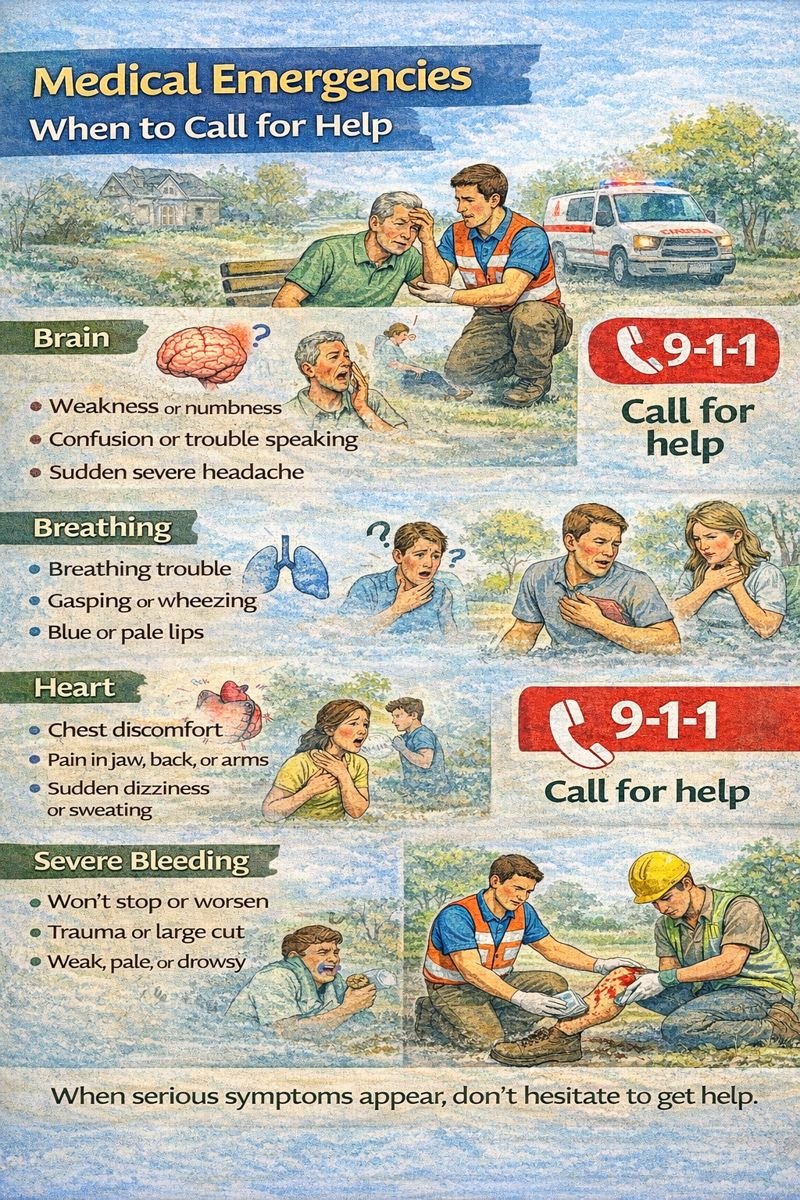
 Many people hesitate to call for emergency assistance because they worry their symptoms are “not serious enough.” In reality, early action can prevent a condition from worsening. When faced with uncertainty, it is generally safer to seek help than to wait.
First Aid & Workplace Relevance
Canadian workplaces, schools, recreation centres, and public venues often rely on prompt recognition of serious symptoms—especially in remote or outdoor settings where help takes longer to arrive. Basic first aid education supports early decision-making without expecting bystanders to diagnose medical conditions.
Scenario (with trained first aid rescuer)
During a lunch break at a community event, an older participant became suddenly confused and struggled to speak clearly. A trained first aid rescuer recognized this as a possible neurological emergency, kept the person seated and calm, and asked someone to call 9-1-1. Paramedics arrived quickly and transported the person for assessment. The fast response helped ensure appropriate medical care.
Brain-Related Warning Signs
Abrupt changes in how the brain works should be treated seriously. Examples include:
-
Sudden numbness or weakness
-
Loss of vision
-
Confusion or difficulty speaking
-
Dizziness or loss of balance
-
Seizures or loss of consciousness
-
Severe or unusual headaches
These symptoms may signal conditions such as stroke, seizure, or head injury. Prompt emergency care can make a major difference.
Breathing Problems
Shortness of breath during exertion can be normal. Shortness of breath without obvious cause, or breathing that suddenly worsens, deserves attention. Difficulty breathing may stem from:
-
Asthma
-
Allergic reactions or anaphylaxis
-
Infections
-
Choking incidents
Breathing emergencies can progress quickly and often require both first aid and medical intervention.
Heart-Related Warning Signs
Heart symptoms do not always resemble dramatic chest pain. Some people experience:
-
Pressure or tightness in the chest
-
Pain in the jaw, back, arms, or shoulders
-
Shortness of breath or fainting
-
Nausea, sweating, or unusual fatigue
Pain that does not improve with rest or position changes should be evaluated urgently.
Severe Bleeding
Most minor bleeding can be controlled with direct pressure. Emergency assistance becomes important when:
-
Bleeding does not stop with firm pressure
-
Bleeding causes weakness, pallor, or drowsiness
-
Bleeding involves large wounds or major trauma
Tourniquets are reserved for specific cases and require appropriate training.
Common-Sense Hazards
Sometimes the severity of the situation is clear without identifying a specific medical condition—such as fires, collisions, falls from height, poisoning, or major trauma. Emergency responders do not expect bystanders to determine “emergency vs. non-emergency” with precision. Calling early is encouraged.
FAQ
Should I wait to see if symptoms go away?
Waiting can delay treatment. When in doubt, calling for help is reasonable.
Can symptoms be mild and still serious?
Yes. Stroke, heart events, and allergic reactions can start subtly.
What if I’m wrong about it being an emergency?
Emergency systems are designed to handle uncertain situations. Calling early can protect health.
Is it okay for bystanders to call 9-1-1?
Yes. First aid training encourages activating emergency services when serious symptoms appear.
Do all emergencies involve pain?
No. Confusion, breathing difficulty, fainting, or weakness can indicate major medical issues without pain.
Educational Note
This content supports public and workplace awareness of emergency symptoms and encourages early activation of emergency services when conditions appear serious. It does not replace professional assessment or training.
About The Author

Mark Kascha
Certified First Aid Instructor Trainer with 30+ years of real-world experience, including lifeguarding, workplace emergency response, and first aid program development across Canada. Has worked with WorkSafeBC, WSIB, and Manitoba Health.
👉 [View full credentials]🔗 View LinkedIn Profile
Last reviewed: March 2026