
Contact Dermatitis: Irritation, Allergies & First Aid Awareness
Contact dermatitis is a common skin condition that causes redness, irritation, or a rash after the skin touches a substance that triggers a reaction. The condition is generally short-term, though symptoms can be uncomfortable.
Workplace & public relevance (Canada)
Contact dermatitis can occur at home, outdoors, or at work. Occupations involving cleaners, cosmetics, hair products, plants, solvents, dyes, rubber, or metals may involve higher exposure to irritants or allergens. Awareness helps reduce discomfort and prevent repeated reactions.
Scenario story
During spring cleaning, Emma used a new household cleaner without gloves. Later that evening she noticed red, itchy patches on her hands. The discomfort settled over a few days, and Emma chose to wear gloves the next time she used the same cleaner.
Types of contact dermatitis
There are two main forms:
Irritant contact dermatitis
Occurs when the skin is exposed to substances that strip moisture or irritate the outer layer. Examples include:
-
Soaps and detergents
-
Household cleaners
-
Hair products and cosmetics
-
Industrial chemicals
-
Frequent hand-washing
Allergic contact dermatitis
Occurs when the immune system reacts to a substance. Common examples include:
-
Metals such as nickel in jewellery
-
Plants such as poison ivy or oak
-
Fragrances or dyes
-
Latex
-
Personal care products
Common symptoms
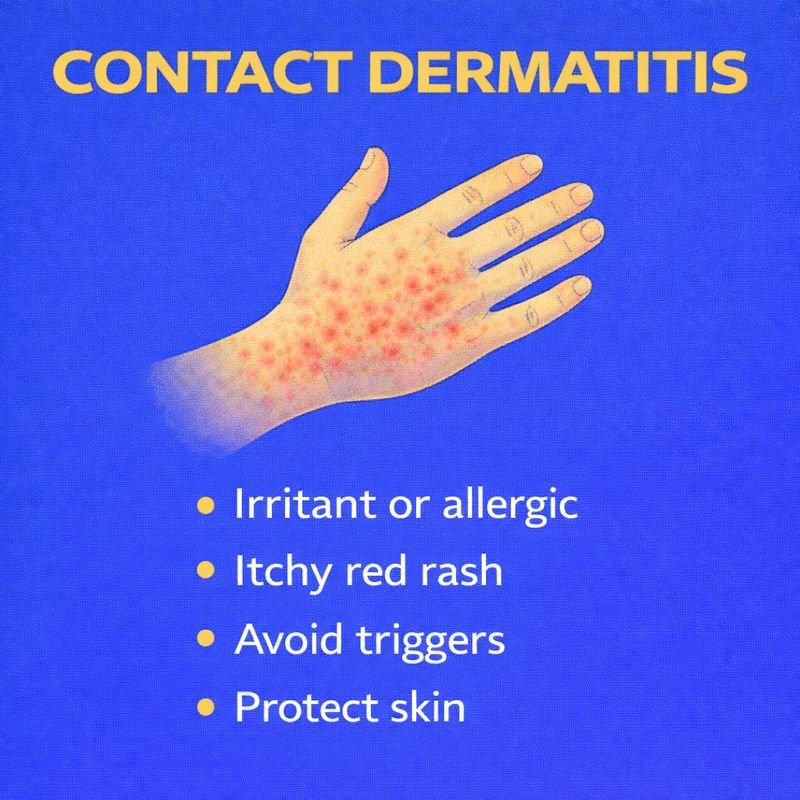 Symptoms can vary from mild to bothersome:
-
Redness or inflammation
-
Itchy rash
-
Dry or scaly skin
-
Swelling in localized areas
-
Small bumps or patches
Symptoms typically appear where the substance touched the skin.
Prevention & avoidance strategies
Reducing exposure is one of the most effective prevention methods:
-
Use gloves for cleaning, gardening, or handling chemicals
-
Choose fragrance-free or dye-free products if sensitivities are known
-
Rinse skin promptly after exposure to irritants
-
Wear protective clothing in workplaces that involve chemicals or wet work
-
Avoid touching plants or substances known to trigger reactions
Workplaces may have safety guidelines, PPE recommendations, and hygiene facilities to reduce exposure risk.
Cleaning & hygiene considerations
If exposure occurs:
-
Rinse the area with mild soap and water
-
Remove contaminated clothing or jewellery
-
Avoid scratching to reduce irritation
Those who work with chemicals or solvents may benefit from washing after shifts to remove residue.
When symptoms persist
If symptoms worsen, spread, or do not improve, healthcare professionals can help determine whether allergy testing or treatment is appropriate. Severe or recurrent cases may require medical evaluation.
FAQ
Is contact dermatitis contagious?
No. It cannot be spread from person to person.
Can food cause contact dermatitis?
In some people, fruits, vegetables, or spices can irritate skin on contact, especially on the hands.
Does stress cause contact dermatitis?
Stress does not directly cause it, but may worsen skin sensitivity in some individuals.
Does it always appear immediately?
Not always. Allergic reactions may appear hours after exposure, while irritant reactions may appear sooner.
Can contact dermatitis occur at work?
Yes. Occupations involving detergents, hair products, chemicals, rubber, or plants often report cases.
Educational note
This resource supports public and workplace first aid awareness and does not replace clinical assessment for persistent or severe skin reactions.
About The Author

Mark Kascha
Certified First Aid Instructor Trainer with 30+ years of real-world experience, including lifeguarding, workplace emergency response, and first aid program development across Canada. Has worked with WorkSafeBC, WSIB, and Manitoba Health.
Last reviewed: March 2026