 What are heart palpitations?
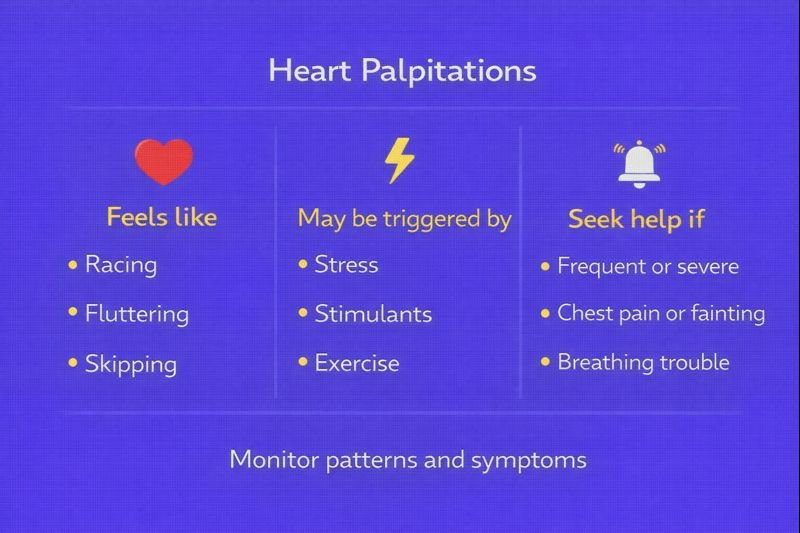
Heart palpitations are sensations where a person becomes aware of their heartbeat. This may feel like the heart is racing, pounding, fluttering, skipping beats, or beating irregularly. Palpitations can sometimes be felt in the chest, throat, or neck.
Canadian workplace & first aid relevance
Heart palpitations are commonly reported in workplaces, schools, and public settings. They may occur during stress, physical exertion, or illness. Awareness helps individuals and bystanders recognize when symptoms may need medical assessment.
Scenario: Stress-related palpitations
During a busy workday, an employee noticed a sudden fluttering sensation in their chest while dealing with a stressful deadline. The sensation passed after a few minutes. Later, they discussed the episode with a healthcare professional to rule out underlying concerns.
Why palpitations happen (educational overview)
Palpitations can occur:
-
With or without heart disease
-
During emotional stress or anxiety
-
With fatigue or illness
-
During physical exertion
-
As a response to stimulants or medications
Many palpitations are harmless, but some may signal an underlying condition that requires evaluation.
Common triggers people notice
Triggers vary between individuals and may include:
-
Stress or strong emotions
-
Lack of sleep or fatigue
-
Caffeine, nicotine, or alcohol
-
Certain medications or supplements
-
Exercise or sudden exertion
Identifying patterns can be helpful during medical discussions.
Associated symptoms to be aware of
Palpitations may occur alone or alongside:
-
Lightheadedness
-
Shortness of breath
-
Sweating
-
Chest discomfort
-
Anxiety or unease
The presence of additional symptoms may influence how urgently medical care is needed.
When to seek medical assessment
Medical evaluation is recommended if palpitations:
-
Occur frequently or worsen over time
-
Last longer than a few minutes
-
Happen at rest or during minimal activity
-
Are accompanied by chest pain, fainting, confusion, or breathing difficulty
-
Occur in individuals with known heart conditions
Sudden severe symptoms should be treated as a medical emergency.
Heart palpitations vs. heart rhythm conditions
Palpitations describe a sensation, not a diagnosis. Some heart rhythm conditions cause palpitations, while others do not. Healthcare professionals use testing to determine whether palpitations are benign or related to a heart condition.
Prevention & awareness considerations
While causes differ, general awareness includes:
-
Monitoring patterns and triggers
-
Avoiding assumptions about cause
-
Reporting symptoms accurately to healthcare providers
-
Supporting stress management and rest in daily life
Workplaces may support well-being through rest breaks, workload management, and health education.
FAQ
Are heart palpitations always serious?
No. Many are harmless, but persistent or severe symptoms should be evaluated.
Can stress alone cause palpitations?
Yes. Stress and anxiety are common non-cardiac triggers.
Can exercise cause palpitations?
Yes. Physical exertion can increase heart awareness, especially during fatigue or dehydration.
Should palpitations always be checked?
New, unexplained, or recurring palpitations are best discussed with a healthcare professional.
Educational note
This article provides general awareness of heart palpitations for public health and first aid education. Diagnosis and treatment decisions are made by healthcare professionals.
About The Author

Mark Kascha
Certified First Aid Instructor Trainer with 30+ years of real-world experience, including lifeguarding, workplace emergency response, and first aid program development across Canada. Has worked with WorkSafeBC, WSIB, and Manitoba Health.
👉 [View full credentials]🔗 View LinkedIn Profile
Last reviewed: March 2026