
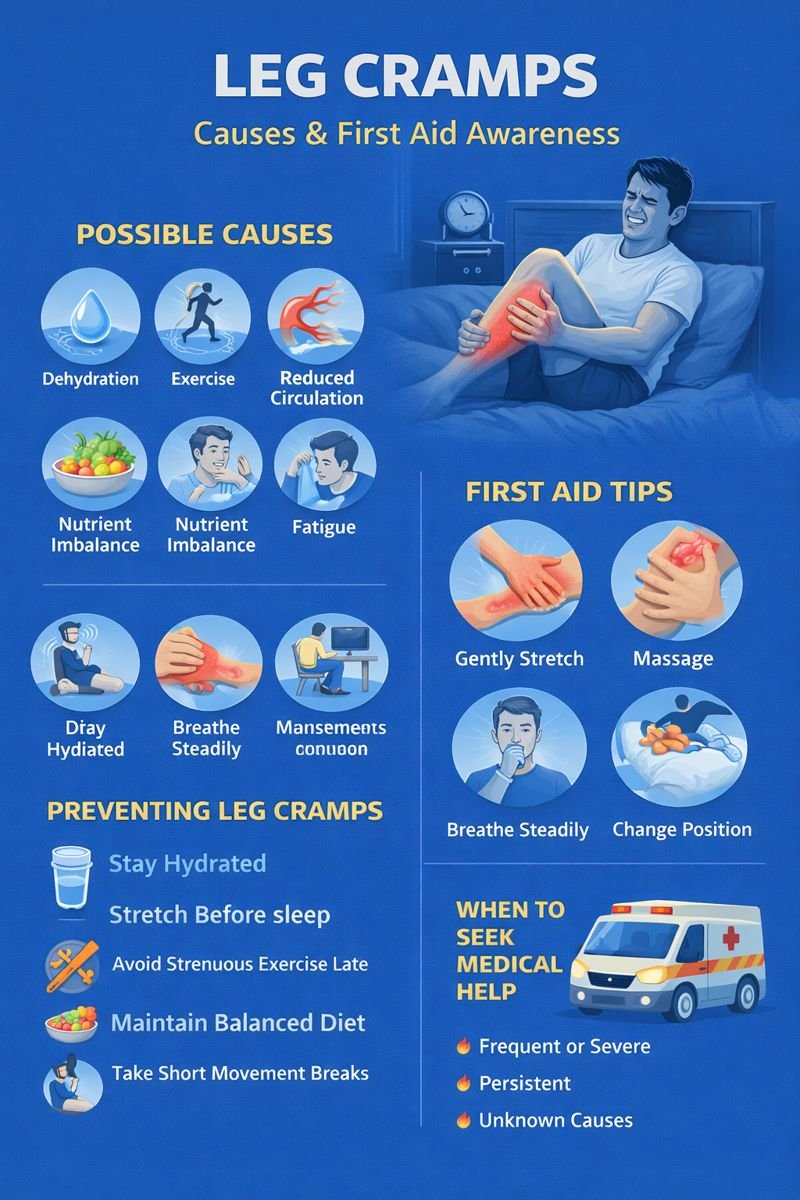
 Leg cramps involve sudden, involuntary tightening of leg muscles—most often the calves, but sometimes the quadriceps or hamstrings. Cramps can last from a few seconds to several minutes and are often painful, especially when they occur during sleep.
Everyday and workplace relevance (Canada)
Leg cramps can affect anyone but are common among workers who stand for long periods, are physically active, or experience irregular hydration throughout the day. Night-time cramps may interrupt rest and impact next-day productivity and comfort.
Scenario story
During a long evening shift at a warehouse, Noah developed a sudden calf cramp when getting into bed at home. The muscle tightened sharply, and he massaged the area while gently extending the leg. After a few minutes the discomfort eased, and Noah made sure to stay hydrated and stretch before the next shift.
When and where leg cramps happen
-
Common during night-time (“nocturnal leg cramps”)
-
May also occur during or after physical activity
-
Sometimes triggered during periods of rest after long workdays
Possible causes and contributing factors
The exact causes are not fully understood, but contributing factors may include:
-
Prolonged standing or repetitive use of leg muscles
-
Strenuous exercise, especially later in the day
-
Reduced blood circulation
-
Electrolyte or nutrient imbalances
-
Fatigue or muscle overuse
Leg cramps may occur more frequently in older adults and people with certain health conditions.
Prevention and lifestyle considerations
Strategies that may help reduce the frequency of leg cramps include:
-
Staying hydrated throughout the day
-
Stretching the legs before and after activity
-
Avoiding strenuous exercise immediately before bedtime
-
Maintaining balanced nutrition to support muscle function
-
Taking short movement breaks during prolonged sitting or standing
Workers may benefit from job-specific ergonomics, footwear, and pacing to reduce fatigue.
First aid awareness for leg cramps
When cramping occurs:
-
Gently stretch the muscle to lengthen it
-
Massage the area to encourage relaxation
-
Breathe steadily, as stress and shallow breathing may worsen discomfort
-
Change position to reduce tension on the affected muscle
Heat or cool compresses are sometimes used for comfort, depending on personal preference. Persistent or severe symptoms should be discussed with a healthcare professional to rule out underlying conditions.
FAQ
Why do leg cramps happen at night?
Night-time cramps may relate to fatigue, reduced circulation during rest, muscle overuse earlier in the day, or other biomechanical factors.
Can dehydration contribute to leg cramps?
Yes. Not having enough fluids can affect muscle function and may increase the likelihood of cramps for some individuals.
Are leg cramps related to exercise?
Strenuous or prolonged activity—particularly involving the legs—can trigger cramps during exercise or later during sleep.
Do leg cramps indicate a serious health problem?
In many cases, cramps are benign. However, persistent, severe, or unexplained cramps may warrant clinical assessment to explore underlying causes.
Can stretching help prevent leg cramps?
Stretching before and after activity may reduce cramping frequency for some people and is commonly recommended as part of general muscle health.
Educational note
This resource supports public health and first aid learning and does not replace assessment, diagnosis, or individualized recommendations from a healthcare professional.
About The Author

Mark Kascha
Certified First Aid Instructor Trainer with 30+ years of real-world experience, including lifeguarding, workplace emergency response, and first aid program development across Canada. Has worked with WorkSafeBC, WSIB, and Manitoba Health.
👉 [View full credentials]🔗 View LinkedIn Profile
Last reviewed: March 2026