Cold Burns From Ice Packs: Symptoms, Prevention & First Aid Awareness
 What Are Cold Burns?
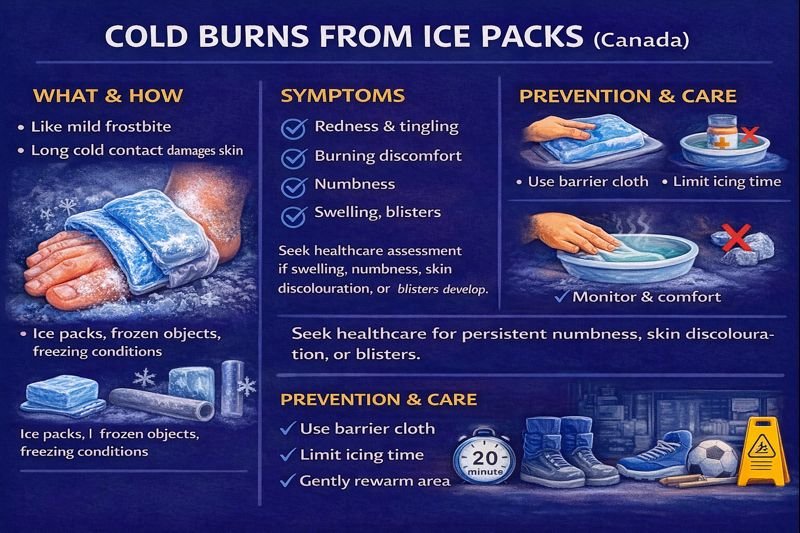
When people think of burns, heat usually comes to mind. However, cold exposure can also damage skin and underlying tissue. A cold burn can occur when skin is in prolonged contact with ice, frozen surfaces, or extremely cold conditions. Cold exposure can lower the temperature of the cells, form tiny ice crystals, and irritate or damage tissues in a way similar to mild frostbite.
Why This Matters for First Aid & Workplaces
Ice packs are often used for sprains, strains, sports injuries, and workplace bumps. Using ice safely helps reduce swelling and discomfort without damaging skin. Awareness is valuable for coaches, workplaces, parents, and anyone using cold packs at home.
Scenario: Mild & Realistic
After a sprained ankle during a school soccer practice, a teen applied an ice pack directly to the skin for too long. The area became red and tingly. The coach reviewed safe icing guidelines, added a barrier cloth, and limited application time in future practices.
How Cold Burns Happen
Cold burns may occur during:
-
Direct ice pack application without a barrier
-
Leaving ice or gel packs on the skin too long
-
Contact with frozen metal or surfaces
-
Winter sports exposure
-
Outdoor work in freezing conditions
The risk increases when circulation is reduced or sensation is impaired.
Symptoms & Signs of Cold Burn
Symptoms vary by duration and exposure, and may include:
-
Redness and tingling
-
Burning discomfort
-
Numbness or “pins and needles”
-
Stiff or firm skin texture
-
Swelling as the area warms
-
Temporary colour changes (pale, white, or later red)
-
In more severe cases, blistering may develop
Healthcare assessment is recommended if there is persistent numbness, skin discolouration, swelling, or blistering.
First Aid Awareness: Rewarming & Comfort
Public first aid education highlights:
-
Removing the cold source promptly
-
Gently rewarming the skin with comfortable, lukewarm water
-
Avoiding massage or rubbing, which may irritate tissues
-
Avoiding dry heat, open flames, or very hot water
-
Monitoring sensation as the area warms
Discomfort during rewarming can occur with cold injuries. Healthcare professionals can guide appropriate care.
Prevention & Safe Use of Ice Packs
Safe cold therapy practices taught in first aid courses commonly include:
-
Always using a barrier cloth between ice and skin
-
Limiting icing to short intervals
-
Checking the skin periodically
-
Avoiding icing when sensation is reduced
-
Never applying frozen packs directly to bare skin
-
Being cautious in children, older adults, and during outdoor sports
The goal of cold therapy is to reduce swelling and discomfort without causing tissue damage.
Workplace & Sports Considerations
Prevention matters in:
-
Outdoor occupations and winter worksites
-
Athletics, recreation, and school sports
-
Warehouse and trades (cold storage environments)
-
Home first aid kits and coaching kits
Education supports injury management and reduces avoidable cold burns.
FAQ — Cold Burns from Ice Packs
1. Are cold burns as serious as heat burns?
Both can damage tissues, but mechanisms differ. Cold burns are often milder when related to ice packs but should be assessed if swelling, blistering, or numbness persists.
2. Why do ice packs need a cloth barrier?
Direct contact with frozen packs can rapidly reduce skin temperature and irritate cells.
3. How long should ice be applied?
First aid education often recommends short, monitored intervals rather than prolonged exposure to avoid irritation. Healthcare professionals can guide when to use cold for injury.
4. Can cold burns blister?
Yes. Longer exposure may cause blistering, swelling, or discolouration, which warrants medical evaluation.
5. Who is at higher risk?
Children, older adults, and individuals with reduced sensation or circulation may have higher risk due to impaired temperature feedback.
Educational Note
This article supports public awareness of cold burns, first aid concepts, and safe use of ice packs. Healthcare professionals provide diagnosis, assessment, and individualized treatment recommendations.
About The Author

Mark Kascha
Certified First Aid Instructor Trainer with 30+ years of real-world experience, including lifeguarding, workplace emergency response, and first aid program development across Canada. Has worked with WorkSafeBC, WSIB, and Manitoba Health.
Last reviewed: March 2026