Heart Attacks: Recognizing Symptoms & First Aid Awareness (Canada)
 A heart attack occurs when oxygen-rich blood to the heart becomes blocked, preventing the heart muscle from getting the oxygen it needs. Without rapid care, heart tissue can become damaged. Heart attacks are a major health concern worldwide, but survival improves greatly when symptoms are recognized early and emergency support is activated quickly.
First Aid & Workplace Relevance
Heart attacks can occur at home, during everyday activities, or in workplaces, gyms, community centres, or while commuting. Canadian workplaces often include emergency response plans and encourage staff to recognize common cardiac symptoms and contact emergency medical services promptly.
Scenario
At a community curling league, a participant reported chest pressure and felt unusually tired. A trained first aid rescuer noticed the person was sweating and holding their left arm. They encouraged the participant to sit, minimized physical effort, and asked someone to call 9-1-1. Paramedics arrived shortly after and transported the participant for treatment. Team members later discussed how quick recognition helped.
Common Symptoms of a Heart Attack
Symptoms can vary from person to person. Some are sudden, while others start slowly. Individuals may have one or several of the following:
-
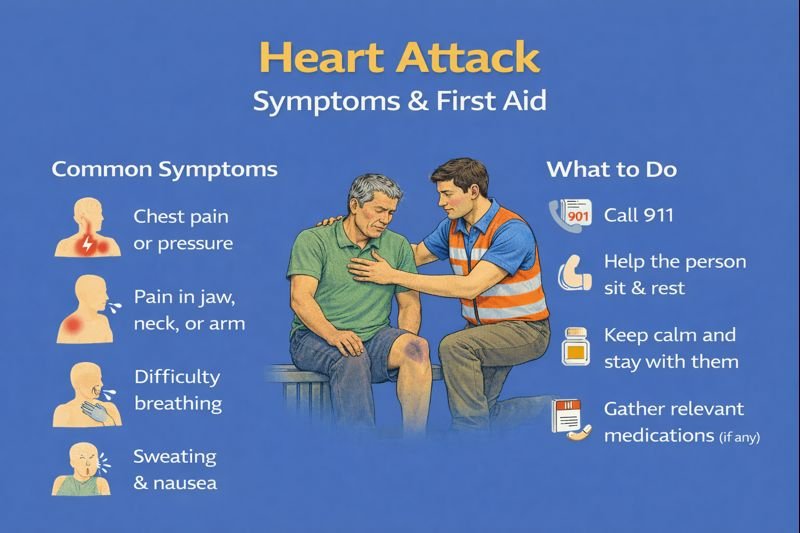
Chest pain, tightness, heaviness, or pressure
-
Pain or discomfort in the jaw, neck, shoulder, or arms (often left arm)
-
Pain between the shoulder blades
-
Difficulty breathing
-
Nausea or stomach discomfort
-
Sweating or unusual fatigue
Not all heart attacks resemble dramatic movie scenes. Some are subtle and easy to overlook. Symptoms can differ between men and women and may differ between one heart attack and another.
First Aid Awareness (Non-Prescriptive)
Courses such as advanced, intermediate and basic first aid often highlight:
-
Calling emergency medical services as soon as heart attack symptoms are suspected
-
Encouraging the person to sit and rest
-
Avoiding unnecessary movement or exertion while waiting for help
-
Gathering relevant medical information or medication lists for responders
-
Staying with the person and monitoring changes in breathing or responsiveness
Emergency medical teams are trained to manage cardiac events en route to the hospital.
Medication Context (Public-Safe)
Some individuals with known heart conditions may have medications prescribed by their clinician. The use of these medications follows personal medical guidance and is not directed by bystanders. Emergency responders often ask about prescribed medications during assessment.
Recovery & Outcomes
Many people survive heart attacks, especially when care is accessed quickly. The first hour is often considered high-risk, which is why early recognition and emergency activation make a meaningful difference.
Prevention & Everyday Awareness
Heart attack risk can be influenced by:
-
Family history
-
Medical conditions (e.g., blood pressure, cholesterol)
-
Lifestyle factors (e.g., tobacco use, physical activity)
-
Age and sex
Communities, schools, and workplaces increasingly support wellness programming, CPR/AED training, and cardiac awareness to improve outcomes.
FAQ
Can symptoms be mild?
Yes. Some heart attacks involve subtle discomfort or fatigue instead of dramatic chest pain.
Do symptoms look different in women?
Some women report nausea, fatigue, or neck/jaw discomfort without strong chest pain.
How long do symptoms last?
Symptoms can last minutes or come and go. Persistent symptoms warrant urgent medical evaluation.
Do all heart attacks feel the same?
No. Symptoms vary widely between individuals and even between events experienced by the same person.
Why call emergency services instead of driving?
Paramedics can provide immediate assessment and cardiac support before and during transport.
Educational Note
This content supports public awareness of heart attack symptoms, first aid considerations, and the importance of early emergency activation. It is not a substitute for professional assessment, diagnosis, or treatment.
About The Author

Mark Kascha
Certified First Aid Instructor Trainer with 30+ years of real-world experience, including lifeguarding, workplace emergency response, and first aid program development across Canada. Has worked with WorkSafeBC, WSIB, and Manitoba Health.
👉 [View full credentials]🔗 View LinkedIn Profile
Last reviewed: March 2026