What Is Groin and Hip Pain?
Groin and hip pain can result from a variety of conditions affecting muscles, joints, or nerves. In many cases, the discomfort is related to a soft tissue injury—such as a muscle strain—or to nerve compression. Because the hip and groin are involved in walking, standing, and balance, pain in this area is often noticeable during everyday activities.
Symptoms may worsen with movement, weight-bearing, or prolonged standing. Management depends on the underlying cause, which is why proper assessment is important.
First Aid and Workplace Relevance in Canada
Groin and hip pain is common in Canadian workplaces and recreational settings, particularly in jobs or sports involving lifting, twisting, prolonged standing, or sudden changes in direction. Construction, healthcare, warehousing, office work, and athletics can all place stress on the hip and groin region.
First aid awareness helps individuals recognize early signs of injury, reduce strain, and take steps to prevent worsening symptoms while awaiting further assessment if needed.
A Simple, Realistic Scenario
A warehouse worker feels a dull ache in the groin after several long shifts involving lifting and walking. Over the next few days, the discomfort worsens when standing or climbing stairs. Remembering first aid training, they reduce physical strain, apply cold therapy, and arrange a medical assessment when the pain doesn’t improve.
Muscle Strain and Hernia-Related Pain
One of the most common causes of groin and hip pain is muscle strain, particularly involving the adductor muscles of the inner thigh.
Typical features may include:
-
Pain in the groin or inner thigh
-
Muscle weakness or stiffness
-
Swelling or tenderness
-
Increased discomfort when walking or standing
In some cases, an adductor strain may be related to a sports hernia, which can progress toward an inguinal hernia. Unlike a traditional inguinal hernia, a sports hernia does not usually cause a visible bulge in the groin.
Nerve Compression
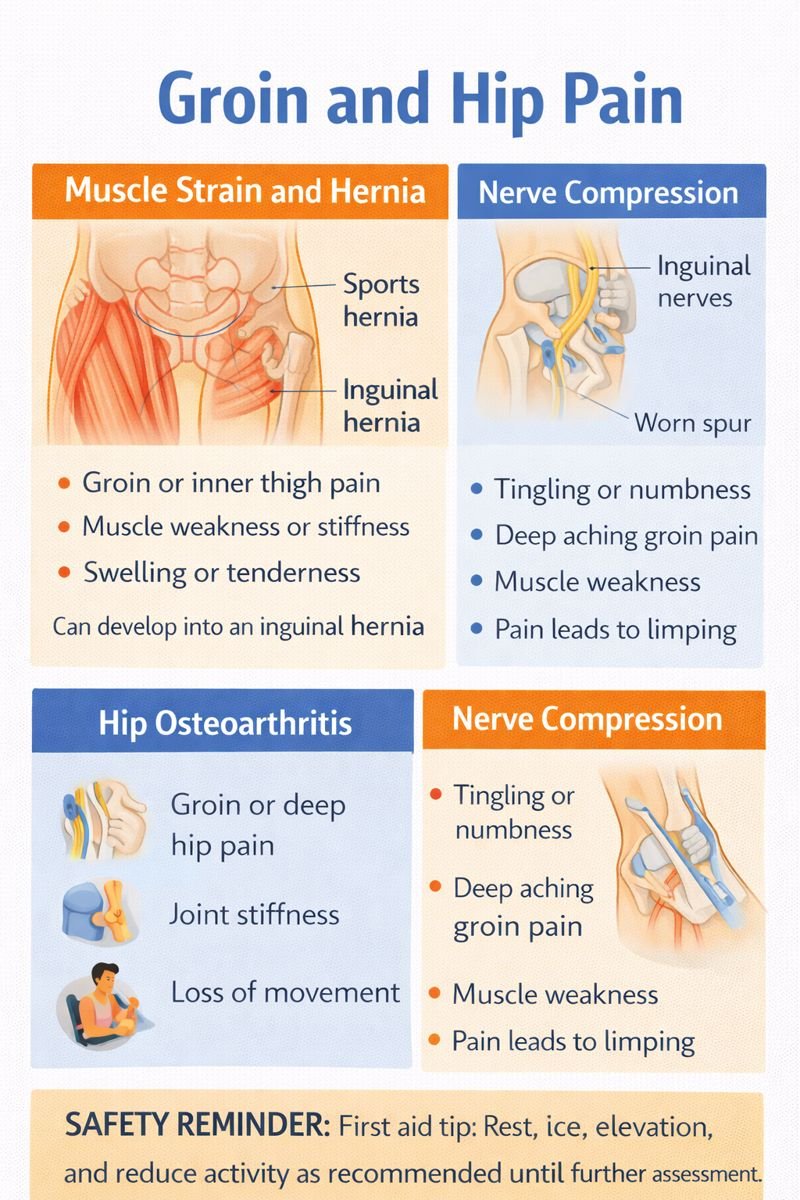 Groin and hip pain may also occur when nerves are compressed, particularly the inguinal or obturator nerves.
Possible contributing factors include:
-
Previous hip or back injury or surgery
-
Muscle tightness
-
Growths or swelling near the nerve pathways
Symptoms of nerve-related pain may include:
-
Tingling or numbness
-
Deep aching pain in the groin
-
Muscle weakness
-
Pain affecting one side
-
Limping due to discomfort
Walking and standing often make nerve compression symptoms worse.
Hip Osteoarthritis
Hip osteoarthritis involves gradual wear and tear of the cartilage within the hip joint. This can cause groin pain that feels deep or aching.
Associated features may include:
-
Joint stiffness, especially after rest
-
Reduced range of motion
-
Muscle loss around the hip
-
Cracking or grinding sensations
Weight-bearing activities can worsen symptoms over time. Bone spurs may develop, leading to catching sensations and further movement limitations.
Other Possible Causes
Several other conditions can also contribute to groin and hip pain, including:
-
Tendinitis
-
Acetabular labral tears (cartilage tears in the hip joint)
-
Stress fractures
-
Osteitis pubis (inflammation of the pubic bone)
These conditions may cause pain that radiates between the groin, hip, and upper thigh and can affect stability and movement.
First Aid and General Management
From a first aid perspective, early care focuses on reducing strain and inflammation.
General first aid measures may include:
-
Resting from aggravating activities
-
Applying cold therapy to reduce swelling
-
Using gentle compression if appropriate
-
Elevating the leg when possible
Temporary activity modification and support during walking may help limit discomfort.
Treatment and Recovery Considerations
Management depends on the cause and severity of the condition. Some cases improve with conservative care, while others may require structured rehabilitation.
General approaches may include:
-
Gradual return to activity
-
Guided physical therapy to restore strength and flexibility
-
Temporary use of walking aids if needed
Early recognition and appropriate care help reduce recovery time and prevent long-term issues.
Prevention and Workplace Safety Tips
Reducing the risk of groin and hip pain includes:
-
Using proper lifting and movement techniques
-
Warming up before physical activity
-
Maintaining flexibility and muscle strength
-
Avoiding prolonged static positions
-
Reporting early symptoms before they worsen
Workplace ergonomics and task modification play an important role in prevention.
Frequently Asked Questions
Can groin pain come from the hip joint?
Yes. Hip joint conditions can refer pain to the groin area.
Is groin pain always caused by a muscle strain?
No. Nerve compression, joint issues, and inflammation can also cause similar symptoms.
Why does walking make groin or hip pain worse?
Walking places stress on muscles, joints, and nerves involved in hip movement.
Can nerve compression cause limping?
Yes. Pain, weakness, or numbness can alter normal walking patterns.
How does first aid training help with hip and groin injuries?
First aid training improves early recognition, safe activity modification, and appropriate response.
Educational Note
This article is intended for general public education and workplace first aid awareness in Canada. It does not replace medical assessment, diagnosis, or individualized treatment for groin or hip pain.
About The Author

Mark Kascha
Certified First Aid Instructor Trainer with 30+ years of real-world experience, including lifeguarding, workplace emergency response, and first aid program development across Canada. Has worked with WorkSafeBC, WSIB, and Manitoba Health.
👉 [View full credentials]🔗 View LinkedIn Profile
Last reviewed: March 2026