
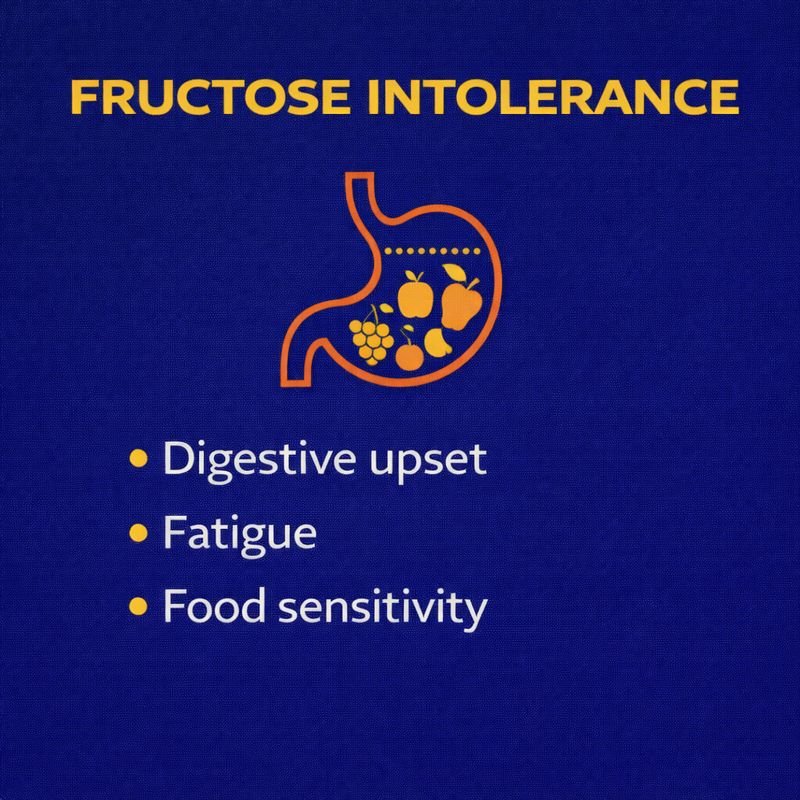
 Fructose intolerance refers to difficulty processing fructose, a natural sugar found in fruits, juices, and in some sweeteners used in packaged foods and beverages. People may experience symptoms after eating foods high in fructose or certain sweeteners.
There are two main forms often discussed:
-
Hereditary fructose intolerance (HFI): A rare inherited condition affecting specific enzymes
-
Fructose malabsorption: A more common digestive sensitivity
Public & workplace relevance (Canada)
Fructose appears in fruit trays, juices, baked goods, cafeterias, and vending machines. Awareness supports food-service settings, workplaces, and schools where dietary accommodations may be discussed.
Scenario story
During a staff potluck, Liam tried a dessert sweetened with fruit concentrate. Within an hour, he felt bloated and tired with stomach discomfort. Over time Liam noticed a pattern with certain fruits and sweeteners and later reviewed the situation with a healthcare provider.
Causes & mechanisms
In hereditary fructose intolerance, the body lacks specific enzymes involved in processing fructose. In malabsorption, the digestive system has difficulty absorbing fructose in the small intestine. Both conditions may lead to digestive symptoms, though HFI is typically diagnosed in early childhood.
Common symptoms
Symptoms vary depending on type, sensitivity, and amount consumed:
Digestive symptoms
-
Bloating or abdominal discomfort
-
Nausea or vomiting
-
Diarrhea or loose stools
-
Feeling unwell after eating certain fruits or sweeteners
Energy & fatigue
Some individuals report tiredness or sleepiness after eating fructose-containing foods.
Feeding difficulties (in children)
Young children or infants with HFI may resist fructose-containing foods and may not gain weight as expected.
Blood sugar considerations
In HFI, disruptions in sugar metabolism may cause low blood sugar (hypoglycemia). This requires clinical evaluation and dietary guidance.
Liver involvement
Severe untreated HFI can involve the liver, but this is uncommon and medically managed under specialist care.
Food sources of fructose
Naturally found in:
-
Apples
-
Pears
-
Grapes
-
Mango
-
Watermelon
-
Honey
Common added sources:
-
High-fructose corn syrup
-
Sweetened beverages
-
Fruit concentrates
-
Some syrups and confectionery
Tolerance varies widely among individuals.
Dietary awareness & prevention
People with fructose intolerance or malabsorption may:
-
Observe personal tolerance to specific fruits
-
Ask about ingredients in cafeterias and restaurants
-
Work with healthcare professionals for dietary planning if needed
FAQ
Is fructose intolerance the same as a food allergy?
No. Fructose intolerance involves digestion or metabolism, not the immune system.
Can adults develop fructose malabsorption?
Yes. Many people identify symptoms in adolescence or adulthood.
Can children outgrow fructose intolerance?
Patterns vary. HFI is lifelong and managed through diet, while malabsorption may fluctuate.
Does fructose always cause symptoms?
No. Reactions depend on the amount consumed and individual tolerance.
Should fructose be eliminated entirely?
Dietary adjustments vary by person and are best guided by healthcare professionals.
Educational note
This content supports food intolerance awareness and does not replace professional evaluation, diagnosis, or nutrition planning.
About The Author

Mark Kascha
Certified First Aid Instructor Trainer with 30+ years of real-world experience, including lifeguarding, workplace emergency response, and first aid program development across Canada. Has worked with WorkSafeBC, WSIB, and Manitoba Health.
👉 [View full credentials]🔗 View LinkedIn Profile
Last reviewed: March 2026