 What Are Elastic Knee Sleeves?
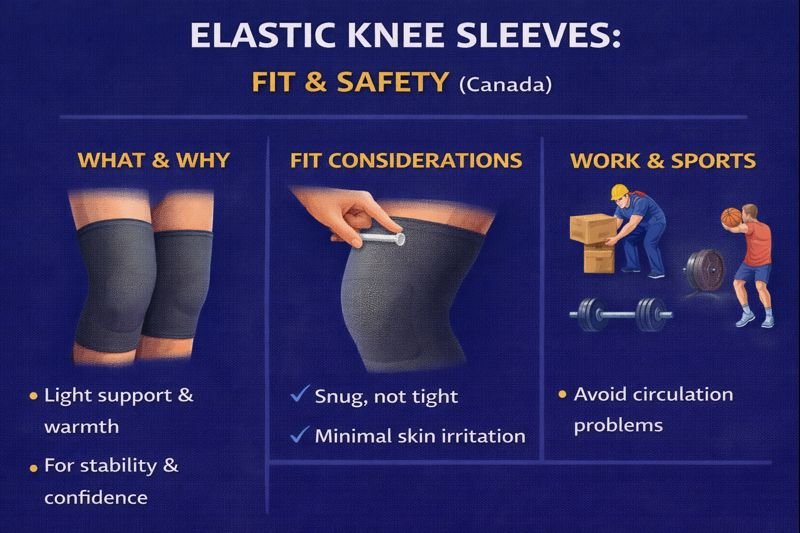
Elastic knee sleeves are supportive garments worn around the knee to provide light compression and stability during daily activities, sports, or workplace tasks. They do not immobilize the joint but offer gentle support and may improve comfort for individuals who feel their knee is weak or unsteady.
Why This Matters for First Aid & Workplaces
Knee discomfort and minor instability are common in activities that involve kneeling, lifting, squatting, or quick directional changes. Many Canadians use knee sleeves during recreation or work to feel more stable. Understanding proper fit helps avoid discomfort or circulation issues.
Scenario: Mild & Realistic
A grocery employee noticed that their knee felt “wobbly” during long shifts involving bending and stocking. They tried a knee sleeve for light support and reported the concern to their supervisor, who adjusted tasks temporarily and recommended follow-up with a healthcare professional for persistent symptoms.
What Knee Sleeves Do (and Don’t Do)
Knee sleeves may assist with:
-
Light stability during movement
-
Compression and warmth
-
Confidence during sport or lifting tasks
They do not:
-
Replace medical assessment
-
Treat injuries or structural conditions
-
Immobilize the knee
-
Provide the level of support of a brace designed for clinical use
Fit & Comfort Considerations
When selecting a sleeve, individuals commonly consider:
-
Snugness: Should feel close to the skin without pinching
-
Compression: Should provide gentle support without cutting off circulation
-
Mobility: Should not restrict natural knee bending
-
Sizing: Should match manufacturer guidance for thigh/calf measurements
-
Comfort during activity: Sleeve should stay in place without slipping or bunching
People often use the “two-finger test” (being able to slide two fingers under the edge) as a rough comfort check, but circulation, sensation, and mobility remain the most important indicators.
Workplace & Sports Relevance
Knee sleeves are used in:
-
Recreational sports (running, basketball, volleyball)
-
Weight training and fitness
-
Trades involving kneeling or lifting
-
Warehousing and stocking tasks
-
Outdoor recreation
For persistent weakness, swelling, pain, or instability, a healthcare professional can assess contributing factors such as mechanics, strength, or previous injuries.
Prevention & Safety Tips
-
Match the sleeve to the type of activity
-
Avoid models that are excessively tight
-
Check for skin irritation or numbness
-
Re-check fit during activity buildup (e.g., after warm-up)
-
Replace worn sleeves that no longer stay in place
FAQ — Elastic Knee Sleeves
1. Are knee sleeves the same as knee braces?
No. Sleeves offer light compression and support; braces provide structural stabilization and are often used under clinical guidance.
2. Can sleeves prevent knee injuries?
Sleeves may provide comfort and confidence, but injury prevention also depends on strength, movement mechanics, and appropriate training.
3. Should sleeves feel tight?
They should feel snug but not restrictive. Excessive pressure or numbness suggests poor fit.
4. Are sleeves useful at work?
Some workers use sleeves for comfort during repetitive tasks or lifting. Employers may encourage ergonomic adjustments or hazard reporting for persistent issues.
5. When should someone seek healthcare assessment?
If the knee buckles, swells, locks, or remains painful, a healthcare professional can evaluate the cause.
Educational Note
This article supports public learning about knee sleeve awareness, injury prevention considerations, and workplace relevance. Healthcare professionals determine diagnosis, treatment, and rehabilitation for knee injuries.
About The Author

Mark Kascha
Certified First Aid Instructor Trainer with 30+ years of real-world experience, including lifeguarding, workplace emergency response, and first aid program development across Canada. Has worked with WorkSafeBC, WSIB, and Manitoba Health.
👉 [View full credentials]🔗 View LinkedIn Profile
Last reviewed: March 2026