What Is a Blood Blister?
A blood blister is similar to a typical fluid-filled blister, but instead of clear fluid, it contains blood. The skin has two main layers: the epidermis (outer layer) and the dermis (deeper layer). Small blood vessels called capillaries are located in the dermis.
In a regular blister, clear fluid collects between the epidermis and dermis due to friction or pressure. In a blood blister, greater force or pressure damages the capillaries in the dermis, allowing blood to leak into the blister. This gives blood blisters their red, purple, or dark appearance.
Blood blisters often form over joints and bony areas, such as the heels, toes, fingers, and the balls of the feet, where pressure is concentrated.
Why This Matters for First Aid and Workplaces in Canada
Blood blisters are common in Canadian workplaces and recreational settings, especially in jobs involving repetitive motion, manual labour, tight footwear, or sports equipment. First aid awareness helps workers recognize blood blisters early, reduce pressure on the area, and prevent infection—supporting comfort, mobility, and safe return to activity.
A Realistic Scenario
A warehouse employee spends a long shift lifting boxes while wearing new work gloves. By the end of the day, they notice a dark, painful blister on a finger joint. A first aid–trained coworker recognizes it as a blood blister, helps reduce pressure on the area, and ensures it stays clean and protected while healing.
Common Causes of Blood Blisters
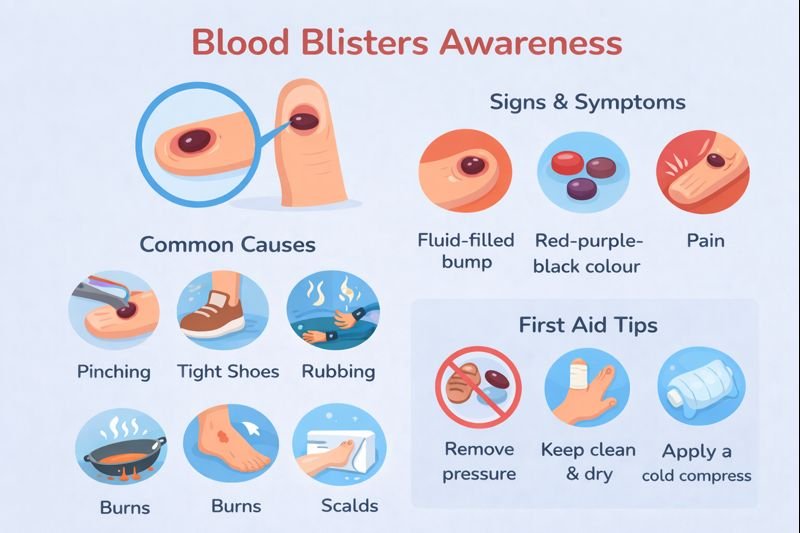 Blood blisters occur less frequently than regular blisters and are usually linked to intense pressure or friction. Common causes include:
-
Forceful pinching or crushing
-
Repeated rubbing or friction
-
Poorly fitting shoes or gloves
-
Sports and physical activities (such as weightlifting, cycling, or baseball)
-
Burns or scalds
-
Tight clothing or equipment
-
Exposure to irritating chemicals
-
Certain skin reactions, including allergies or infections
Signs and Symptoms of Blood Blisters
Blood blisters are usually easy to identify and may include:
-
A raised, fluid-filled bump
-
Red, purple, or dark colouring
-
Tenderness or pain when touched
-
Irritation or discomfort during movement
While often uncomfortable, most blood blisters are not serious.
First Aid Awareness for Blood Blisters
Blood blisters usually heal on their own over several days. First aid focuses on protecting the area and preventing infection, rather than active treatment.
General first aid awareness steps include:
-
Reducing or removing the source of pressure or friction
-
Keeping the blister intact when possible
-
Elevating the affected area to limit swelling
-
Using cold compresses intermittently to reduce discomfort
-
Covering the area with a clean, protective dressing if needed
-
Keeping the area clean and dry while it heals
If a blister breaks on its own, protecting the exposed skin from contamination is important.
Prevention and Workplace Considerations
Blood blisters are often preventable with simple precautions:
-
Wear properly fitting shoes, gloves, and protective equipment
-
Use moisture-wicking socks and keep skin dry
-
Take breaks from repetitive or high-pressure activities
-
Use padding or protective barriers over pressure points
-
Adjust tools or equipment to reduce friction
Reducing repeated pressure allows the skin to recover and lowers the risk of blister formation.
Frequently Asked Questions (FAQ)
Are blood blisters dangerous?
Most blood blisters are minor and heal naturally, but they can become infected if not protected properly.
Should blood blisters be popped?
Blood blisters generally heal best when left intact, as the skin provides natural protection.
How long does a blood blister take to heal?
Most blood blisters dry out and heal within several days to a couple of weeks, depending on size and pressure.
Where do blood blisters most often occur?
They commonly form on fingers, toes, heels, and other bony or high-pressure areas.
Why is first aid awareness important for blisters?
Early recognition and protection help prevent infection and reduce discomfort, especially in active or work environments.
Educational Note
This article is intended for general first aid and workplace safety education in Canada. It promotes awareness and basic care principles but does not replace medical assessment when needed.
About The Author

Mark Kascha
Certified First Aid Instructor Trainer with 30+ years of real-world experience, including lifeguarding, workplace emergency response, and first aid program development across Canada. Has worked with WorkSafeBC, WSIB, and Manitoba Health.
👉 [View full credentials]🔗 View LinkedIn Profile
Last reviewed: March 2026