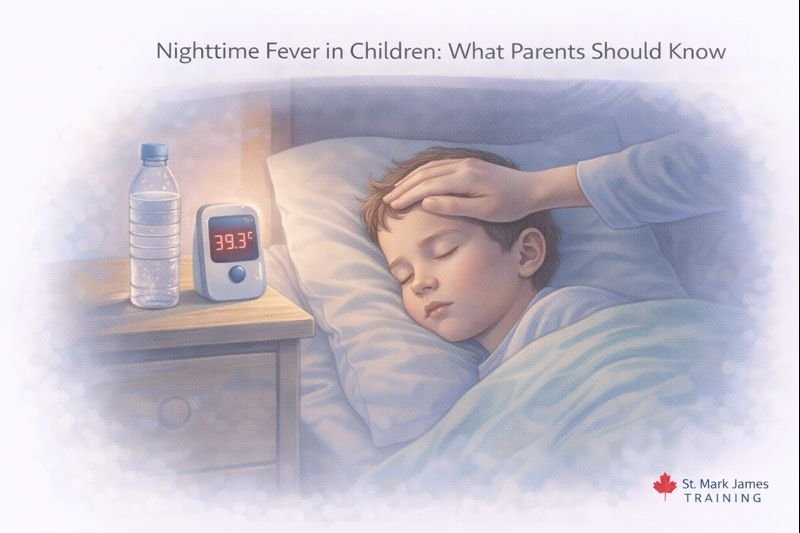
 Nighttime fever in children can be worrying for parents, especially when symptoms appear suddenly. In many cases, fever is caused by a viral infection, and rest, hydration, and monitoring are all that is required. Knowing when to observe at home versus when to seek care is an important confidence skill for caregivers across Canada.
Educational note: Fever itself is not an illness — it’s a sign that the immune system is working to fight off an infection.
When to Wake a Sleeping Child
Most mild fevers do not require waking a child from sleep. However, seek medical advice if:
-
A child has a fever ≥ 39°C (102°F)
-
A child looks unusually unwell, confused, or difficult to wake
-
Breathing is fast or laboured
-
A rash spreads or does not blanch
-
The child is dehydrated (dry mouth, fewer wet diapers, minimal urine, lethargy)
For infants:
-
Under 3 months old: Consult a doctor for any fever ≥ 38°C (100.4°F) due to higher risk and immature immune systems.
If a healthcare provider recommends urgent assessment, waking the child may be necessary.
Medication Considerations (With Guidance)
Fever-reducing medications such as acetaminophen or ibuprofen may be used if a medical professional has advised it. These are typically reserved for higher fevers or if the child appears uncomfortable.
Important:
-
Do not give ibuprofen to infants under 6 months unless directed
-
Do not give aspirin to children due to the risk of Reye’s syndrome
-
Always use correct dosing for age/weight
Comfort Measures at Night
Parents can support comfort without overcooling:
✔ Light, breathable sleepwear
✔ Lukewarm sponge bath or brief soak if the child is awake (stop if shivering occurs)
✔ Light bedding instead of heavy blankets
✔ Avoid cold baths or rubbing with alcohol (unsafe and not recommended)
Hydration & Monitoring
Fever increases the risk of dehydration. Offer:
-
Water
-
Breast milk or formula (infants)
-
Oral electrolyte solutions (if recommended)
Watch for:
-
Fewer wet diapers
-
Dry mouth or lips
-
No tears
-
Excessive sleepiness
Canadian First Aid & Training Relevance
Parents, educators, and childcare providers across Canada can benefit from basic first aid training, including how to recognize worsening symptoms, when to call 911, and how to assess dehydration or breathing difficulties in children. These skills are also valuable in workplace child-care settings, recreation, and community programs.
When to Seek Emergency Care
Call emergency services if the child:
-
Has difficulty breathing
-
Cannot stay awake or is hard to rouse
-
Has stiff neck, seizures, blue lips, or severe headache
-
Shows signs of shock or poor circulation
-
Has fever with a widespread rash
Early recognition prevents delays in treatment and supports better outcomes.
Disclaimer (Educational Only)
This post is for general learning purposes and is not a diagnosis or treatment guide. If a child is unwell or symptoms worsen, seek care from a qualified healthcare professional or emergency services in your province.
About The Author

Mark Kascha
Certified First Aid Instructor Trainer with 30+ years of real-world experience, including lifeguarding, workplace emergency response, and first aid program development across Canada. Has worked with WorkSafeBC, WSIB, and Manitoba Health.
👉 [View full credentials]🔗 View LinkedIn Profile
Last reviewed: March 2026