 Eye injuries can happen unexpectedly during sports, home projects, or workplace tasks—especially in settings with flying debris, tools, or chemicals. Even small particles can irritate the eye, while more serious injuries may require urgent medical attention.
First Aid & Workplace Relevance
Canadian workplaces such as construction, landscaping, manufacturing, and automotive trades routinely use protective eyewear to reduce injury risk. Recreation also plays a role—sports such as hockey, racquet sports, and basketball are common sources of eye impacts.
Scenario
During a weekend cleanup, dust from a power sander blew into a teen’s eye. They blinked rapidly and rubbed at the irritation. A trained first aid rescuer reminded them not to rub their eye, guided them to a sink, and helped flush the debris out gently with clean water until the discomfort eased.
Common Types of Eye Injuries
-
Irritation/abrasion from dust, dirt, or sand
-
Impact injuries (black eye) from sports or tools
-
Chemical exposure from household or workplace products
Causes & Mechanisms
Eye injuries may result from:
-
Particulate debris (dust, wood, sand, metal filings)
-
Sports injuries / impacts
-
Household chemical splashes
-
Workplace products (e.g., cleaning agents)
-
Lack of or improper protective eyewear
General First Aid Education for Eye Injuries
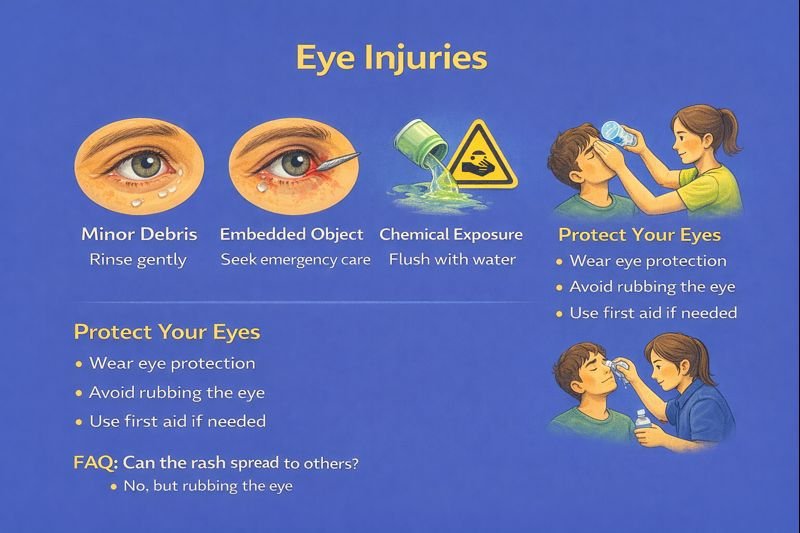
1. Minor Debris (sand, dust, eyelashes)
-
Blink and allow natural tearing to flush the eye
-
Rinse gently with clean water if needed
-
Avoid rubbing, which may worsen irritation
Most mild irritations improve within a day or two.
2. Embedded Objects (serious)
-
Do not touch, press, or attempt removal
-
Cover both eyes with a clean dressing to limit eye movement
-
Seek medical care promptly
3. Chemical Exposure
-
Flush eyes with clean running water for several minutes
-
Remove contact lenses after flushing begins
-
Seek medical attention after flushing, even if symptoms improve
Prevention & Protective Measures
-
Use CSA-approved or task-appropriate protective eyewear at work
-
Wear eye protection during household repairs, yard work, and sports
-
Keep chemicals labelled and stored safely
-
Teach youth how to flush debris safely rather than rub the eye
FAQ
Q1: Do all eye injuries need emergency care?
Not always. Mild irritation may clear quickly, while impacts, chemical exposures, or embedded objects may require urgent evaluation.
Q2: What if vision becomes blurry after an eye injury?
Blurry vision can indicate irritation or a more serious injury. Medical assessment is advised.
Q3: Should contact lenses be removed after an eye injury?
Lenses may trap debris or chemicals. Many first aid guides suggest removing them after flushing begins if possible.
Q4: Can rubbing the eye make things worse?
Rubbing can increase irritation and worsen scratches. Blinking and flushing are safer.
Educational Note
This post is for public education and general first aid awareness. Learning first aid skills helps people recognize when irritation can be managed at home and when professional care is needed.
About The Author

Mark Kascha
Certified First Aid Instructor Trainer with 30+ years of real-world experience, including lifeguarding, workplace emergency response, and first aid program development across Canada. Has worked with WorkSafeBC, WSIB, and Manitoba Health.
👉 [View full credentials]🔗 View LinkedIn Profile
Last reviewed: March 2026