
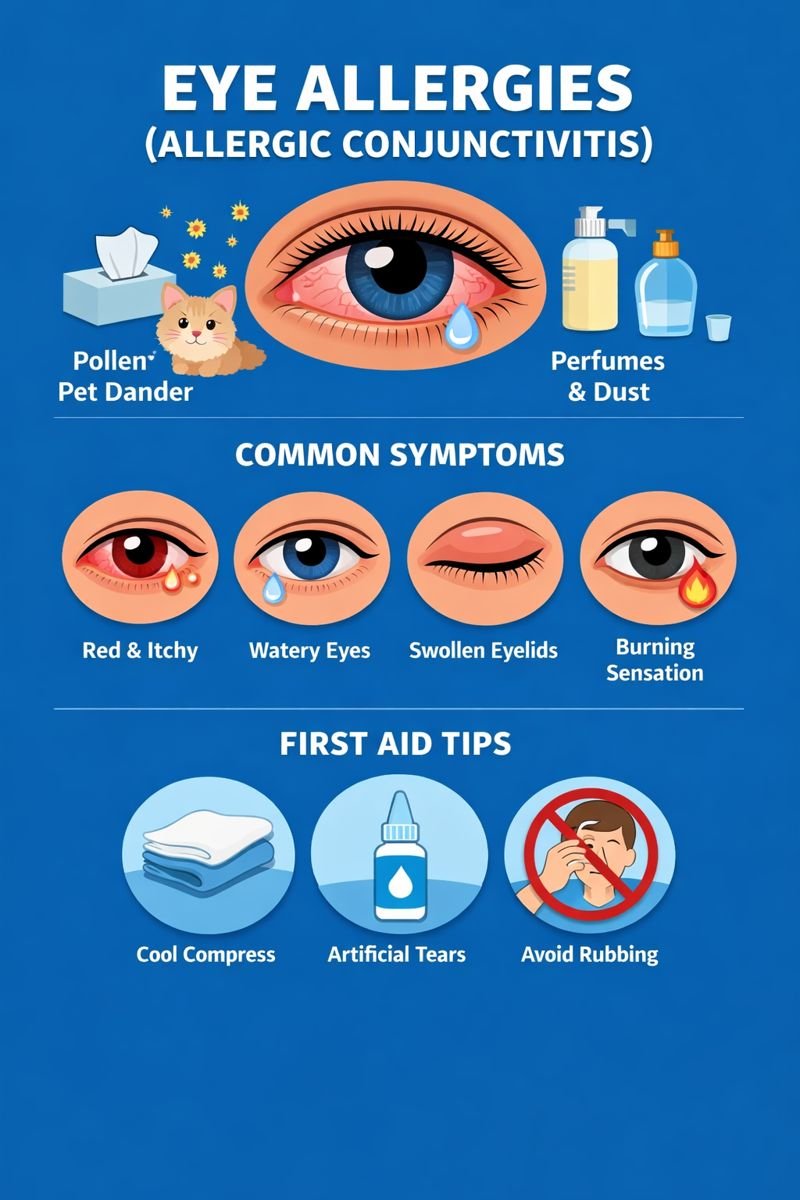
 Eye allergies, also called allergic conjunctivitis, occur when the immune system reacts to an allergen on the surface of the eye. The body releases histamines, which can lead to redness, itchiness, and watery eyes. While allergies can happen at any time of year, they are especially common during spring, summer, and fall when outdoor allergens increase.
Why eye allergies matter in everyday and workplace settings (Canada)
Eye irritation from allergies is common in workplaces where staff are exposed to outdoor pollen, indoor dust, perfumes, cleaning products, or pet dander. Allergy awareness helps workers identify when symptoms are allergy-related rather than caused by injury, infection, or chemical exposure.
Short scenario
In late May, Erin’s eyes became itchy and watery during outdoor lunch breaks at her office campus. A co-worker reminded her that pollen counts were high, and Erin used a cool cloth and lubricating artificial tears later at home. The symptoms eased, and she took note of seasonal triggers for future weeks.
Common allergens
Eye allergies may be triggered by airborne or contact allergens such as:
-
Pollen from grasses, trees, and weeds (seasonal)
-
Indoor allergens such as dust, pet dander, and mould
-
Cosmetics and fragrances, including makeup and perfume
-
Chemical irritants found in some workplace products
-
Contact lens materials or solutions, which can cause irritation or sensitivity
Symptoms of eye allergies
Symptoms may appear soon after exposure or may take a couple of days to develop. Common symptoms include:
-
Red or irritated eyes
-
Tearing or watery discharge
-
Eye itchiness
-
Mild eyelid swelling
-
Light sensitivity
-
Burning or soreness sensation
Eye symptoms may also occur alongside other allergy symptoms such as sneezing or a runny nose.
Causes & mechanisms
Allergic conjunctivitis occurs when the immune system identifies a harmless substance (like pollen) as a threat. Histamines and other chemicals are released in the affected area, causing inflammation and itchiness on the eye’s surface.
Management and first aid considerations
Avoiding or reducing exposure to known allergens is the most helpful strategy. Individuals who are unsure about their triggers may consider discussing their symptoms with a healthcare professional to better understand possible causes and options.
Supportive measures that may help provide comfort include:
-
Using a cool, clean, moist cloth over closed eyes
-
Using lubricating eye drops (“artificial tears”) to gently rinse allergens from the eye
-
Minimizing rubbing of the eyes, which can worsen irritation
-
Considering indoor air quality measures such as regular dusting, use of air filters, or limiting exposure to strong fragrances
Some people with confirmed allergies may be advised by their healthcare provider about allergy management options, including antihistamines or other approaches when appropriate. Treatments, medicines, or specific products are not covered here and should be discussed with a regulated professional.
Prevention & workplace considerations
-
Seasonal pollen levels can influence symptom severity, especially for outdoor workers.
-
Indoor environments with dust, pet dander, or strong scents may trigger symptoms year-round.
-
Safety eyewear may reduce exposure to airborne allergens in certain workplaces.
-
Employers can support workers by maintaining indoor air quality and following fragrance-aware policies when appropriate.
FAQ
What makes eye allergies different from an eye infection?
Eye infections are typically caused by bacteria or viruses, whereas allergies involve an immune reaction to an allergen. Allergies often present with itchiness and clear tearing, while infections may involve thicker discharge or other symptoms. Only a healthcare professional can determine the cause.
Can rubbing the eyes make allergies worse?
Rubbing may release more histamines locally and can increase redness and swelling. It may also irritate the surrounding tissue or transfer additional allergens.
Are eye allergies only seasonal?
Many are seasonal due to pollen, but indoor allergens such as dust or pet dander can trigger symptoms any time of year.
Do contact lenses cause allergies?
Some people may react to contact lens materials or cleaning solutions. Symptoms may improve when lenses are removed and replaced later as advised.
Are eye allergies dangerous?
Most cases are mild and related to environmental triggers. Persistent or unusual symptoms should be discussed with a regulated healthcare provider.
Educational note
This material is for general first aid and public education purposes and encourages awareness of allergy-related eye irritation in everyday and workplace settings.
About The Author

Mark Kascha
Certified First Aid Instructor Trainer with 30+ years of real-world experience, including lifeguarding, workplace emergency response, and first aid program development across Canada. Has worked with WorkSafeBC, WSIB, and Manitoba Health.
👉 [View full credentials]🔗 View LinkedIn Profile
Last reviewed: March 2026