Poisoning & Choking Hazards for Babies: Household Safety Awareness
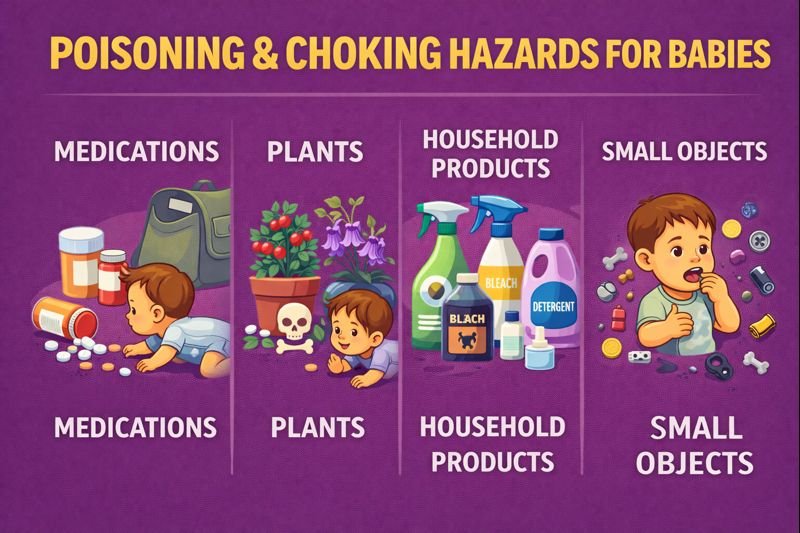 Babies explore the world through touch and taste, and they often place objects in their mouths. As infants become mobile, they can access items on floors, tables, furniture, purses, and cupboards, increasing the risk of both poisoning and choking. Children under age three are at higher risk because their swallowing skills and judgment are still developing.
Why it matters in Canadian homes & childcare settings
Unintentional poisoning and choking incidents can happen in homes, childcare programs, and family workplaces. Awareness helps parents, caregivers, and early childhood workers reduce risks through safe storage, supervision, and hazard checks.
Scenario
A crawling baby reached for a small button that had fallen from a jacket. A caregiver performed a quick floor check, removed the button and nearby beads, and moved a purse containing medications to a high shelf. No incident occurred, and the environment was made safer for play.
Common poisoning & choking hazards
Medications and supplements
Medications, including vitamins and over-the-counter products, may resemble candy in colour or flavour. Keeping purses, pill organizers, and bottles out of sight and reach helps prevent accidental ingestion.
Plants (indoor & outdoor)
Plants can be attractive to babies due to colourful berries, leaves, or flowers. Some varieties may cause stomach upset or poisoning if ingested, while others pose choking risks. Examples mentioned include:
-
Plants linked with vomiting, nausea, or dizziness when ingested: foxglove, azalea, rhododendron, oleander, mountain laurel, and unripe tomatoes or potato “eyes.”
-
Non-poisonous plants such as begonias, African violets, gardenias, lilacs, and violets may still cause gagging or choking if chewed.
Household products
Many cleaning and personal care products contain chemicals that can irritate the skin, eyes, or mouth, or may cause harm if swallowed in significant amounts. Examples include:
-
Laundry products, bleach, disinfectants
-
Mouthwashes that contain alcohol
-
Shampoo, liquid cosmetics, nail polish
-
Pesticides and rodent control products
Canadian Poison Centres and public health agencies frequently emphasize safe storage, labelling, and high shelving for these products in childcare environments.
Small objects
Pins, buttons, coins, beads, small toys, batteries, and even pet food can pose choking risks. Babies commonly access items under furniture or in corners that adults do not routinely check. A useful technique for caregivers is performing an occasional “floor-level scan” from a child’s perspective.
Lead paint
Lead remains a concern in older homes, older toys, antique furniture, and some imported products. Lead exposure can harm neurological development in young children. Renovations and repairs in older buildings require caution and cleanup measures to prevent dust exposure.
Prevention & safety tips
-
Store medications, cosmetics, cleaners, and chemicals in locked or out-of-reach cabinets
-
Keep purses and bags off tables and floors
-
Dispose of small choking hazards promptly
-
Identify plant types in the home and garden
-
Monitor renovation dust and consider professional advice for older homes
-
Use child-resistant closures when available
-
Encourage supervision in childcare and play areas
FAQ
Why are babies more at risk for poisoning?
They explore the world orally, and their bodies are smaller, making even small amounts of substances more impactful.
Can vitamins be harmful if swallowed like candy?
Yes. Many supplements contain active ingredients that can be harmful if taken in excess or by young children.
Is lead still a concern in Canada?
Lead exposure risks remain in older housing, older paint layers, imported toys, and antique furniture. Renovation and dust control practices reduce risk.
What everyday items pose choking hazards?
Buttons, coins, beads, batteries, broken toy parts, and small food pieces are common hazards for mobile infants.
Should households with babies modify how items are stored?
Often, yes. Elevating storage, locking cabinets, and clearing floors help minimize choking and poisoning risks.
Educational note
This information supports general household safety and poisoning prevention awareness. For suspected ingestions or exposures, Poison Centres or health professionals can help with next steps.