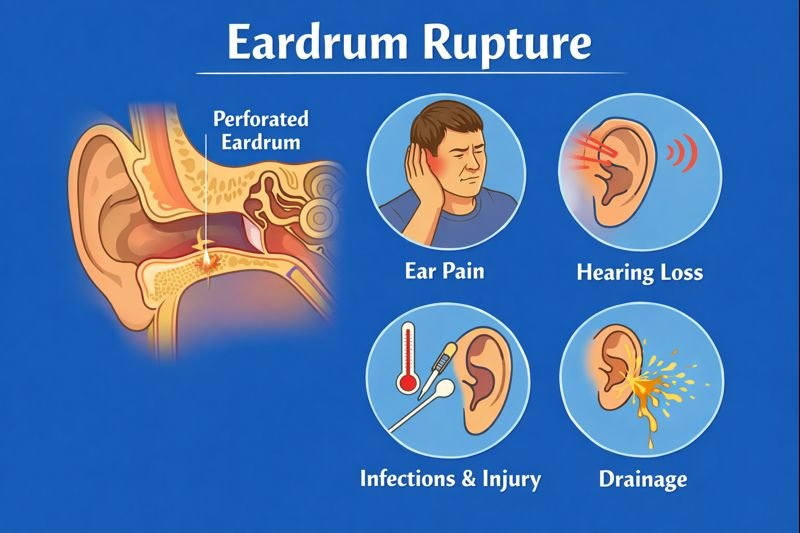
 An eardrum rupture (also called a perforated eardrum) is a small tear or hole in the tympanic membrane—the thin tissue that separates the outer ear canal from the middle ear. This membrane helps transmit sound vibrations, so damage can temporarily affect hearing.
Most eardrum ruptures heal naturally over time. Permanent hearing changes are uncommon.
Relevance in Canadian First Aid & Workplaces
In Canada, perforated eardrums occur in both children and adults and can be related to ear infections, pressure changes, or accidental injuries. Awareness of symptoms and early first aid can help limit discomfort and encourage safe decisions about work and recreation—especially activities involving noise exposure, air travel, or water.
Scenario (Mild & Realistic)
During a weekend flight home, Maya felt sudden ear pain as the plane descended. After landing, her ear felt “blocked,” and sounds were muffled. She rested the ear, avoided inserting anything into it, and monitored symptoms over the next few days. The discomfort gradually eased, and normal hearing returned.
Symptoms of an Eardrum Rupture
Symptoms vary depending on the size and cause of the tear. Common signs can include:
-
Ear pain (may lessen as the tear opens)
-
Temporary hearing reduction in the affected ear
-
Watery or slightly blood-tinged drainage
-
Tinnitus (ringing or buzzing)
-
A feeling of fullness or congestion
-
Occasional dizziness in more significant perforations
Causes & Mechanisms
Several factors can lead to a perforated eardrum:
Ear infections
Common in children. Fluid buildup behind the membrane can increase pressure until a small tear forms.
Pressure changes (Barotrauma)
Can occur during air travel, scuba diving, mountain driving, or pressure-related workplace environments.
Injury or direct trauma
A blow to the ear, a sudden loud sound, or inserting objects (including cotton swabs) can cause damage.
Noise exposure
Very loud or sudden noises can contribute to perforation, though this is less common.
Management, First Aid, and Recovery Awareness
Public first aid guidance focuses on comfort and protecting the ear:
-
Rest the ear and avoid inserting objects or liquids
-
Use a warm, dry compress for comfort
-
Monitor symptom changes, especially drainage or worsening pain
-
Seek assessment from a trained health professional if symptoms interfere with hearing or daily tasks
Health assessments can help determine whether a perforation is present and monitor healing. Many perforations heal naturally over several weeks. More significant tears may require medical evaluation or procedures to support healing.
Prevention & Workplace Considerations
Helpful prevention strategies include:
-
Avoiding cotton swabs or objects in the ear canal
-
Managing ear infections promptly
-
Using hearing protection during loud tasks or industrial noise exposure
-
Equalizing pressure gently during flights or elevation changes
-
Following safe diving practices in water or occupational settings
Workplaces can support ear health by:
-
Providing noise-reduction tools and hearing protection
-
Reducing exposure to sudden loud sounds
-
Promoting early reporting of ear discomfort in high-noise environments
FAQ
Can a perforated eardrum affect hearing permanently?
Most people regain normal hearing once the membrane heals. Long-term changes are uncommon and often linked to more complex injury or repeated infections.
How long does healing usually take?
Many eardrum perforations improve over several weeks. Healing time varies based on the size of the tear and contributing factors.
Is ear pain always severe during a rupture?
Pain ranges widely. Some people experience sharp discomfort followed by relief, while others may only notice muffled hearing or mild pressure.
Can you fly with a perforated eardrum?
People vary in tolerance. A health professional can provide individualized recommendations based on symptoms and healing progress.
Educational Note
This article supports public and workplace education about ear injuries and first aid awareness. Symptoms and recovery vary, and trained health professionals can help assess concerns that interfere with hearing or daily activities.
About The Author

Mark Kascha
Certified First Aid Instructor Trainer with 30+ years of real-world experience, including lifeguarding, workplace emergency response, and first aid program development across Canada. Has worked with WorkSafeBC, WSIB, and Manitoba Health.
👉 [View full credentials]🔗 View LinkedIn Profile
Last reviewed: March 2026