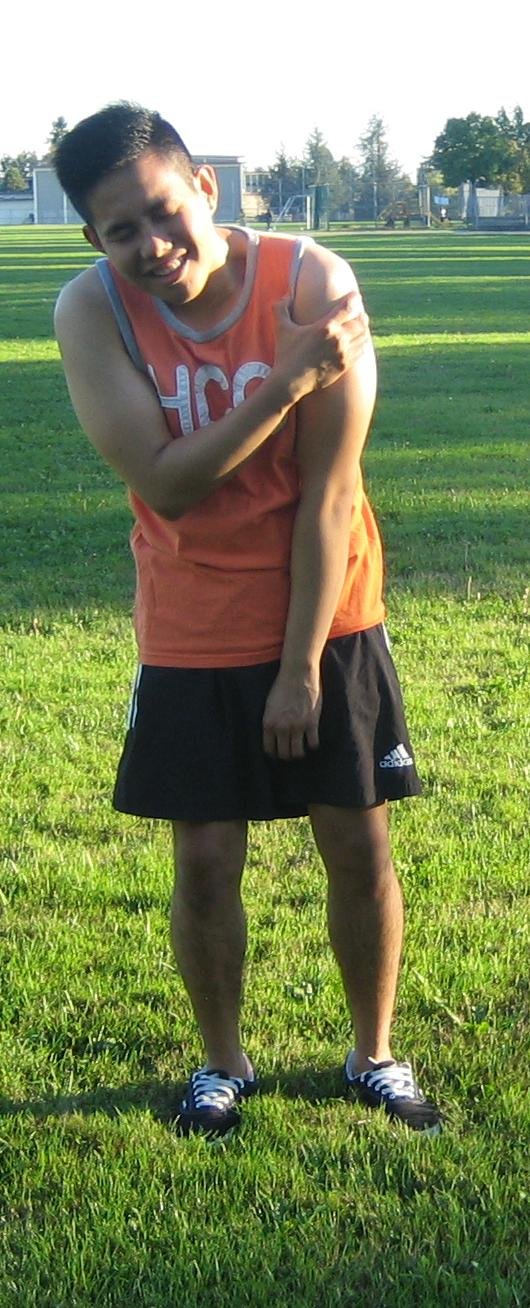
A dislocated shoulder most commonly occurs after falling onto an outstretched arm. In this injury, the ball of the upper arm bone (humerus) is forced out of the shoulder socket. Once properly treated and restored into place, recovery usually takes 12–16 weeks, depending on severity.
The shoulder joint is particularly vulnerable because it sits in a shallow socket, allowing a wide range of motion. While this flexibility is useful, it also makes the shoulder less stable and more prone to injury.
Dislocated shoulders are frequently seen in contact sports such as rugby or hockey, and among older adults, where falls are a common cause.
Indications of a Dislocated Shoulder
In most cases, the upper arm bone dislocates toward the front (anterior) of the shoulder. The injury is often obvious and may include:
-
Inability to move the affected arm
-
Severe pain in the shoulder
-
The shoulder appearing square rather than rounded
-
A visible bulge or lump beneath the skin at the front of the shoulder
These signs indicate a serious joint injury that requires urgent medical assessment.
What Should I Do? (First Aid Response)
If a dislocated shoulder is suspected:
-
Bring the individual to the nearest emergency department immediately
-
Do NOT attempt to put the shoulder back into place
-
Improper reduction can cause damage to nerves, blood vessels, and surrounding tissues
-
-
Keep the arm as still as possible
-
Place a soft object (pillow, towel, or folded clothing) between the arm and chest for support
-
If trained, create a simple sling to support the arm across the chest with the elbow bent at a right angle
These steps are taught in Basic and Intermediate First Aid training, where participants learn how to safely immobilize joint injuries and prevent further harm.
Medical Treatment
At the emergency department:
-
A physical exam is performed
-
X-rays are taken to rule out fractures
-
Additional imaging may be used to assess soft-tissue damage
If no fracture is present, the shoulder is carefully guided back into place through a procedure called reduction, performed by trained medical professionals.
When Is Surgery Needed?
-
Surgery may be required if:
-
Surrounding tissues are torn
-
The joint remains unstable
-
Dislocations recur frequently
-
If tissues are stretched but not torn, physiotherapy and strengthening exercises may be sufficient to restore stability and prevent future dislocations.
First Aid & Educational Disclaimer
This content is provided for educational purposes only and does not replace professional medical care. Dislocated shoulders are serious joint injuries that require assessment by healthcare professionals.
Learning how to recognize and manage joint injuries — including immobilization, monitoring circulation, and knowing when to activate emergency medical services — is covered in first aid and CPR courses across Canada, including Basic, Intermediate, and Advanced First Aid.
About The Author

Mark Kascha
Certified First Aid Instructor Trainer with 30+ years of real-world experience, including lifeguarding, workplace emergency response, and first aid program development across Canada. Has worked with WorkSafeBC, WSIB, and Manitoba Health.
👉 [View full credentials]🔗 View LinkedIn Profile
Last reviewed: March 2026