
Difficulty swallowing, also known as dysphagia, can sometimes occur alongside symptoms of acid reflux. While occasional acid reflux does not usually interfere with swallowing, persistent or worsening symptoms may signal a more advanced digestive issue that requires medical assessment.
Understanding how acid reflux affects the body helps individuals recognize when symptoms are mild and when further evaluation may be needed.
First Aid & Workplace Relevance (Canada)
In Canadian workplaces, symptoms such as chest discomfort, throat irritation, coughing, or trouble swallowing can affect comfort, focus, and productivity. These symptoms may appear during physically demanding tasks, long shifts, or after meals.
First aid awareness helps workers and supervisors recognize when symptoms are recurring or interfering with daily activities, supporting early discussion with healthcare providers and appropriate workplace accommodations when needed.
Scenario: Recognizing Symptoms Early
An office employee began noticing frequent heartburn and occasional difficulty swallowing during lunch breaks. After learning through first aid training that persistent symptoms should not be ignored, they arranged a medical check-up. Early assessment helped identify contributing factors and prevented worsening discomfort at work.
What Is Acid Reflux?
Acid reflux, also known as gastroesophageal reflux or heartburn, occurs when stomach contents flow back into the esophagus. Common features include:
-
A burning sensation in the chest
-
Sour or acidic taste in the mouth
-
Regurgitation of food or liquid
The esophagus is not designed to handle stomach acid, which is why reflux can cause irritation and discomfort.
How Acid Reflux Can Lead to Swallowing Difficulty
Acid reflux symptoms occur when the lower esophageal sphincter, a muscular valve between the esophagus and stomach, does not close properly. This allows acidic stomach contents to move upward.
When reflux happens frequently or over a long period, ongoing irritation can cause inflammation of the esophagus. This inflammation may make swallowing uncomfortable or difficult, particularly with solid foods.
When Acid Reflux Becomes More Serious
If acid reflux occurs frequently—often more than twice a week—it may be considered gastroesophageal reflux disease (GERD). In addition to heartburn, GERD may be associated with:
-
Nausea or vomiting
-
Persistent throat discomfort
-
Difficulty swallowing
-
Sensation of food sticking in the chest
Long-term irritation can lead to complications such as inflammation, narrowing of the esophagus, or damage to its lining.
Symptoms That May Occur With GERD
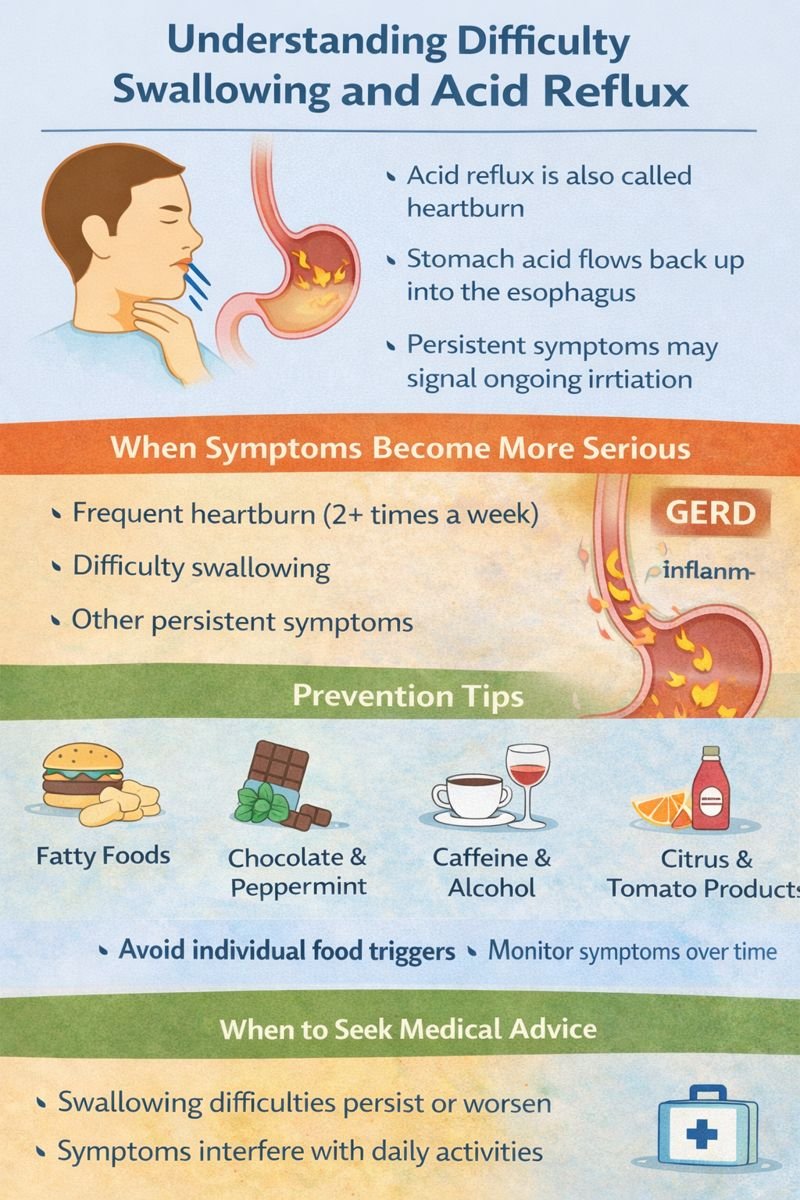 Possible symptoms include:
-
Chest burning or pressure
-
Pain or discomfort when swallowing
-
Chronic cough or throat clearing
-
Hoarseness
-
Feeling of a lump in the throat
-
Fatigue related to disrupted sleep
Symptoms can vary from person to person and may change over time.
Prevention and Everyday Considerations
For many people, acid reflux symptoms can be reduced by identifying and avoiding common triggers. Foods and beverages often associated with reflux include:
-
Fatty or fried foods
-
Chocolate and peppermint
-
Coffee, alcohol, and soft drinks
-
Citrus juices and tomato-based products
-
Spicy or heavily seasoned foods
Lifestyle awareness, such as meal timing and portion size, may also influence symptoms.
First Aid Awareness and General Management
From a first aid education perspective, management focuses on awareness and monitoring rather than treatment. Key points include:
-
Recognizing patterns of frequent or worsening symptoms
-
Not dismissing difficulty swallowing as a minor issue
-
Understanding that persistent symptoms may require medical evaluation
Healthcare providers can assess symptom severity and recommend appropriate investigations or strategies when needed.
Frequently Asked Questions
Is occasional heartburn a cause for concern?
Occasional heartburn is common, but frequent or worsening symptoms should be discussed with a healthcare professional.
Can acid reflux cause trouble swallowing?
Yes. Ongoing irritation of the esophagus can make swallowing uncomfortable or difficult over time.
Are chest symptoms always related to the heart?
No. Acid reflux can cause chest discomfort that feels similar to heart-related pain, which is why assessment is important.
Can workplace habits affect acid reflux?
Meal timing, physical activity after eating, and stress can influence symptoms in some individuals.
When should swallowing difficulty be checked?
Any persistent or progressive difficulty swallowing should be evaluated by a healthcare professional.
Educational Note
This article is intended for general public education and first aid awareness. It does not provide medical diagnosis or treatment advice. First aid training focuses on recognizing concerning symptoms and understanding when further medical assessment may be appropriate.
About The Author

Mark Kascha
Certified First Aid Instructor Trainer with 30+ years of real-world experience, including lifeguarding, workplace emergency response, and first aid program development across Canada. Has worked with WorkSafeBC, WSIB, and Manitoba Health.
👉 [View full credentials]🔗 View LinkedIn Profile
Last reviewed: March 2026