
Morning joint stiffness refers to difficulty moving one or more joints after waking up, often accompanied by aching, tightness, or reduced range of motion. This stiffness is commonly worse after long periods of inactivity, such as overnight sleep, and may ease as the body starts moving.
While mild stiffness can occur after physical exertion or poor sleeping posture, persistent or severe morning stiffness may be associated with underlying health conditions and should be taken seriously.
First Aid & Workplace Relevance (Canada)
Morning joint stiffness can affect Canadians across many workplaces, particularly in physically demanding jobs, sedentary office roles, healthcare, trades, and remote work environments. Stiffness may slow movement, increase discomfort during tasks, and raise the risk of strains or falls early in the workday.
First aid awareness helps workers recognize patterns of stiffness, supports safe pacing at the start of shifts, and encourages early discussion with healthcare professionals when stiffness becomes persistent.
Scenario: Recognizing a Pattern Over Time
A warehouse employee noticed increasing stiffness in their hands and knees each morning that improved after several hours of movement. A supervisor trained in first aid encouraged them to monitor how long the stiffness lasted and whether it affected multiple joints. With this information, the employee sought medical assessment and gained better understanding of their symptoms.
Why Morning Joint Stiffness Occurs
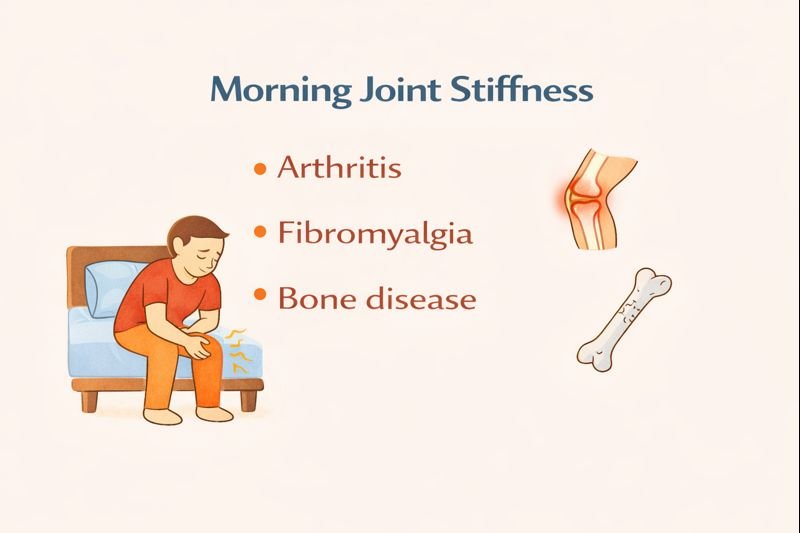 Joint stiffness is often worse in the morning because the body has been inactive for several hours. During inactivity:
-
Joint fluid circulation slows
-
Muscles and connective tissues become less flexible
-
Inflammatory chemicals may build up
Certain medications may also wear off overnight, contributing to increased stiffness upon waking.
Inflammatory Conditions and Joint Stiffness
Inflammatory joint diseases are a common cause of prolonged morning stiffness.
Rheumatoid Arthritis
Healthcare professionals often ask about:
-
How long stiffness lasts in the morning
-
Which joints are affected
-
Whether stiffness is improving or worsening
Commonly affected joints include the wrists, fingers, shoulders, hips, knees, and ankles. Longer-lasting morning stiffness may indicate active inflammation.
Ankylosing Spondylitis
This inflammatory condition primarily affects the spine and larger joints. Stiffness often worsens overnight but improves with movement as ligaments and joints loosen during the day.
Fibromyalgia and Headache-Related Stiffness
Fibromyalgia is a chronic pain condition marked by widespread muscle tenderness and stiffness. Morning stiffness can be significant, making it difficult to get out of bed, though it often improves with gentle movement.
Severe or recurring headaches may also contribute to stiffness, particularly in the neck and shoulders. Headache-related stiffness can occur alongside conditions such as fibromyalgia and other systemic health issues.
Bone-Related Conditions
Some bone and blood-related conditions may also cause morning stiffness:
-
Avascular (aseptic) necrosis:
Reduced blood supply to bones—often in the hips or legs—can cause pain, stiffness, and reduced movement. -
Sickle cell disease:
This inherited blood condition may cause joint pain and stiffness due to impaired blood flow, sometimes leading to acute or chronic symptoms.
These conditions require medical assessment and ongoing care.
Cancer and Treatment-Related Stiffness
Certain cancers and cancer treatments may contribute to joint stiffness:
-
Breast cancer may lead to stiffness or swelling in the shoulder and arm
-
Head and neck cancers can affect posture and range of motion
-
Treatments such as surgery or radiation may cause scar tissue, muscle tightness, or reduced mobility
Stiffness in these cases may be related to both the disease process and its treatment.
First Aid Awareness and General Management
From a first aid education perspective, managing morning joint stiffness focuses on awareness rather than treatment.
Key points include:
-
Noticing how long stiffness lasts each morning
-
Observing which joints are affected
-
Recognizing when stiffness improves with movement versus persists
-
Avoiding sudden or forceful movements when joints feel stiff
Persistent or worsening stiffness should be assessed by a healthcare professional.
Frequently Asked Questions
Is morning joint stiffness always a sign of arthritis?
No. While arthritis is a common cause, stiffness can also result from inactivity, muscle tension, or other health conditions.
How long is morning stiffness considered normal?
Brief stiffness that resolves quickly may be normal, but stiffness lasting longer than an hour may need evaluation.
Can inactivity make stiffness worse?
Yes. Long periods of immobility can increase stiffness, especially overnight.
Does movement help reduce stiffness?
Gentle movement often improves stiffness, particularly in non-inflammatory conditions.
When should morning stiffness be checked?
If stiffness is persistent, worsening, or affects daily activities, medical assessment is recommended.
Educational Note
This article is intended for general public education and first aid awareness. It does not provide medical diagnosis or treatment advice. First aid training focuses on recognizing symptom patterns, supporting safe movement, and understanding when professional assessment may be appropriate.
About The Author

Mark Kascha
Certified First Aid Instructor Trainer with 30+ years of real-world experience, including lifeguarding, workplace emergency response, and first aid program development across Canada. Has worked with WorkSafeBC, WSIB, and Manitoba Health.
Last reviewed: March 2026