What Is a Compression Fracture of the Spine?
A compression fracture of the spine occurs when one of the vertebrae (the bones that make up the spine) collapses or cracks due to compressive force. These fractures most commonly affect the lower back (lumbar spine), where the vertebrae carry the greatest load.
Compression fractures can develop suddenly after trauma or gradually over time when the bones are weakened. The severity can range from mild height loss of the vertebra to more serious collapse that affects posture and nerve function.
First Aid and Workplace Relevance in Canada
Spinal compression fractures are relevant in Canadian workplaces and daily life, particularly in construction, trades, transportation, caregiving, and among older adults. Falls from height, slips, and heavy impacts increase risk, while underlying bone weakness raises the likelihood of injury even during routine activities.
First aid awareness helps individuals recognize warning signs of spinal injury and understand when urgent medical assessment is required to protect the spine and nervous system.
A Simple, Realistic Scenario
An older adult slips on icy steps and lands hard on their feet. Over the next few days, they develop persistent lower back pain that spreads into the hips. Remembering first aid education, they limit activity and seek medical evaluation rather than assuming it is a simple strain.
Common Symptoms
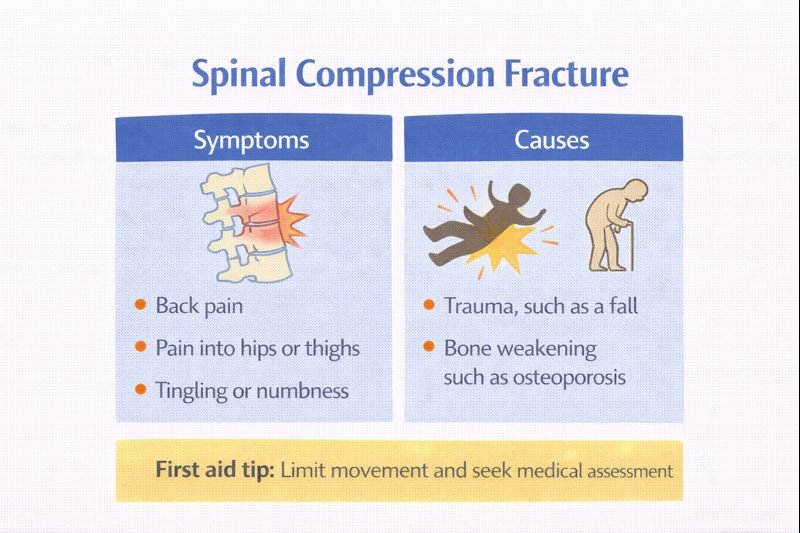 Symptoms of a spinal compression fracture may include:
-
Localized back pain at the fracture site
-
Pain that radiates to the hips, buttocks, or thighs
-
Increased pain with standing or movement
-
Reduced mobility
-
Tingling, numbness, or weakness if nerves are affected
In more serious cases, bowel or bladder changes may occur if the fracture places pressure on the spinal cord or nerve roots. These symptoms require immediate medical attention.
Causes and Risk Factors
Compression fractures occur when the vertebrae can no longer support the load placed on them.
Common causes include:
-
Traumatic injuries, such as falls from height or hard landings
-
Motor vehicle collisions
-
Landing forcefully on the feet or buttocks
In older adults, compression fractures often develop due to bone weakening, most commonly from osteoporosis. In these cases:
-
The fracture may occur without a clear injury
-
Pain may develop gradually
-
Normal daily activities can trigger collapse
When multiple vertebrae are affected, the front portions may compress more than the back, leading to a stooped or bent-forward posture over time.
Nerve Involvement
Because the spinal cord and nerve roots run close to the vertebrae, compression fractures—whether traumatic or degenerative—can irritate or compress nerves. This explains why neurological symptoms may accompany back pain in some individuals.
First Aid Awareness and Early Response
From a first aid perspective, suspected spinal fractures should be treated with caution.
General first aid considerations include:
-
Limiting movement of the spine
-
Avoiding lifting or twisting
-
Keeping the person comfortable and supported
-
Seeking medical assessment promptly after falls or trauma
Early evaluation helps reduce the risk of further injury.
Management and Treatment Considerations
Treatment depends on how the fracture occurred and its severity.
Traumatic Compression Fractures
Following significant trauma, medical imaging is used to confirm the injury. These fractures may require:
-
Careful monitoring
-
Stabilization of the spine
-
In some cases, surgical intervention to support the vertebrae and protect the spinal cord
Degenerative Compression Fractures
Fractures related to bone weakness are often managed with:
-
Rest from aggravating activities
-
Pain management strategies
-
Temporary back support to reduce spinal load
Individuals with underlying bone weakness may require long-term strategies to reduce future fracture risk.
Prevention and Bone Health Awareness
Reducing the risk of compression fractures includes:
-
Preventing falls at home and work
-
Using proper footwear and mobility aids when needed
-
Maintaining bone strength through safe activity
-
Reporting persistent back pain early
Workplace safety measures and fall-prevention strategies are especially important for older workers.
Frequently Asked Questions
Can a compression fracture occur without a fall?
Yes. In weakened bones, fractures can develop gradually without a clear injury.
Why does pain sometimes spread to the hips or thighs?
Nearby nerves may be irritated by the fractured vertebra.
Is posture affected by compression fractures?
Multiple fractures can lead to a forward-bent posture over time.
Are neurological symptoms common?
They can occur if the fracture affects nearby nerves or the spinal cord.
How does first aid training help with spinal injuries?
First aid education promotes early recognition and safe response to back injuries.
Educational Note
This article is intended for general public education and workplace first aid awareness in Canada. It does not replace medical assessment, diagnosis, or individualized treatment for spinal injuries.
About The Author

Mark Kascha
Certified First Aid Instructor Trainer with 30+ years of real-world experience, including lifeguarding, workplace emergency response, and first aid program development across Canada. Has worked with WorkSafeBC, WSIB, and Manitoba Health.
👉 [View full credentials]🔗 View LinkedIn Profile
Last reviewed: March 2026