
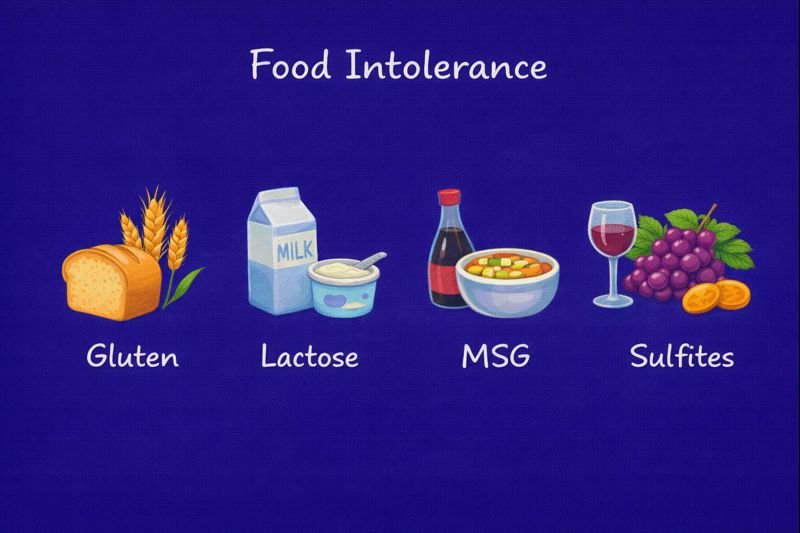
 Some people experience discomfort after eating certain foods. When the reaction does not involve the immune system, it may be called a food intolerance. Unlike allergies, intolerances are generally not considered life-threatening, but they can affect comfort, digestion, and daily routine.
First Aid & Workplace Relevance (Canada)
Food intolerances can influence workplace participation, concentration, and nutrition. In workplaces with catered meals, shared kitchens, or social events, awareness can help individuals choose foods that support their comfort and well-being.
Scenario (Mild & Realistic)
After a team meeting with snacks, an employee noticed bloating and mild headache later in the afternoon. They realized similar symptoms happened after certain baked goods and began tracking which foods seemed to contribute.
Understanding Food Intolerance
Intolerances vary widely between individuals. Reactions can include bloating, cramping, headache, fatigue, or general uneasiness soon after eating. Symptoms can develop quickly or over several hours depending on the food and the person.
Common Types of Intolerance
Gluten-Related Intolerance
Celiac disease is an autoimmune condition triggered by gluten in wheat, rye, and barley. People without celiac disease may still report gluten sensitivity with symptoms such as:
-
Fatigue
-
Gas
-
Nausea
-
Bloating
-
Skin irritation
Sensitivity patterns differ, and healthcare providers assess suspected gluten reactions to determine cause.
Lactose Intolerance
Lactose intolerance involves difficulty processing lactose, the sugar found in milk. It is more common in adults and may lead to:
-
Bloating
-
Abdominal discomfort
-
Diarrhea
-
Gas
-
Nausea
Symptoms often occur within a few hours of eating dairy-containing foods.
MSG Sensitivity
Monosodium glutamate (MSG) is used for flavour enhancement in some dishes and packaged foods. Reported reactions may include:
-
Feeling flushed or warm
-
Headache
-
Tingling or numbness
-
Weakness or nausea
Sensitivity varies and does not affect everyone the same way.
Alcohol Intolerance
True alcohol allergy is rare, but intolerance can cause:
-
Redness of the skin
-
Stomach discomfort
-
Nasal congestion
-
Headache
Reactions may relate to difficulty breaking down alcohol or to compounds such as sulfites or tannins found in certain beverages.
Sulfite Sensitivity
Sulfites occur naturally in some foods and drinks and may also be added as preservatives. Reactions may include:
-
Headache
-
Rashes or skin irritation
-
Digestive discomfort
-
Asthma-like symptoms in sensitive individuals
Self-Awareness & Daily Living
Food reactions are often personal and may require observation over time. Many people track food intake, read ingredient lists, or adjust meal choices during social or workplace events.
FAQ (Educational)
Is a food intolerance the same as an allergy?
No. Allergies involve the immune system and can sometimes be severe. Intolerances typically relate to digestion or sensitivity and are not usually life-threatening.
Can intolerances appear in adulthood?
Yes. Digestive enzymes and sensitivities can change with age, diet, and health.
Is testing always available for intolerances?
Some intolerances have medical testing methods, while others are identified through tracking and professional guidance.
Can someone have more than one intolerance?
Yes. Reactions can vary widely between individuals.
Educational Note
This content supports public awareness and first aid education. Food reactions can differ greatly among individuals, and health professionals can help assess persistent or disruptive symptoms.
About The Author

Mark Kascha
Certified First Aid Instructor Trainer with 30+ years of real-world experience, including lifeguarding, workplace emergency response, and first aid program development across Canada. Has worked with WorkSafeBC, WSIB, and Manitoba Health.
Last reviewed: March 2026