Understanding Cold and Heat Therapy
After an injury at work, during sports, or in daily life, many people are unsure whether to use cold therapy (ice) or heat therapy. The correct choice depends on the type and timing of the injury.
Cold and heat affect the body in different ways. Knowing when to use each can help reduce discomfort, control swelling, and support recovery.
First Aid and Workplace Relevance in Canada
Deciding between ice and heat is a common first aid question in Canadian workplaces, schools, sports facilities, and homes. First aid awareness of cold and hot therapy helps workers, supervisors, coaches, and caregivers respond appropriately to injuries and avoid treatments that could worsen symptoms.
A Simple, Realistic Scenario
A warehouse employee twists their ankle while stepping off a pallet. The ankle swells quickly and becomes painful. Remembering first aid training, a coworker applies cold therapy right away instead of heat, helping control swelling during the early phase.
Acute Injuries: When to Use Cold Therapy
What Is an Acute Injury?
 Acute injuries occur suddenly due to events such as:
-
Falls
-
Direct blows
-
Twisting or awkward movements
These injuries are often painful and involve inflammation, swelling, or bleeding.
Why Cold Therapy Helps
Cold therapy is recommended soon after an acute injury because it:
-
Helps limit swelling
-
Slows bleeding in injured tissues
-
Reduces pain by decreasing nerve activity
-
Narrows blood vessels in the area
How Cold Therapy Is Used
General first aid guidance includes:
-
Applying a cold pack as soon as possible
-
Limiting contact time to up to 20 minutes at a time
-
Reapplying regularly, often every 1–3 hours
-
Placing a cloth or towel between the ice and skin
Cold therapy is most useful during the first few days after injury, while swelling and inflammation are present.
Alternating Cold and Heat After the Acute Phase
Once swelling and bleeding have settled—often several days after the injury—alternating cold and heat may be used in some situations.
A common approach is:
-
Cold for about 10 minutes
-
Followed by heat for about 10 minutes
This contrast encourages changes in blood flow that may support tissue recovery. Alternating should only be used after swelling is under control.
Chronic Injuries: When to Use Heat Therapy
What Is a Chronic Injury?
Chronic injuries develop gradually over time and may be linked to:
-
Repetitive strain
-
Overuse
-
Poor biomechanics
-
Incomplete healing from a previous injury
Symptoms often include stiffness, aching, or tightness rather than sudden swelling.
Why Heat Therapy Helps
Heat therapy is generally preferred for chronic conditions because it:
-
Relaxes tight muscles
-
Reduces joint stiffness
-
Increases blood flow to the area
-
Improves tissue flexibility
Heat may also be helpful before activity to prepare muscles for movement.
How Heat Therapy Is Used
General first aid guidance includes:
-
Applying heat for 15–20 minutes
-
Using warm (not hot) sources such as warm towels or heating pads
-
Placing a barrier between heat and skin to prevent burns
Heat should not be used on areas with active swelling.
Using Cold After Activity for Chronic Injuries
In chronic conditions, cold therapy may still be used after activity if swelling or irritation occurs. This helps calm tissues after exertion.
Key Differences at a Glance
-
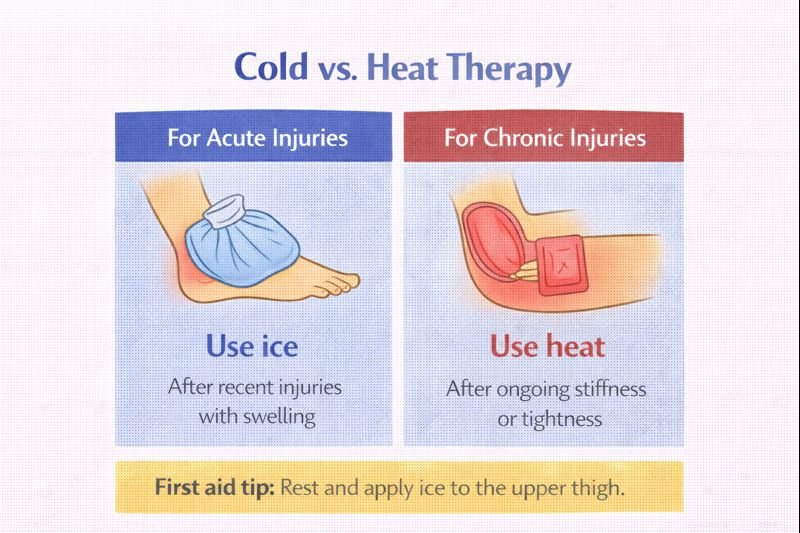
Cold therapy: Best for recent injuries with swelling
-
Heat therapy: Best for ongoing stiffness or tightness
-
Acute injury: Cold first
-
Chronic condition: Heat for comfort and mobility
Choosing the correct approach helps support recovery and prevent worsening symptoms.
Frequently Asked Questions
Should heat be used right after an injury?
No. Heat can increase swelling if used too early after an acute injury.
How long should ice be applied?
Typically up to 20 minutes at a time, with breaks between applications.
Can cold and heat be combined?
Yes, but only after swelling has settled and as part of a recovery approach.
Are chronic injuries always painless?
No. They often cause ongoing discomfort, stiffness, or aching.
How does first aid training help with injury care?
First aid education teaches when to use cold or heat safely and effectively.
Educational Note
This article is intended for general public education and workplace first aid awareness in Canada. It does not replace medical assessment, diagnosis, or individualized treatment for injuries.
About The Author

Mark Kascha
Certified First Aid Instructor Trainer with 30+ years of real-world experience, including lifeguarding, workplace emergency response, and first aid program development across Canada. Has worked with WorkSafeBC, WSIB, and Manitoba Health.
👉 [View full credentials]🔗 View LinkedIn Profile
Last reviewed: March 2026