Musculoskeletal injuries are common in physical activity, recreation, and even the workplace. Two major categories are recognized:
Acute injuries
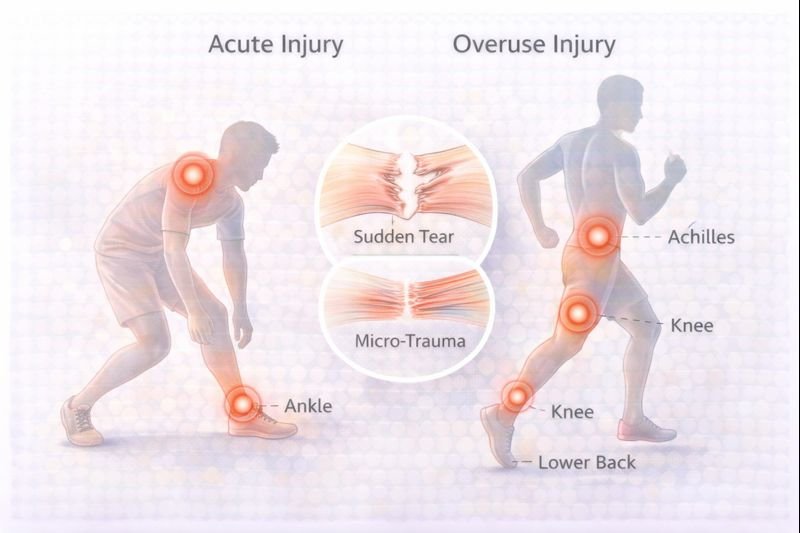 These occur suddenly—often during a fall, collision, or awkward movement. Examples include:
-
Wrist fractures
-
Ankle sprains
-
Shoulder dislocations
-
Hamstring tears
Overuse injuries
These develop gradually due to repeated stress on muscles, bones, and connective tissue. They are common in running, dance, racquet sports, and occupations requiring repetitive motion.
Why Do Overuse Injuries Occur?
The body is constantly adapting to stress through a process called remodelling, where tissue breaks down and rebuilds stronger. If breakdown occurs faster than repair, small injuries accumulate. Over time, this leads to:
-
Tendon irritation
-
Stress fractures
-
Persistent muscle pain
-
Joint inflammation
This is why many overuse injuries are subtle at first and harder to diagnose.
Common Contributing Factors
Overuse injuries can develop due to:
-
Returning to activity too quickly after time off
-
Increasing duration or intensity too aggressively
-
Poor movement technique or biomechanics
-
Muscle weakness or inflexibility
-
Previous injuries
-
Inadequate warm-up or cool-down
-
Unsupportive footwear or equipment
These patterns are also seen in workplace settings involving repetitive strain, manual handling, and prolonged standing.
Managing and Treating Overuse Injuries
Initial self-care strategies include:
-
Reducing duration, frequency, and intensity of activity
-
Alternating training types (cross-training)
-
Applying ice after activity
-
Using anti-inflammatory medication (if suitable and recommended)
-
Correcting technique or posture
-
Reintroducing activity gradually
If symptoms persist, a healthcare professional may recommend imaging, physiotherapy, or workplace accommodations.
Injury Prevention Matters — in Sport and at Work
Preventing chronic overuse injuries is easier than treating them. Helpful habits include:
-
Structured warm-up and cool-down routines
-
Progressive load increases
-
Strength and mobility work
-
Proper body mechanics
-
Hydration and recovery
-
Appropriate equipment and footwear
Canadian workplaces increasingly emphasize ergonomics and prevention as part of their health and safety programs. First aid and injury awareness training can also help recognize early symptoms and reduce downtime.
Educational Disclaimer
This information is for public education only and not a clinical diagnosis or medical treatment plan. Individuals with persistent, worsening, or severe pain should consult a qualified healthcare provider.
About The Author

Mark Kascha
Certified First Aid Instructor Trainer with 30+ years of real-world experience, including lifeguarding, workplace emergency response, and first aid program development across Canada. Has worked with WorkSafeBC, WSIB, and Manitoba Health.
👉 [View full credentials]🔗 View LinkedIn Profile
Last reviewed: March 2026