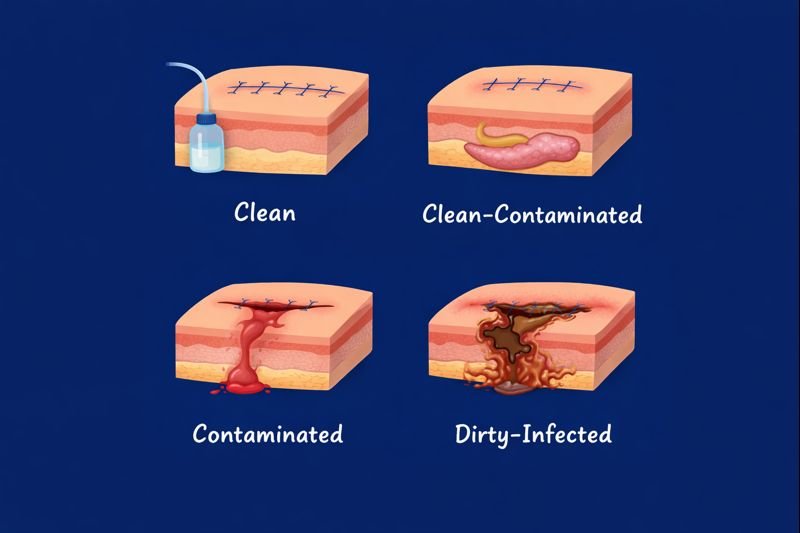
 Surgical wounds are intentional incisions made during operations. Classifying these wounds helps surgical teams understand infection risk and plan follow-up care. Classification focuses on the incision itself, not on the small stitch holes used to close it.
First Aid & Workplace Relevance (Canada)
In Canada, healthcare workplaces—including hospitals, ambulatory centres, and specialized surgical clinics—use standardized surgical wound classification systems for infection surveillance and quality improvement. While this system is clinical, public awareness can help patients and families better understand post-operative discussions about healing and infection risk.
Scenario (Mild & Realistic)
After a routine day surgery, a patient was informed that their wound was considered “clean-contaminated” because the procedure involved the urinary tract. They were reassured this classification did not mean the site was infected, but that the tissue involved carried a normal level of bacteria. Healing progressed without complication.
Clean Wounds
Clean surgical wounds are incisions made in areas of the body where the surgeon does not expect exposure to tissues that naturally contain bacteria or inflammation. These wounds are typically closed at the end of surgery. If fluid drains are used, they generally lead to sealed containers.
Clean-Contaminated Wounds
Clean-contaminated wounds involve surgical entry into areas of the body that may contain bacteria, though infection is not expected. Examples include the urinary tract, oropharynx, appendix, biliary tract, and vagina. These procedures may carry a slightly higher infection risk compared to clean wounds, but are not considered actively infected.
Contaminated Wounds
Contaminated surgical wounds may result from a break in sterile technique during emergency life-saving care, or when surgeons encounter unexpected inflammation or spillage from the gastrointestinal tract. These scenarios can elevate infection risk, even though the goal of intervention remains urgent and necessary.
Dirty-Infected Wounds
Dirty-infected wounds involve pre-existing infection or tissue breakdown before surgery begins. Surgeons may encounter dead tissue, perforated organs, or an established infection at the operative site. These cases require additional infection-control precautions.
Important Considerations
Not all procedures fit neatly into the four major classifications. Out-patient surgeries, paediatric procedures, and some minimally invasive techniques may require surgical judgment to classify appropriately. Clinical teams weigh anatomy, surgical approach, and contamination risk to estimate likelihood of post-operative infection.
FAQ (Educational)
Does a clean-contaminated wound mean an infection is present?
No. It indicates that the procedure involved tissues with natural bacteria, but infection is not expected.
Why is classification important in surgery?
Classification helps surgical teams assess infection risk, compare outcomes, and apply consistent monitoring practices.
Are contaminated wounds always emergencies?
They often arise during urgent or emergent care when sterility cannot be maintained fully, but classification refers to risk, not necessarily urgency.
Can wound classification change after surgery?
Infection may develop later, but the classification refers to the operative environment at the time of incision.
Educational Note
This material supports general public and workplace health awareness. Surgical wound classification is determined by clinical teams based on anatomy, sterility, and infection risk.
About The Author

Mark Kascha
Certified First Aid Instructor Trainer with 30+ years of real-world experience, including lifeguarding, workplace emergency response, and first aid program development across Canada. Has worked with WorkSafeBC, WSIB, and Manitoba Health.
👉 [View full credentials]🔗 View LinkedIn Profile
Last reviewed: March 2026