 Swimming is an excellent low-impact fitness activity, but it can place significant stress on the shoulders due to repetitive overhead movement. The shoulder is one of the most mobile joints in the body, which makes swimmers vulnerable to fatigue-related strain, overuse injuries, and mobility limitations.
What Causes “Swimmer’s Shoulder”?
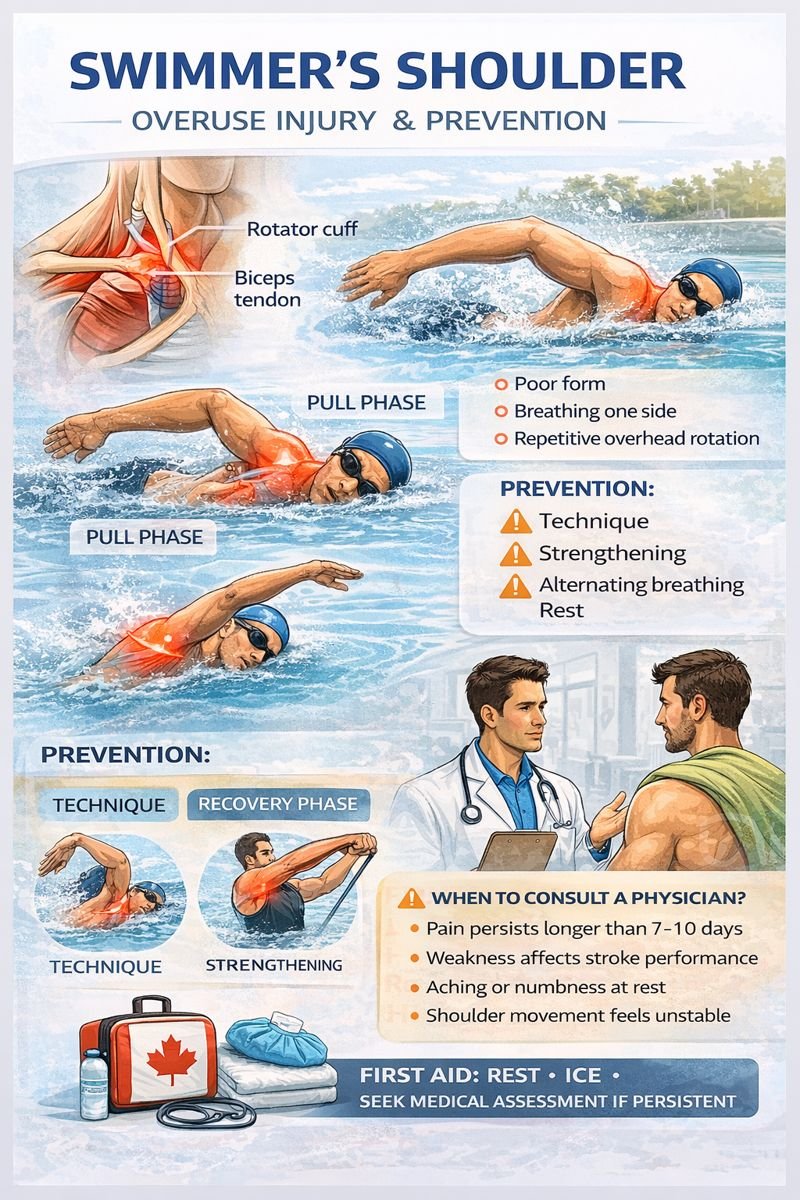
“Swimmer’s Shoulder” refers to irritation or injury affecting the muscles and tendons of the shoulder (primarily the rotator cuff) during repetitive pull-through motions.
Two common mechanisms include:
1. Pull-Through Muscle Pain
During the pull phase (hand entering water and sweeping backward), the shoulder bones may impinge on the biceps tendon, causing sharp or aching pain.
2. Recovery Phase Pain
As the arm exits the water, the rear rotator cuff muscles engage. Fatigue or poor rotation mechanics can strain these tissues over time.
These injuries can occur from:
✔ Poor stroke technique
✔ Breathing consistently to one side
✔ Excessive training volume
✔ Insufficient recovery / muscular imbalance
Preventing Shoulder Pain in Swimming
Stretching & Mobility
Pre-swim stretching helps prevent impingement and delayed onset shoulder pain.
Useful stretches include:
-
Triceps / overhead stretch
-
Cross-body rotator cuff stretch
-
Neck & scapular mobility
-
Thoracic rotation exercises
These movements prepare the rotator cuff and improve breathing mechanics in the water.
Strengthening for Shoulder Stability
Strengthening exercises increase joint control and reduce repetitive strain.
Common rehabilitation movements:
✔ Internal & external rotation
✔ Scapular retraction
✔ Lower trapezius activation
✔ Core and hip stabilization (improves overall stroke balance)
Swimmers who only breathe on one side may overload one shoulder — alternating sides can help distribute stress.
When Symptoms May Indicate a More Serious Injury
While many swimming injuries stem from overuse, acute pain may signal:
⚠ Rotator cuff tear
⚠ Labral tear
⚠ Nerve irritation
⚠ Cervical involvement
⚠ Fracture (rare but possible in traumatic impact)
Seek medical care if:
-
Pain prevents arm elevation
-
Weakness develops suddenly
-
The arm “hangs” or feels unstable
-
There is numbness, tingling, or grip loss
-
Pain persists beyond training sessions
First Aid & Return-to-Sport Considerations (Canadian Context)
Early first aid measures focus on:
✔ Rest & modified activity
✔ Cold/ice to reduce inflammation
✔ Supportive taping or bracing when recommended by a clinician
Workplace implications:
✔ Shoulder injuries may affect workers in roles involving lifting, carrying, or overhead tasks.
✔ Early assessment prevents prolonged time loss and workplace injury re-occurrence.
Canadian first aid training (including programs offered through St. Mark James Training) emphasizes:
-
Safe immobilization
-
When to escalate to medical care
-
Return-to-activity considerations
This knowledge supports both recreational athletes and Canadian workplaces in managing non-emergency injury scenarios safely.
About The Author

Mark Kascha
Certified First Aid Instructor Trainer with 30+ years of real-world experience, including lifeguarding, workplace emergency response, and first aid program development across Canada. Has worked with WorkSafeBC, WSIB, and Manitoba Health.
👉 [View full credentials]🔗 View LinkedIn Profile
Last reviewed: March 2026