
Pasta is a popular and convenient meal enjoyed at home, at social gatherings, and in workplace settings. While many people digest pasta without issue, some individuals experience abdominal pain shortly after eating it. This discomfort may be linked to specific ingredients in pasta or accompanying sauces that trigger digestive or immune reactions.
Understanding why pasta may cause stomach pain can help individuals recognize patterns and decide when further assessment may be needed.
First Aid & Workplace Relevance (Canada)
Abdominal pain after meals can affect comfort, focus, and productivity in Canadian workplaces, particularly in settings with shared meals, catered events, or limited food options. Digestive discomfort may lead to fatigue, distraction, or frequent breaks from work tasks.
First aid awareness helps workers and supervisors recognize that recurring post-meal symptoms may be food-related rather than random, supporting safer food choices and timely medical follow-up.
Scenario: Identifying a Food-Related Pattern
After several staff lunches involving pasta dishes, an employee noticed recurring stomach cramps and bloating later in the day. By tracking meals and symptoms, they realized the discomfort occurred mainly after pasta-based meals. With this awareness, they adjusted food choices and later discussed symptoms with a healthcare professional, reducing repeated discomfort at work.
Food Allergies and Pasta
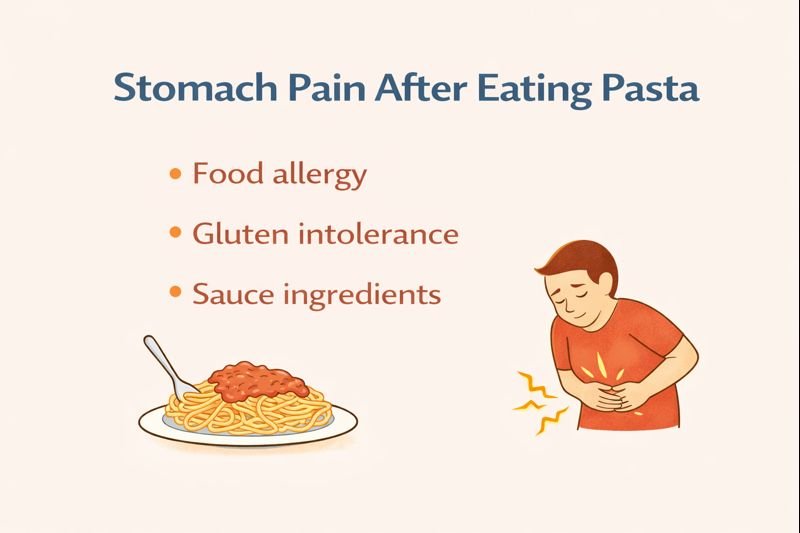 Pasta may contain ingredients that commonly trigger food allergies. These can include:
-
Wheat
-
Eggs
-
Dairy (often found in sauces or fillings)
In individuals with food allergies, consuming these ingredients can lead to inflammation in the digestive tract, resulting in abdominal pain.
Other allergy-related symptoms may occur alongside stomach pain, such as:
-
Hives or skin rashes
-
Nasal congestion or sneezing
-
Wheezing or asthma symptoms
In Canada, food manufacturers are required to clearly list priority allergens on packaged products, making label reading an important preventive step.
Gluten Intolerance and Celiac Disease
Most traditional pasta contains gluten, a protein found in wheat. For individuals with gluten intolerance or celiac disease, even small amounts of gluten can trigger digestive symptoms.
In celiac disease, the immune system reacts to gluten by damaging the lining of the small intestine. This can cause:
-
Abdominal pain
-
Diarrhea
-
Fatigue
Avoiding gluten is essential for long-term digestive health in people with gluten-related conditions. Only pasta specifically labeled “gluten-free” is suitable for those who must avoid gluten.
Pasta Sauces and Added Ingredients
Pasta is rarely eaten alone, and sauces can also contribute to stomach discomfort.
Common sauce-related triggers include:
-
Tomato-based sauces, which may cause symptoms in individuals with sensitivities or allergies
-
Cream or cheese-based sauces, which may trigger symptoms in people with dairy allergy or lactose intolerance
Lactose intolerance is a digestive condition that can cause cramping, gas, bloating, and diarrhea after consuming dairy products.
When Stomach Pain May Signal an Ongoing Condition
If abdominal pain occurs every time pasta is eaten, it may indicate an underlying digestive condition rather than a one-time reaction. Conditions sometimes associated with recurring symptoms include:
-
Irritable bowel syndrome (IBS)
-
Inflammatory bowel conditions
-
Food intolerances or allergies
Persistent or worsening symptoms should be assessed by a healthcare professional to determine the cause.
First Aid Awareness and General Management
From a first aid education perspective, managing post-meal abdominal pain focuses on awareness rather than treatment.
Key points include:
-
Noticing consistent symptom patterns after specific foods
-
Reading ingredient and allergen labels carefully
-
Avoiding known triggers until assessed
-
Recognizing that recurring pain is not normal and may need evaluation
First aid training emphasizes early recognition and appropriate follow-up, not diagnosis.
Frequently Asked Questions
Is stomach pain after eating pasta normal?
Occasional discomfort can happen, but repeated pain may suggest a food sensitivity or digestive issue.
Can pasta cause pain even without an allergy?
Yes. Gluten intolerance, lactose intolerance, or digestive conditions may cause symptoms without a true allergy.
Do gluten-free pastas prevent symptoms?
They may help individuals who are sensitive to gluten, but other ingredients can still trigger discomfort.
Can pasta sauces be the real cause?
Yes. Tomato-based or dairy-based sauces are common triggers for some people.
When should symptoms be checked by a doctor?
If abdominal pain occurs frequently, worsens, or affects daily activities, medical assessment is recommended.
Educational Note
This article is intended for general public education and first aid awareness. It does not provide medical diagnosis or treatment advice. First aid training focuses on recognizing digestive symptoms, identifying potential triggers, and knowing when further assessment may be appropriate.
About The Author

Mark Kascha
Certified First Aid Instructor Trainer with 30+ years of real-world experience, including lifeguarding, workplace emergency response, and first aid program development across Canada. Has worked with WorkSafeBC, WSIB, and Manitoba Health.
👉 [View full credentials]🔗 View LinkedIn Profile
Last reviewed: March 2026