
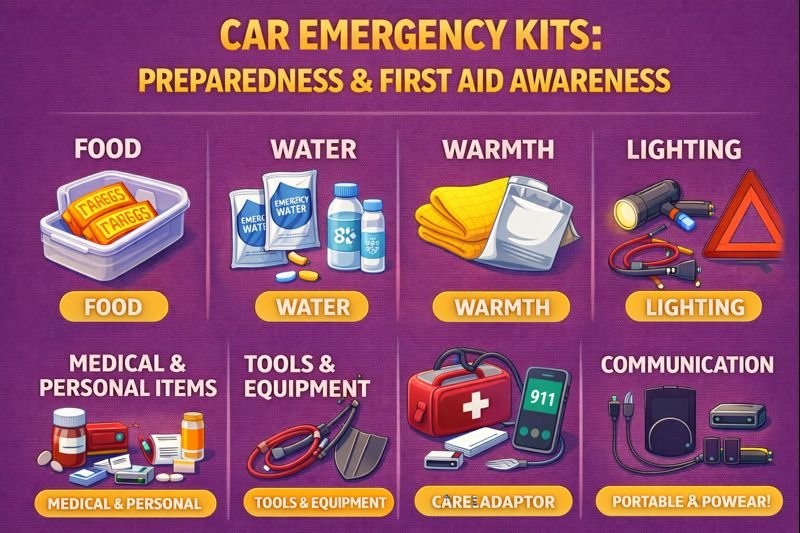
 Being prepared on the road is an important part of first aid and safety. Even well-maintained vehicles can experience breakdowns, bad weather, or limited cell coverage. A car emergency kit helps support your comfort and safety until help arrives.
Why it matters in Canada & workplaces
Canadian weather, remote travel routes, and winter driving conditions make roadside preparedness especially important. Many workplaces across Canada—construction, home care, field services, transportation, and outdoor programming—encourage staff to keep seasonal emergency supplies in vehicles.
Scenario
While driving home, a family encountered a stalled vehicle and waited for roadside assistance. Because they had blankets, water, a flashlight, and phone chargers on hand, the wait in cold weather was manageable and less stressful.
Recommended items for a car emergency kit
Food
High-energy snacks with longer shelf life are useful during delays or unexpected overnight waits. Choose foods that pack easily and store well in heat or cold. Check expiration dates during seasonal restocking.
Water
Water supports hydration and comfort during delays. Emergency pouches and compact containers save space and are designed for long-term storage. Bottles can also be used but may require more space and freeze in winter.
Warmth
-
Wool or thermal blankets
-
Emergency (space) blankets or bags
-
Seasonal clothing items such as hats, gloves, scarves, or insulated layers
Warmth-related items help prevent cold stress during winter breakdowns or storms.
Lighting
Flashlights and extra batteries support visibility during night-time breakdowns or roadside repairs. LED options are common for long runtimes. Some drivers also keep glow sticks or reflectors for added visibility.
Medical & personal items
-
First aid basics for minor discomforts (adhesive bandages, tape, wipes, etc.)
-
Daily prescription medications (enough for a short period if needed)
-
Any personal medical supplies used routinely (e.g., diabetic testing supplies)
Store medications securely and rotate stock to maintain safe expiration dates.
Tools & equipment
Examples include:
-
Jumper cables
-
Tire-changing tools
-
Basic tool kit
-
Ice scraper or brush
-
Collapsible shovel (winter)
-
Multi-purpose knife or utility tool
Driving in snow, gravel, or rural terrain may require more specialized seasonal tools.
Communication
-
Mobile phone
-
Charging cable
-
Car adapter or portable power bank
-
Wind-up or solar charging options for extended delays
Some areas of Canada have limited cellular coverage; power banks ensure the device remains usable when signal returns.
Seasonal & regional considerations
Emergency kits can be adapted based on:
-
Winter storms or extreme cold
-
Heat and wildfire season
-
Remote or rural travel
-
Long highway routes
-
Family and workplace needs (e.g., infants, pets, job equipment)
Restocking & maintenance
Check emergency kits each season to:
-
Update food and water
-
Replace expired items
-
Adjust clothing for temperature
-
Recharge or replace batteries and power banks
FAQ
Why keep food and water in the car?
Breakdowns, storms, or highway delays may last hours. Snacks and fluids support comfort and hydration.
Are blankets really necessary?
Yes. Temperatures can drop quickly inside stationary vehicles, especially in Canadian winters.
Do all cars need a shovel?
It depends on weather and region. Winter driving in snowy areas often benefits from compact shovels and traction aids.
Do workplaces encourage car emergency kits?
Industries with field workers, drivers, or outdoor staff often incorporate vehicle preparedness into safety planning.
How often should kits be updated?
Seasonal checks are common, as clothing, batteries, water, and food supplies can change with weather needs.
Educational note
This information supports general safety and preparedness for homes, workplaces, and travel in Canada. Individual needs vary by region, climate, and vehicle use.
About The Author

Mark Kascha
Certified First Aid Instructor Trainer with 30+ years of real-world experience, including lifeguarding, workplace emergency response, and first aid program development across Canada. Has worked with WorkSafeBC, WSIB, and Manitoba Health.
👉 [View full credentials]🔗 View LinkedIn Profile
Last reviewed: March 2026