
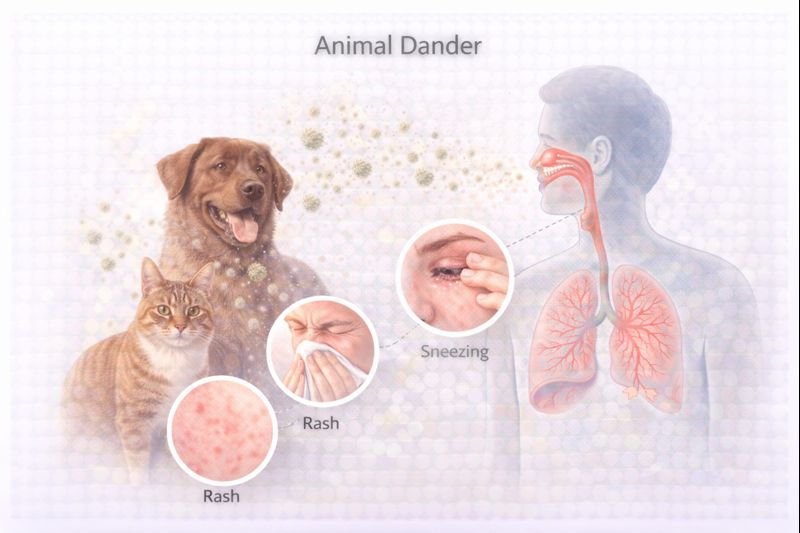
 Animal allergies are common in Canada, particularly allergies related to animal dander (tiny particles of skin, saliva, or urine carried through the air). While not everyone reacts to dander, those who do may experience symptoms ranging from mild irritation to more significant respiratory discomfort.
Dander-related allergies are often compared to seasonal reactions like hay fever, and for some Canadians living with asthma, eczema, or chronic sinus issues, exposure can lead to worsening symptoms.
Common Symptoms of Animal Dander Reactions
Symptoms can appear within minutes of exposure or develop over time if exposure is prolonged. Reactions are typically grouped into two categories:
Milder Symptoms
-
Sneezing or frequent throat clearing
-
Runny, itchy, or red eyes
-
Tickling sensation in the throat or roof of the mouth
-
Itchy nasal passages
More Significant Reactions
-
Nasal congestion or sinus pressure
-
Thick mucus drainage down the back of the throat
-
Persistent cough
-
Irritated or swollen sinuses
-
Fatigue and disrupted sleep
-
Bluish discolouration under the eyes (“allergic shiners”)
In some individuals, allergic dermatitis can also occur, presenting as:
-
Hives
-
Raised red patches
-
Persistent itchiness
What Is Animal Dander?
Animal dander isn’t harmful by itself — the issue occurs when the immune system releases histamine in response to it. The release of histamine causes the classic symptoms associated with allergic reactions.
Dander can originate from:
-
Skin flakes
-
Saliva
-
Urine
Dogs and cats shed these particles throughout indoor spaces. Horses and other animals can trigger similar reactions, although less commonly.
Additional Exposure Sources
Animals groom themselves frequently, spreading saliva onto fur. Shed fur then carries dried saliva into the air. Handling or petting animals can trigger reactions through both respiratory exposure and direct skin contact.
Managing Animal Dander Allergies in Canada
Reducing exposure is the most effective preventive strategy, although not always practical — particularly in homes with pets, on farms, or in workplaces where animal contact occurs.
Helpful approaches include:
-
HEPA air filtration
-
Frequent vacuuming and surface cleaning
-
Limiting soft furnishings that trap allergens
-
Regular pet bathing and grooming (when safe for the animal)
-
Wearing protective masks when exposure is unavoidable (common in agricultural settings)
Medication options from healthcare providers may include:
-
Antihistamines
-
Nasal corticosteroid sprays
-
Decongestants
-
Topical creams for dermatitis
-
Saline nasal irrigation
Potential Complications
Individuals who live with asthma may experience worsening symptoms when exposed to dander. Exposure can contribute to:
-
Wheezing
-
Chest tightness
-
Difficulty breathing
-
Coughing fits
-
Night-time shortness of breath
Canadians working in agricultural settings, veterinary clinics, shelters, or grooming industries may require workplace accommodations or health monitoring to reduce ongoing exposure and ensure a safe working environment.
Connection to First Aid, Workplace Safety & Training
Understanding allergy symptoms — including when reactions may progress — is valuable in workplaces and community settings. While most dander reactions are mild, severe allergic responses can require prompt first aid awareness. Training in first aid, and CPR/AED can prepare Canadians to respond confidently during unexpected medical emergencies at work, at school, or at home.
Educational Disclaimer
This article is for general learning only. It does not diagnose, treat, or replace medical advice. Canadians experiencing persistent or worsening allergy symptoms should speak with a qualified healthcare provider.
About The Author

Mark Kascha
Certified First Aid Instructor Trainer with 30+ years of real-world experience, including lifeguarding, workplace emergency response, and first aid program development across Canada. Has worked with WorkSafeBC, WSIB, and Manitoba Health.
👉 [View full credentials]🔗 View LinkedIn Profile
Last reviewed: March 2026