
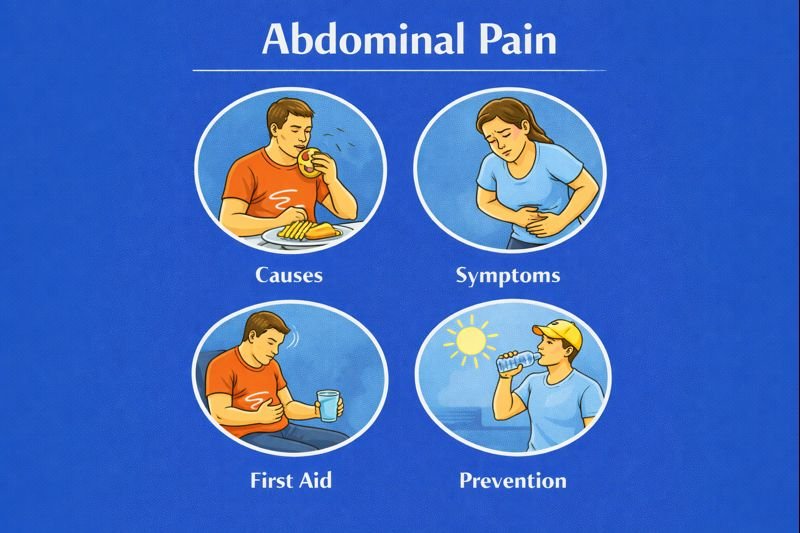
 Abdominal pain refers to discomfort felt between the chest and pelvis. It can range from mild and short-lived to more intense or persistent. Because many organs are located in this region—including those of the digestive, urinary, and reproductive systems—abdominal pain can have many possible causes.
Relevance in Canadian First Aid & Workplaces
Abdominal discomfort may occur during daily activities, meals, heat exposure, stress, or exertion. In workplaces, abdominal pain may affect comfort, focus, or safety—especially in physically demanding roles or in environments with heat, shift work, or food handling.
Scenario (Mild & Realistic)
After eating lunch quickly during a busy shift, Maya developed cramping and mild bloating. She rested, drank water, and the discomfort eased within an hour.
Common Digestive Causes
Abdominal pain often relates to the digestive system. Examples include:
-
Gas or bloating
-
Indigestion
-
Constipation
-
Diarrheal cramping
-
Gastrointestinal infections (“stomach bugs”)
-
Irritation from eating quickly or overeating
Other Possible Sources of Abdominal Pain
Pain felt in the abdomen is not always from the digestive system. Other sources may include:
-
Urinary system (e.g., bladder or kidney-related issues)
-
Reproductive organs (e.g., ovarian or pelvic discomfort)
-
Gallbladder or pancreas irritation
-
Circulatory or vascular concerns
-
Musculoskeletal causes such as abdominal wall strain
Pain That May Be Felt in the Abdomen but Originates Elsewhere
Sometimes abdominal pain can be referred from other areas, such as:
-
Chest or cardiac conditions
-
Lung irritation or certain pneumonias
-
Skin conditions (e.g., shingles)
-
Groin or pelvic issues
This is one reason abdominal pain can be difficult to interpret without medical assessment.
Abdominal Pain Is a Symptom
Abdominal pain is not a diagnosis on its own. It reflects a change or irritation in the body. Other symptoms—such as nausea, fever, appetite changes, digestive habits, or urinary changes—may provide helpful information to a health professional if assessment is needed.
Duration & Pattern Recognition
People often observe:
-
Where the pain is located
-
Whether it comes and goes
-
Whether it relates to eating, movement, heat, or stress
-
Whether it improves with rest or hydration
Patterns may help distinguish temporary irritation from other causes.
Comfort Measures & First Aid Awareness
For mild, short-lived discomfort, people may:
-
Rest and slow activity
-
Sip water
-
Use warmth for muscle discomfort or menstrual cramping
-
Avoid heavy meals until symptoms settle
-
Notice dietary triggers or timing patterns
Individuals with persistent, recurrent, or unclear abdominal pain may seek evaluation by a health professional, especially if it interferes with daily activities, appetite, or comfort.
Prevention & Daily Considerations
Helpful strategies can include:
-
Eating regular meals instead of skipping
-
Avoiding large or rushed meals
-
Practising food safety to reduce infection risk
-
Using proper lifting form to avoid abdominal wall strain
Workplaces involving food handling, long shifts, or physical tasks may incorporate abdominal symptom awareness into safety or wellness programs.
FAQ
Is abdominal pain common?
Yes. Many adults experience abdominal discomfort at various points in life, often related to digestion, diet, or temporary irritation.
Does abdominal pain always come from the stomach?
No. Several organs in the abdomen—and some outside it—can create similar pain signals.
Can stress affect abdominal pain?
Yes. Stress and anxiety can influence digestion, appetite, and muscle tension.
How long should abdominal pain last?
Duration varies. Temporary symptoms often improve within hours, while persistent or recurring pain may benefit from professional assessment.
Is abdominal pain always serious?
Not necessarily. Some causes are mild and short-lived, while others require evaluation. A clinician can help determine the difference.
Educational Note
This article provides public education about abdominal pain as a symptom and highlights awareness rather than diagnosis. Triggers, sensitivity, and recovery differ between individuals. Trained health professionals can assess symptoms that impact comfort, daily activities, or overall health.
About The Author

Mark Kascha
Certified First Aid Instructor Trainer with 30+ years of real-world experience, including lifeguarding, workplace emergency response, and first aid program development across Canada. Has worked with WorkSafeBC, WSIB, and Manitoba Health.
👉 [View full credentials]🔗 View LinkedIn Profile
Last reviewed: March 2026